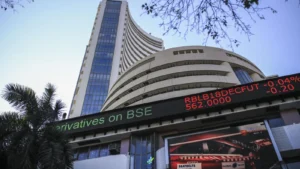


Indian equity markets returned from the Republic Day break with a strong start, but the session was more about just headline gains. Early trade The market saw the Sensex surge and Nifty regain crucial levels, but the broader Indian equity market spoke of hesitant optimism and picky buying among investors, with worries underlining every move.
In this article, I break down what really triggered the early surge in the Indian equity markets, why momentum proved to be difficult to sustain as the day progressed, and how global cues, sectoral movements, earnings outcomes, and upcoming policy expectations are affecting investor behaviour. Beyond the index numbers, this analysis focuses on what the day’s market action means for investors navigating a volatile and selective environment.
A Strong Start for Indian Equity markets After the Holiday Break
The trading session started well on a positive note, with early indicators clearly suggesting a strong opening for the Indian Equity market. Ahead of the bell, GIFT Nifty was trading nearly 75–80 points higher, setting expectations for strength in Indian domestic benchmarks.
And that optimism turned into action once markets opened. The Sensex climbed close to 250 points in early trade, while the Nifty surged above the 25,140 mark, reflecting renewed buying interest, particularly in select large-cap stocks.
This opening felt to me like a combination of relief and recalibration. Some kind of bounce was to be expected after a rocky start in January, with key indices corrected by over 4% from their month’s high. The holiday break had given investors a moment to reassess their positions, and the enthusiastic opening was a sign of willingness to step back in, albeit tentatively.
Early Gains, But Limited Follow-Through
While the strong open got the market off to a good start, it had difficulty sustaining momentum throughout the session. There was selling at higher levels, and both Sensex and Nifty sacrificed a major chunk of their early gains
What stood out to me was the lack of aggressive follow-through buying. Every rise appeared to call for profit booking, indicating that investors were comfortable participating, but only to an extent. This resulted in a choppy, range-bound session rather than a decisive trend.
Such behaviour is vulnerable to a market searching for clarity. Confidence exists, but it isn’t broad-based yet.
Global Developments Continue to Shape Indian Equity Market
Despite this reasonable domestic backdrop for India, global factors continued to affect the psychology of investors.
Worries about global trade policies and continuing geopolitical tensions, as well as fluctuations in the global bond yields, were concerns. An increase in the volatility of oil prices also contributed to a more cautious backdrop, particularly for sectors that are sensitive to inflation and input costs.
Foreign portfolio investor (FPI) behaviour added another element of restraint. While there was no sharp single-day selloff, continued outflows in recent weeks have moderated overall risk appetite. For emerging markets like India, global capital flows remain an important sentiment driver.

Sectoral Performance Reflects Selective Rotation
Sector-wise movements during the session highlighted the market’s selective nature rather than a broad rally.
Banking and Financials
Banking shares led the early gainers, as investors bet on stable credit growth after recent quarterly earnings reports in the past week. With system-wide loan growth still in the low teens, the long-term outlook for the sector is positive.
But worries over margins and asset quality kept gains in check. Investors were in the middle of quality lenders, but were not concrete in adding more at higher valuations.
FMCG and Consumption
FMCG stocks witnessed mixed trading. While the names are often thought of as defensive, lukewarm performance suggests that investors are getting more picky, particularly when it comes to near-term end-market visibility.
Even the defensive sectors, which have long outperformed steadily, are being viewed through a sharper lens.
Auto, Energy, and Telecom
Auto stocks faced pressure amid concernsover cost pressure and the dynamics of global demand. Crude oil and energy stocks moved largely in lock step, capping gains. Telecom stocks remain volatile as continued financial strain and competitive dynamics continue to impact investor sentiment.

Broader Markets Signal Risk Aversion
While benchmarks were working hard to protect their five-week gains, the rest of the market was showing a little more hesitation.
Mid and small-cap shares witnessed selective selling, indicating high-risk aversion. Valuations in pockets of the broader market are still stretched, and with earnings visibility maintaining some inconsistencies, investors seemed to hesitate to take new exposure.
This discrepancy between frontline benchmarks and the general market underscores a common theme: the market’s penchant for large-cap stability in uncertain times.
Earnings Remain a Key Differentiator
Corporate earnings continued to drive stock-specific action throughout the session.
Strong quarterly reports were met with buying interest, and mild disappointments prompted robust corrections. To my mind, this is incontrovertible proof that the market is no longer forgiving, execution and quality of earnings count for more than do narratives.
Beyond earnings, corporate announcements related to restructuring, strategic initiatives, or capital allocation decisions also contributed to volatility at the stock level.
Budget 2026 Expectations Keep Investors Watchful
With the Union Budget 2026 on the horizon, investors remained cautious about taking major directional bets. Expectations for infrastructure and fiscal restraint will also be on the high side, as a new tax policy, but that too can only be resolved with announcements.
Until such time, we suspect markets will be more influenced by international events and earnings reports, not domestic enthusiasm.

What This Session Signals for Investors
Looking beyond the headline numbers, a few key takeaways stood out for me:
- A strong opening does not automatically translate into a sustained trend
- Global cues continue to influence Indian markets significantly
- Sector rotation is active, making selectivity essential
- Earnings quality is being rewarded, while weakness is punished
This was not a breakout session, but it was a telling one.
Conclusion: A Strong Opening, Tempered by Caution
The session began with hope, Sensex up 250 points and Nifty above 25,140, but it concluded as a reminder that suggests that markets are still navigating uncertainty.
Indian stocks were able to recover, but also held back. Investors participated, but selectively. With global risks, earnings scrutiny and policy expectations all in the mix, this cautiousness seems justified.
Short-term volatility may continue, but for long-term investors, the message remains clear: focus on fundamentals, respect valuations, and don’t mistake a strong opening for confirmed momentum. Sometimes, the most important signal isn’t how high the market opens, but how carefully it moves thereafter.
Also Read: Unlocking the Strong Potential of Mid-Cap Mutual Funds: 3 Top Performers Over 10 Years
Disclaimer
This article is for information purposes and does not constitute investment advice. The opinions are those of the author through public information available at the time of posting, and market conditions are subject to change. Readers must do their own research or consult a financial advisor before investing.

Himani Soni
I’m Himani Soni, a finance content strategist with 2+ years at Investik Future. I decode market trends and simplify complex investing concepts into clear, actionable insights for the everyday investor.