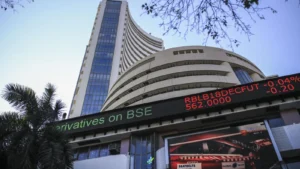


When I saw BSE shares touch a fresh lifetime high this week, my first reaction wasn’t excitement; it was curiosity.
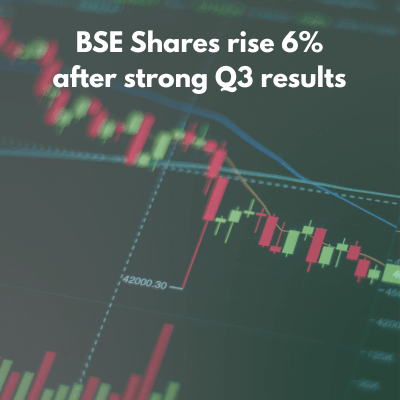
Yes, the stock jumped over 6% in a single session and printed a new 52-week high around ₹3,178. But markets don’t reward numbers alone. They reward narratives, sustainability, and future optionality. So instead of getting carried away by the headline rally, I sat down to understand what is actually driving this surge, what brokerages are factoring in, and where the blind spots might be.
In this article, I examine BSE’s Q3 FY26 performance in detail, breaking down the key financial numbers, brokerage views, valuation signals, and long-term growth drivers to understand what is genuinely structural and what may be cyclical.
The Quarter That Changed Market Perception
Let’s start with the facts, because the numbers are impressive.
In Q3 FY26, BSE reported a consolidated net profit of ₹601.81 crore, a staggering 174% year-on-year increase from ₹219.67 crore in the same quarter last year. Revenue from operations climbed 62% YoY to ₹1,244.10 crore, while net profit margins expanded sharply to 45%, up from just 26% a year ago.
To put this in perspective: this isn’t just growth, it’s operating leverage kicking in at scale. As volumes rise, BSE’s incremental costs remain relatively contained. That’s exactly what we saw this quarter.
Operating Leverage: The Real Hero of the Results
One number that really stood out for me was Nuvama’s EBITDA margin of 60.8%. That’s a 443 basis point expansion YoY, and it tells a very important story.
BSE is no longer just surviving as India’s second exchange; it’s monetising participation in the capital markets far more efficiently than before. Transaction revenues, listing fees, and derivatives activity are now meaningfully contributing to profitability.
This kind of margin profile is rare even among global exchanges.
Also Read: L&T Shares Rise 4% After Q3 FY26 Results: What the Market Is Focusing On
What Brokerages Like, And What Holds Them Back
What I find interesting is that brokerages are optimistic, but not reckless. And that balance matters.
Jefferies: Optimism With a Caution Flag
Jefferies raised its target price to ₹3,050 and upgraded earnings estimates for FY26–FY28 by 4–7%, citing stronger-than-expected top-line growth and better cost control.
However, Jefferies also pointed out something many retail investors may ignore: Limited visibility on new product launches beyond FY29
In simple words, current growth is solid, but the next growth engine isn’t fully visible yet.
Nuvama: Betting on Operating Strength
Nuvama maintained a ‘Buy’ rating and raised its target to ₹3,760, implying nearly 26% upside from previous levels.
What they liked (and I agree here):
- Strong operating leverage
- Healthy contribution from other income
- Aggressive EPS upgrades for FY26–28
This signals confidence in BSE’s earnings compounding ability, not just headline growth.
Motilal Oswal: The Derivatives Dependency Question
Motilal Oswal stayed neutral, with a revised target of ₹3,350.
Their concern is subtle but important:
- Revenue growth is increasingly driven by F&O momentum
- Colocation revenues are under pressure
- Expense growth may accelerate
Also Read: ELSS Tax Saver Funds in 2026: Motilal Oswal, SBI and HDFC Funds Explained for Long-Term Investors
HDFC Securities: A Long-Term Compounding View
HDFC Securities probably had the most balanced view.
They raised EPS estimates by 8–10%, projecting 30% revenue CAGR and 36% EPS CAGR over FY25–28. Their revised target price stands at ₹3,310, valuing BSE at 42x FY28E core PAT, plus CDSL stake and net cash.
This isn’t cheap, but quality rarely is.
Why This Rally Feels Different From Past BSE Cycles
I’ve tracked Indian exchanges long enough to know that BSE has seen false starts before. This time feels different for three reasons:
- Retail participation is structural, not event-driven
- Derivatives volumes are no longer NSE-exclusive
- Listing and book-building revenues are becoming recurring
Valuation: Expensive, But Not Irrational
At current levels, BSE trades at over 40x forward earnings, depending on which FY you look at. That’s not cheap by any traditional metric.
But valuation only looks expensive when growth slows.
If BSE delivers even a part of the 30–35% earnings CAGR projected by brokerages, today’s price could look reasonable in hindsight. Still, this is not a stock I would chase blindly after a sharp rally.
My Personal Take as an Investor
If I’m being honest, I see BSE as:
- Not a short-term trading bet
- A long-term structural play on India’s financialisation
I would be far more comfortable accumulating on corrections than buying into euphoric spikes.

Key Risks I’m Watching Closely
No investment story is complete without risks:
- Overdependence on derivatives volumes
- Slower innovation in new products
- Regulatory changes impacting transaction fees
- Rising competition in niche segments
Ignoring these would be irresponsible, especially at current valuations.
Final Thoughts: A Strong Quarter, But the Real Test Lies Ahead
BSE’s Q3 FY26 results clearly justify the market’s excitement; strong revenue growth, expanding margins, and improving operating efficiency are all real.
But as investors, our job isn’t to celebrate yesterday’s numbers. It’s to judge tomorrow’s sustainability.
For now, BSE has earned the market’s respect. Whether it earns long-term conviction will depend on what comes next, not just how well it executes, but how creatively it evolves.
Also Read: Tata Motors Q3 FY26 Results: 48% Profit Drop and What It Means for Investors
Disclaimer
This article is for informational and educational purposes only and reflects my personal views as a market observer. It is not investment advice. Investors should consult a certified financial advisor before making any investment decisions. Stock market investments are subject to market risks.

Himani Soni
I’m Himani Soni, a finance content strategist with 2+ years at Investik Future. I decode market trends and simplify complex investing concepts into clear, actionable insights for the everyday investor.