


At the start of 2026, I found myself doing something I rarely do: questioning my own investment strategy. Markets have been unpredictable, sentiment has swung sharply after policy announcements, and volatility has returned just when many investors expected stability. Like many retail investors I interact with, I began wondering whether putting fresh money into pure equity funds still made sense or whether it was time to shift toward more balanced strategies.
That curiosity pushed me to closely compare two categories I’ve long tracked but never deeply analysed side-by-side: multi-asset allocation funds and aggressive hybrid funds. Both claim to balance risk and return, both are extremely popular among investors in search of calm and stability, and both are frequently recommended during times of market uncertainty. But the real question I wanted answered was a simple one: which one actually suits investors better in 2026, based on goals, risk appetite, and real-world performance?
So in this article, I’m breaking down my honest, experience-driven analysis of multi-asset vs aggressive hybrid funds, what these funds entail, how they perform in various market phases, and who the best investors are for them and how I use them to invest. If you’re confused about where to allocate your money this year, this comparison should give you clarity.
Why I Started Looking Beyond Pure Equity Funds
For years, equity funds were my default investment vehicle because historically they’ve created the most wealth over long periods. But 2026 reminded me of something many investors forget during bull runs: volatility tests discipline more than returns do.
Recent market swings, corrections after policy announcements, and increased taxation in certain segments made me reassess how much risk I actually wanted in my portfolio. I realised that even if a fund has high long-term return potential, it’s useless if short-term volatility makes investors panic and exit early.
That realisation is what pushed me to study diversified categories more seriously.
My Take on Multi-Asset Funds: The 'All-Weather Portfolio'
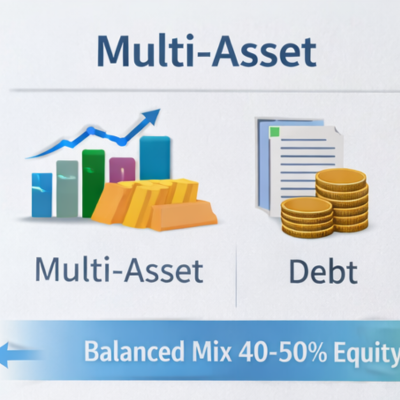
Multi-asset allocation funds invest across equity, debt, and commodities such as gold or silver. Some even add international exposure. The goal is simple: don’t depend on a single asset class to generate returns.
While researching category performance trends, I noticed something striking: these funds didn’t just perform well; they performed consistently across different market phases. Over recent periods, average category returns have been roughly:
- About 19%+ over 1 year
- Around 18% CAGR over 3 years
- Nearly 15–16% CAGR over 5 years
That kind of performance caught my attention because it combines growth with stability, a combination that’s rare in investing.
Another signal of rising investor confidence is capital inflow. The category reportedly attracted tens of thousands of crores in investments through 2025, pushing total assets under management into the lakh-crore range. Strong inflows usually indicate that investors trust the category’s structure, not just its past performance.
What Personally Attracted Me to Multi-Asset Funds
The biggest advantage, in my opinion, is automation.
Earlier, I used to manually rebalance my portfolio between equity funds, gold ETFs, and debt instruments. That meant paying close attention to markets and making allocation decisions, something not every investor has the time for, or expertise in.
Multi-asset funds do that internally. Allocation may be adjusted by fund managers in response to market conditions. For investors who prefer a hands-off approach, it’s very attractive. Another psychological benefit I observed is that these funds tend to fall less than pure equity funds during market corrections. Which makes it easier to hold without worry.
Aggressive Hybrid Funds: Still Designed for Growth
After analysing multi-asset funds, I turned my focus to aggressive hybrid funds. At first glance, they seem similar, but structurally, they’re very different.
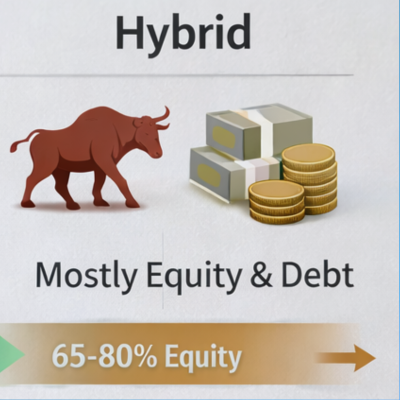
These funds usually allocate 65–80% to equities and the rest to debt instruments. That means they behave much closer to equity funds than diversified ones. Debt acts as a stabiliser, not a primary return driver.
Recent category trends showed:
- Roughly 7% average 1-year return
- Around 14–15% CAGR over 3 years
- About 12–13% CAGR over 5 years
This pattern indicated an important finding to me: Short-term performance can be modest performance, but longer-term results remain strong. In other words, these funds reward patience.
Why Many Investors Still Prefer Aggressive Hybrid Funds
Despite the stability of multi-asset funds, aggressive hybrid funds remain popular, and for good reason. Investors who prefer them usually want:
- Higher equity participation for compounding
- Better long-term growth potential
- Less allocation to non-equity assets
- Equity-oriented taxation benefits (where applicable)
Essentially, these are funds for people who wish moderation but not to the extent of blunting growth.
The Real Difference I Noticed in 2026
When I compared both categories deeply, I realised that this decision isn’t really about how a fund stacks up based on performance stats; it’s really if you’re of the mindset of someone who actively invests or not. Someone who prefers stability, smoother returns, and lower volatility will usually find multi-asset funds more comfortable because they spread investments across multiple asset classes.
Meanwhile, investors who can tolerate market swings and are aiming for stronger long-term growth may feel more confident with aggressive hybrid funds because of their higher equity exposure. I also observed that investors who wanted the luxury of automatic diversification without needing to constantly adjust allocations tend to like multi-asset funds, while those who were looking for equity-like returns with a small cushion often gravitated toward aggressive hybrid funds.
That comparison led me to this concept: That success as an investor, whether individual or professional, is much more about temperament than about something like fund category.
Also Read: Unlocking the Strong Potential of Mid-Cap Mutual Funds: 3 Top Performers Over 10 Years

What I’d Personally Choose for SIP Investing in 2026
If someone asked me today where I’d start a fresh SIP, my reply would not be a single category. It would depend on market comfort levels.
With current uncertainty, I personally tilt a bit towards multi-asset funds for new SIPs because they are cushioned against volatility and also make it easier to remain committed. But for your long-term goals, such as retirement or wealth creation over 10-15 years, I will have it in aggressive hybrid funds so that money can grow.
My Practical Allocation Strategy
Rather than choosing one category, I prefer combining both:
- Roughly round 60% in multi-asset funds for stability and diversification
- Approximately around 40% in aggressive hybrid funds for growth exposure
This blended approach gives me equity participation while reducing emotional pressure during corrections.
The Biggest Lesson This Comparison Taught Me
Before doing this analysis, I used to think fund selection was mainly about picking top performers. Now I see it differently.
My current priority order is:
- Investor discipline
- Asset allocation
- Fund category
- Fund performance
Performance actually comes last, because even the best fund won’t help if an investor exits at the wrong time.
Final Verdict: Which Fund Is Better in 2026?
After evaluating both options closely, my conclusion is clear: There is no universally better fund, only a better match for your personality and goals.
- If you want smoother returns and lower stress, multi-asset funds may suit you.
- If you want higher long-term growth and can handle volatility, aggressive hybrid funds may be better.
Personally, I no longer see these categories as competitors. I see them as complementary tools that can work together inside a smart portfolio.
Also Read: How Equity Funds Can Turn Small Investments into Big Wealth Over 10 Years
Disclaimer
This report is for information purposes only and is not intended as specific advice or recommendations. It’s not financial advice, investment advice, or a suggestion to invest in any particular fund or category. Mutual fund investment is also a risky matter. Investments in the securities market are subject to market risk. Read all the related documents carefully before investing.

Himani Soni
I’m Himani Soni, a finance content strategist with 2+ years at Investik Future. I decode market trends and simplify complex investing concepts into clear, actionable insights for the everyday investor.