
How Google’s 20% Boomerang AI Hiring Rate Signals a Powerful Shift in AI Investing
Google is at the centre of the current talent war, but this isn’t a flashy headline battle between OpenAI, Meta, Anthropic, and Google. Instead, I see it as a long, expensive, and deeply strategic contest for time, trust, and technical depth. And Google’s recent push to rehire former employees, so‑called “boomerang hires,” tells me far more about where the Artificial Intelligence race is heading than any single product launch.
Roughly 20% of engineers hired by Google into advanced machine-learning roles in 2025 are former employees. To put that in context, boomerang hiring across the broader tech sector typically sits in the 8–12% range, even during tight labour markets. This isn’t nostalgia hiring. It’s a calculated response to structural pressure in the Artificial Intelligence economy.
This article isn’t about who hired whom or which Artificial Intelligence model launched first. What I want to unpack here is what Google’s rehiring of former Artificial Intelligence engineers actually signals, not just for the company, but for the future of artificial intelligence as a business and as an investment theme.
Through an investor’s lens, I’ll explain:
- Why “boomerang hiring” matters more than flashy Artificial Intelligence headlines
- How talent, compute, and organisational memory are becoming competitive moats
- What Google’s internal reset says about the maturity of the Artificial Intelligence cycle
- And how long-term investors should interpret these moves beyond short-term stock reactions
If you’re trying to understand where real Artificial Intelligence value is being built, and which companies are positioning themselves to sustain it, this piece is meant to give you that clarity.
Table of Contents
ToggleWhy Google’s Talent Strategy Is No Longer Just About Pay
Yes, compensation matters. When headlines talk about $50–100 million retention packages or aggressive poaching, it’s easy to assume this is simply a bidding war. But if money were the only factor, Google wouldn’t need to bring people back.
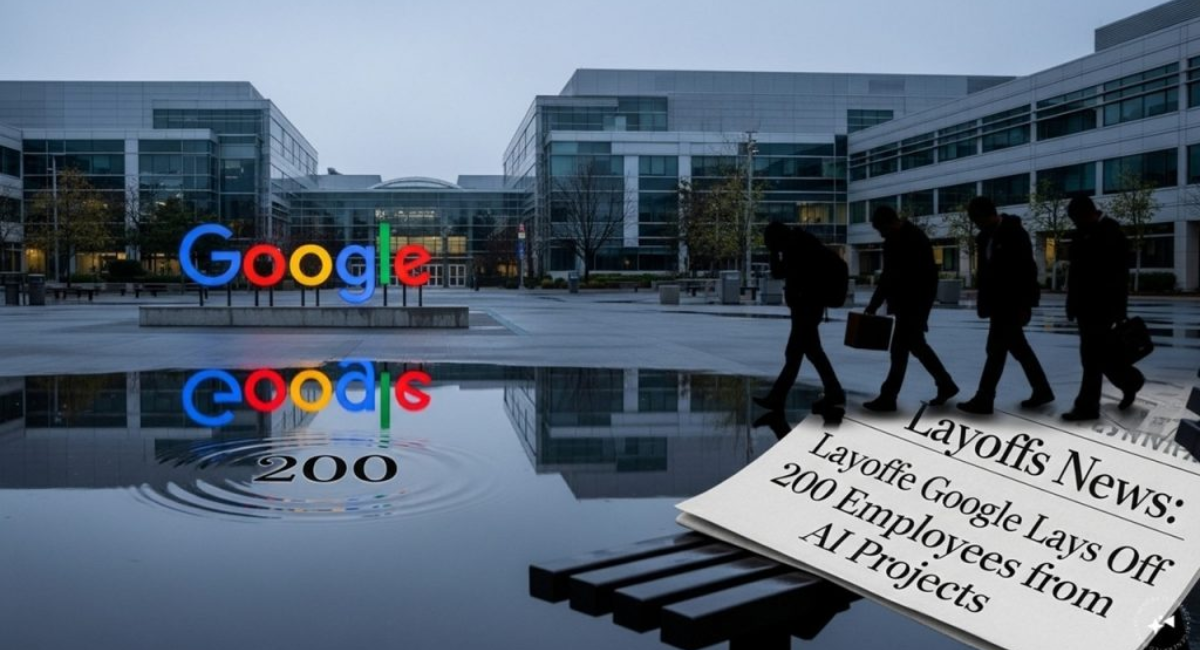
Former employees already know Google’s culture, bureaucracy, strengths, and weaknesses. Many of them left during or after the 2023 layoffs, whenroughly 12,000 roles were cut, or about 6% of its workforce. Rehiring them now signals a shift in priorities.
From my perspective, Google is quietly acknowledging a truth the market often underestimates: Progress in artificial intelligence depends less on isolated brilliance and more on institutional memory.
Training frontier models isn’t just about algorithms. It’s about knowing how to work with massive compute clusters, internal tooling, legacy systems, and research pipelines that take years to understand. Boomerang engineers shorten that learning curve instantly.
Why Large-Scale Compute Advantages Still Matter
One thing I don’t see discussed enough is how computing infrastructure changes hiring behaviour.
Google doesn’t just compete with OpenAI or Meta on talent. It competes on the ability to let that talent actually build. Advanced Artificial Intelligence research today is inseparable from access to massive, reliable, and well-optimised compute.
This is where Google quietly retains an edge. When I connect this to Google’s renewed confidence, faster product launches, fewer internal approvals, and a willingness to ship imperfect products, it paints a picture of a company that has finally aligned capital, compute, and conviction. That alignment is what draws former employees back.

Layoffs, Regret, and the Return of Risk‑Taking
The 2023 layoffs were a psychological breaking point for Big Tech employees. Trust eroded. Loyalty fractured. Many talented engineers left not because they wanted to, but because uncertainty forced their hand.
Now, Google appears to be reversing not just staffing decisions, but mindset. By cutting management layers, offering buyouts, and encouraging faster execution, Google is signalling something subtle but powerful: risk‑taking is back in fashion.
As someone who tracks business cycles closely, this matters. Innovation rarely thrives in defensive organisations. It thrives when leadership is willing to tolerate mistakes.
The return of figures like Noam Shazeer reinforces this shift. Foundational researchers don’t come back for comfort; they come back for leverage.
What This Means for Google Stock and Long‑Term Investors
Alphabet’s stock performance over the past year reflects renewed confidence, but I don’t think the market has fully priced in the organisational reset underway.
Rehiring former Artificial Intelligence talent isn’t cheap. But it’s far cheaper than rebuilding research depth from scratch, and far safer than relying on external hires who may never fully integrate.
From an investing standpoint, I read this as:
- A commitment to defending Artificial Intelligence relevance long term, not quarter to quarter
- A recognition that talent churn is a hidden cost in Artificial Intelligence scalability
- A willingness to prioritise execution over optics
This doesn’t guarantee dominance. OpenAI and Meta remain formidable. But it does suggest Google has moved past its hesitant phase.

The Bigger Signal: Artificial Intelligence Is Maturing as an Industry
One broader takeaway I can’t ignore: boomerang hiring is a sign of industry maturity. Early‑stage tech revolutions attract outsiders and idealists. Mature ones re‑attract insiders who know what actually works. Artificial Intelligence is entering that phase now. Companies aren’t just asking, “Who is smartest?” They’re asking, “Who can ship, scale, secure, and sustain?”
Google’s rehiring trend answers that question decisively
Final Thoughts
I don’t view Google’s boomerang hiring strategy as defensive. I see it as pragmatic. In a world where Artificial Intelligence hype moves faster than fundamentals, Google is doubling down on something unglamorous but powerful: people who already know how to build inside its system.
For investors, that’s not a viral story, but it’s often the kind that matters most.
Also Read: The Hidden AI Trade: How 2 Indian Mid-Caps Are Monetising the Infrastructure Boom
Disclaimer
This article is for informational and educational purposes only and reflects my personal views. It is not investment advice. Investors should conduct their own research or consult a qualified financial advisor before making any investment decisions. Market conditions and company strategies can change without notice.