
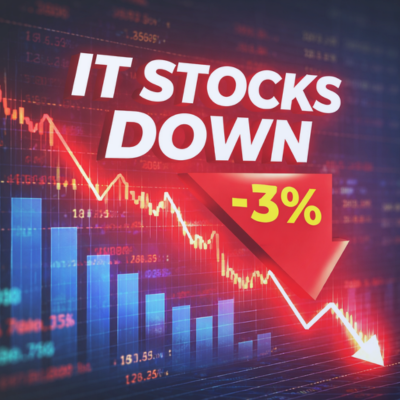
IT Stocks Drop 3% Amid Surging AI Concerns

IT stocks have been under intense pressure over the past few sessions. I’ve been watching the technology sector with unusual intensity. As a day-to-day observer of markets, this isn’t just another normal sell-off. The tech stock selling pressure feels different this time: sharper, sentiment-driven, and closely tethered to one overriding, powerful theme, artificial intelligence disruption.
Table of Contents
ToggleWhat triggered this wave of caution wasn’t a single earnings miss or macroeconomic data point. Rather, it was a mix of global cues, brokerage downgrades, and a dramatic drop in one beloved tech company, IBM, that appears to have rattled confidence among investors across continents.
In this article, I would like to give you an overview of how I see this playing out and why it matters, especially if you own IT stocks or are thinking about entering the sector.
The Global Trigger That Caught My Attention
The first red flag appeared overnight in U.S. markets. Shares of Anthropic dropped after news about updates to its coding platform that could modernize legacy programming systems like COBOL. That might sound technical, but to investors, it signaled something bigger: AI may soon automate work that traditional IT service firms have depended on for decades.
That’s where the shockwave hit.
Legacy system maintenance has long been a steady revenue stream for large IT consulting companies. If AI tools can suddenly handle these tasks faster and cheaper, it raises a tough question: what happens to the firms whose business models rely on billing hours for such services?
The Day Big Blue Fell
When IBM’s stock plunged about 13% in a single session, it wasn’t just a company-specific reaction; it was a psychological turning point. To me, this drop symbolized the market acknowledging that even established tech giants aren’t immune to AI disruption.
Market veteran Ajay Bagga summed it up well when he noted that global event risk remains the dominant narrative and that AI continues to be a disruptive force. I agree with that assessment. Markets can handle inflation, rate hikes, and even geopolitical tensions, but disruptive technology often creates the deepest uncertainty because nobody can confidently model its long-term impact.
Why Indian IT Stocks Are Feeling the Heat
Watching Indian IT stocks react to global cues isn’t new to me. These companies derive a significant share of revenue from overseas clients, especially the United States. So when U.S. tech sentiment turns negative, Indian IT typically follows.
Stocks like Persistent, Infosys, and HCLTech recently dropped more than 3% each in a single trading session. To a long-term investor, a 3% fall may not seem dramatic, but when multiple stocks decline together, it signals sector-wide stress rather than isolated weakness.
In my experience, such synchronised declines usually indicate that institutional investors are repositioning portfolios, not just retail traders panicking.
Technical Levels I’m Watching Closely
I always combine sentiment analysis with technical levels because charts often reveal what headlines cannot. According to strategist Anand James of Geojit Investments, oversold indicators suggest that recovery signs were starting to appear recently.
He highlighted three key levels traders are monitoring:
- Support near 29,961
- Reversal level around 31,300
- Major resistance close to 36,200
In my opinion, these levels are like psychological milestones. If the index later stabilizes above support, confidence could quickly return. But if it falls below this range, we still have further downside before we see any serious recovery.
Brokerages Turning Cautious, A Signal I Never Ignore
One of the other things that really caught my attention was Jefferies’ new sector outlook. The brokerage downgraded several Indian IT firms, including TCS, Infosys, HCLTech, and Wipro.
What concerned me wasn’t just the rating cuts; it was the reasoning behind them.
The brokerage said the way IT services are delivered, priced, and coiled could be fundamentally altered by AI. That’s not a cyclical change, that’s structural. Structural issues tend to be de-leveraged over a longer stretch of time because they question the fundamentals on which these growth assumptions are based.
When analysts start talking about permanent business model changes rather than quarterly earnings risks, I pay very close attention.
The ADR Signal Most Investors Overlook
One indicator I’ve learned never to ignore is ADR movement in U.S. markets. American Depositary Receipts often react faster to global sentiment than domestic listings.
Recently, Infosys’ ADR fell about 5%, while Wipro’s declined roughly 3%. That tells me global investors, not just Indian traders, are reassessing their exposure to IT outsourcing companies.
This distinction matters because foreign institutional investors drive a significant portion of liquidity in Indian markets. If they turn cautious, price corrections can accelerate quickly.
The Hidden Risk Few Are Talking About
While AI disruption is the headline story, there’s another risk quietly building in the background: stress in private credit markets.
Bagga referenced concerns around Blue Owl freezing redemptions in one of its funds. The broader private credit market is estimated to be worth about $3.5 trillion. That’s not a small corner of finance; it’s a massive ecosystem.
In my view, the reason this matters is simple: financial stress rarely stays contained. If liquidity tightens in one segment, it often spills into equities. We’ve seen similar patterns before major market corrections.
Also Read: AI In 2026: Money Makers Vs Tech Builders
So, Is This a Panic Phase or a Real Shift?
Here’s my honest take: it’s a bit of both.
In the short term, this looks like sentiment-driven selling amplified by algorithmic trading and global cues. But long-term, AI absolutely will reshape the IT services industry. The real question isn’t whether disruption will occur, but rather how soon and which companies will speed.
In the face of technological disruption, industries historically have three stages through which they tend to progress:
- Denial
- Panic
- Reinvention
Right now, I believe we’re somewhere between stages two and three.
What I’m Personally Doing as an Investor
Rather than allowing myself to react emotionally, I’m keeping three filters in mind:
- Balance sheet strength: Companies with strong cash reserves canuse AI as an investment opportunity rather than a threat.
- Client diversification: Companies that rely on a limited range of services are at greater risk.
- Innovation spending: The organisations that invest aggressively in AI today may be the leaders of tomorrow.
Corrections often create the best opportunities, but only if you distinguish between temporary fear and permanent damage.
Final Thoughts
From where I stand, this selloff isn’t random; it’s a market trying to reprice the future of technology services in an AI-driven world. Fear is dominating headlines right now, but markets rarely move in straight lines. Periods of pessimism often plant the seeds of the next rally.
The key is not to panic alongside the crowd. It’s to understand why the crowd is panicking. Because once you understand that, you’re no longer reacting to the market, you’re reading it.
Disclaimer
This article reflects personal market observations and analysis for informational purposes only. It does not constitute investment advice, a recommendation, or an offer to buy or sell securities. Always consult a registered financial advisor before making investment decisions.