
Trump’s 25% Tariff Threaten India’s $1.2B Exports
When I first read about the United States announcing a 25% tariff on countries trading with Iran, my immediate reaction was concern, not panic. Headlines framed it as a direct threat to Indian exports, but after digging into the trade data, policy structure, and sanction mechanics, I realised the situation is far more nuanced than it appears at first glance.
Table of Contents
ToggleIn this article, let me walk you through what’s actually happening, what matters for India, and why investors should focus on facts instead of noise.
Understanding the Tariff Announcement
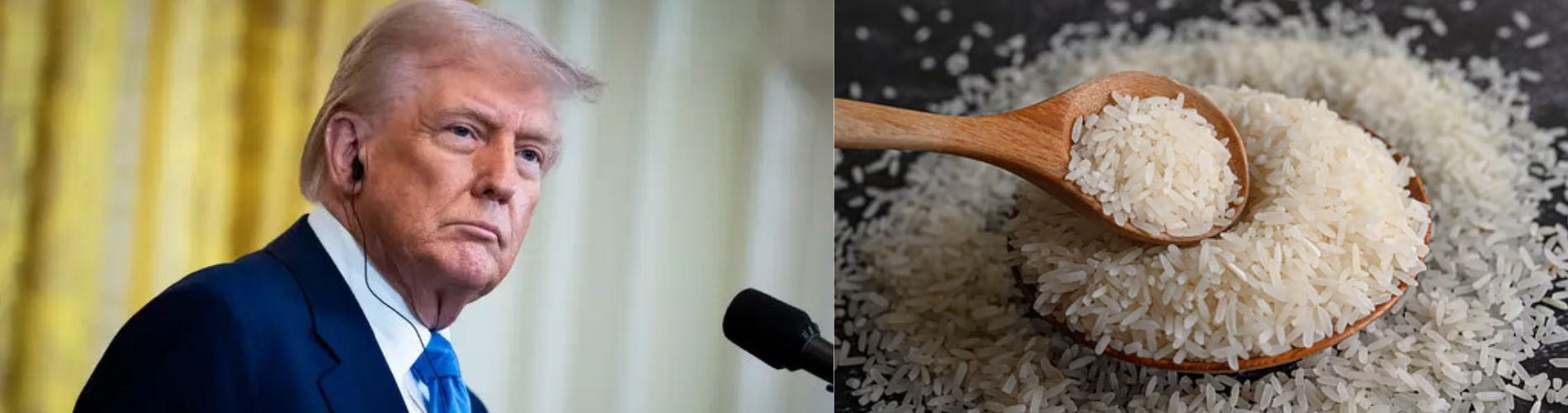
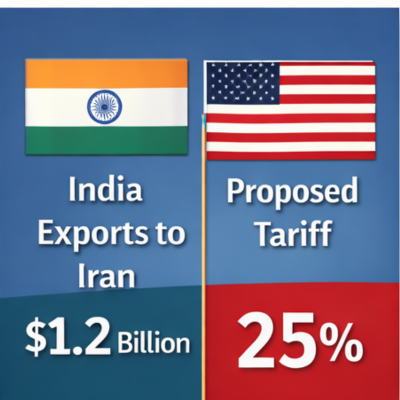
The policy signal came directly from U.S. President Donald Trump, who declared that countries continuing trade relations with Iran could face an additional 25% tariff penalty. The announcement was positioned as part of Washington’s broader strategy to economically pressure Tehran amid rising geopolitical tensions.
However, here’s the first key point most coverage misses: There is no detailed implementation framework yet. No official tariff schedule, customs rulebook, or compliance definition has been published clarifying:
- Which products qualify
- What “doing business with Iran” legally means
- Whether tariffs will be additive or standalone
Without these details, markets are reacting to uncertainty rather than confirmed policy.
Why India’s Exposure Looks Big, But Isn’t
At first glance, India’s exports to Iran, roughly $1.24 billion, sound substantial. But context changes everything. That figure represents only about 0.15% of India’s total trade. In macroeconomic terms, that’s a very small slice.
Even more important is the composition of exports, which heavily tilts toward humanitarian categories.
India’s Major Exports to Iran
- Rice: $757 million (over 60%)
- Oil meals: $70.8 million
- Fruits & vegetables: $58 million
- Chemicals: $56 million
- Engineering goods: $43 million
- Pharmaceuticals: $40 million
- Tea: $37 million
- Spices: $29 million
The overwhelming dominance of rice exports is critical. Because food exports are typically exempt from sanctions regimes.
The OFAC Factor Most Investors Ignore
International trade with sanctioned countries isn’t governed only by tariffs. The real authority lies with the Office of Foreign Assets Control (OFAC), the U.S. Treasury body enforcing sanctions globally.
Most Indian exporters already operate under strict OFAC compliance rules. This means:
- Payments are routed through approved channels
- Trade is restricted to humanitarian goods
- Banks monitor transactions for compliance
In other words, Indian firms trading with Iran already follow the rulebook. The new tariff threat doesn’t suddenly make compliant trade illegal. From my perspective, this dramatically lowers the probability of sudden disruption.
Why Rice Exports Are Likely Safe
Rice dominates India-Iran trade, and rice falls squarely under the humanitarian goods classification.
Historically, sanctions frameworks, even during peak geopolitical conflicts, have allowed exports of:
- Food
- Medicines
- Agricultural commodities
Blocking food shipments risks humanitarian crises, which global regulators generally avoid.
So while tariffs sound threatening politically, they rarely target staple food supply chains. That’s why many trade experts expect minimal direct impact on rice shipments.
The Real Risk Isn’t Tariffs, It’s Currency Volatility
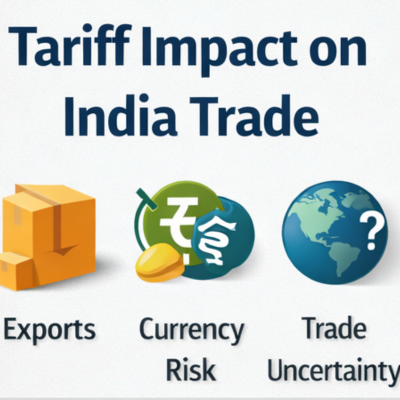
If I had to highlight a genuine risk, it wouldn’t be tariffs. It would be currency settlement complications.
Trade with Iran already uses alternative payment arrangements because dollar transactions are restricted. If geopolitical pressure intensifies, payment systems could become:
- Slower
- More expensive
- Less predictable
This wouldn’t stop trade, but it could affect exporter margins.
For investors tracking export-driven companies, that’s a far more relevant variable than headline tariff rates.
The 50% Tariff Reality Investors Should Already Know
Another overlooked fact: many Indian exports already face up to 50% tariffs in the U.S. market. This includes an existing 25% penalty linked to Russian crude purchases, layered onto standard tariffs. So the proposed additional 25% would only matter if:
- It is implemented formally
- It applies additively
- It covers sectors in which India actually exports heavily
Right now, none of those conditions is confirmed.
Sectors That Could Face Risk
If Washington eventually enforces the tariff aggressively and broadly defines “doing business with Iran,” the most exposed Indian sectors would likely include:
- Textiles and apparel
- Gems and jewellery
- Leather and footwear
- Auto components
- Chemicals
- Marine exports
These sectors depend heavily on the U.S. market for revenue. Any incremental tariff burden could reduce price competitiveness. But again, that scenario depends entirely on policy clarity that doesn’t yet exist.
India’s Trade Balance With Iran Is Actually Favourable
Another reason I’m not overly worried: India runs a trade surplus with Iran.
- Exports: about $1.24 billion
- Imports: about $441 million
Imports have also declined significantly in recent years. India mainly buys:
- Organic chemicals
- Dry fruits like dates and pistachios
This means India isn’t heavily dependent on Iranian supply chains. So even in a worst-case scenario, economic disruption would likely be limited.
Also Read: India-EU FTA: What a $50 Billion Trade Opportunity Means for the Next Decade
The Geopolitical Motive Behind the Announcement
From a macro perspective, the tariff threat is less about trade economics and more about geopolitical signalling. The U.S. wants to:
- Increase pressure on Iran’s government
- Isolate Tehran economically
- Deter third-party trade relationships
Tariffs become a diplomatic lever, not just a trade policy. Understanding this motive matters for investors because geopolitical tools are often used rhetorically before they’re implemented practically.
What I’m Watching Next as an Investor
Whenever a policy announcement lacks operational detail, I focus on three signals:
- Official documentation: If the U.S. releases a formal tariff notification, markets will react meaningfully.
- Banking compliance circulars: Financial institutions usually adjust first. If they tighten rules, trade friction increases.
- Shipping and logistics costs: Freight and insurance spikes often reveal real risk earlier than government statements.
Right now, none of these indicators suggests immediate disruption.
My Bottom Line
After analysing the data, I don’t see this announcement as a near-term threat to India’s export economy.
Yes, the headline sounds alarming. But structurally:
- India’s trade share with Iran is tiny
- Most exports are humanitarian goods
- Compliance systems already exist
- Policy details are missing
For investors, that combination typically signals headline risk, not earnings risk. Markets often react faster than policies actually move. In situations like this, patience, not panic it is the smarter strategy.
Also Read: What Trump’s Venezuela Plan Means For Guyana’s Oil
Disclaimer
This article is for informational and educational purposes only and should not be considered financial, investment, or trading advice. Readers should conduct their own research or consult a qualified financial advisor before making investment decisions.