
US Tariff Shift to 15%: Can India Gain A Strong Edge?
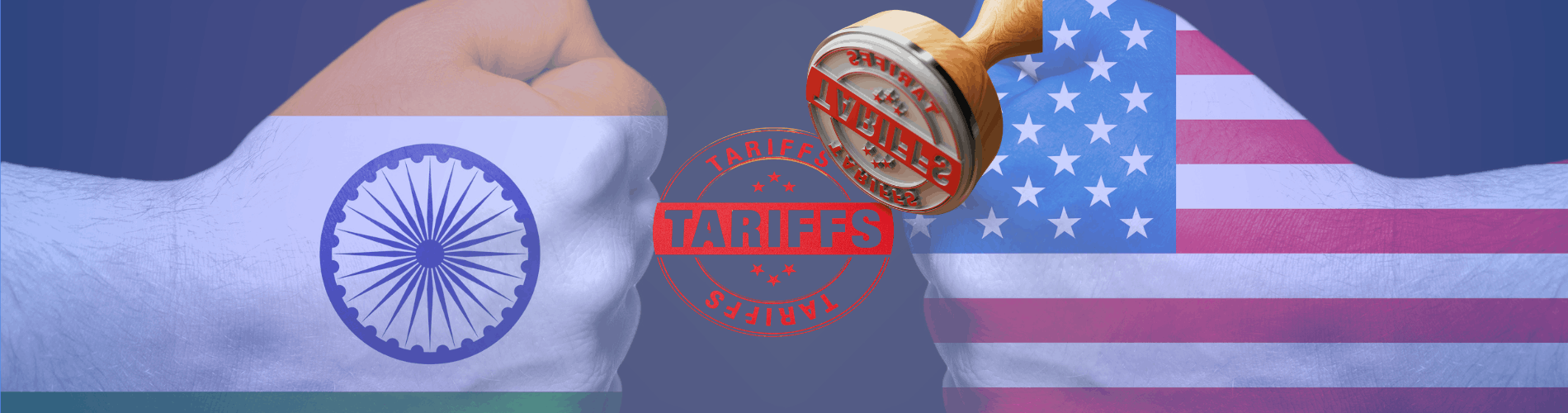
When I track global trade signals, I usually look for loud disruptions, sanctions, bans, or full-blown trade wars. But this time, what caught my attention wasn’t a dramatic escalation. It was a technical adjustment announced by Donald Trump: a temporary increase in broad US tariffs to 15% under Section 122 of American trade law.
Table of Contents
ToggleAt first glance, that sounds like bad news for exporters worldwide. But the more I studied the numbers, analyst commentary, and policy signals, the clearer it became to me that this shift may actually leave India in a comparatively stronger position than China and several other Asian exporters, at least for now.
In this article, I break down what the new 15% US tariff on imports actually means, why India may emerge relatively stronger than China and other Asian exporters, and what signals global investors and businesses should watch during the 150-day window that could reshape trade dynamics.
Why This US Tariff Move Isn’t a Typical Trade Shock
The tariff revision came just one day after the US Supreme Court struck down a previous sweeping tariff regime imposed under the emergency economic powers law. That earlier framework had created uncertainty for importers and exporters alike.
So instead of continuing with a legally vulnerable approach, Washington switched to a temporary but structured mechanism. Section 122 allows the US government to impose tariffs for up to 150 days to address balance-of-payments concerns or currency issues.
That time limit is crucial. It signals to me that this is less of a permanent policy shift and more of a negotiating instrument, a pressure valve rather than a full clampdown.
What Analysts Are Seeing, And Why I’m Paying Attention
According to analysts at Emkay Global, roughly 55% of India’s exports to the US will face the 15% tariff, while about 40% remain exempt, including:
- Electronics
- Pharmaceuticals
- Petroleum products
This exemption mix is important. These are not fringe exports; they’re some of India’s fastest-growing and highest-value categories. When I calculated the implied weighted impact, the effective tariff rate for India was roughly 11–13%. That’s meaningfully lower than China’s estimated rate, which analysts believe sits above 15%.
That gap may look small on paper, but in global trade, even a 2–3 percentage-point difference can redirect billions of dollars’ worth of orders.
The Quiet Advantage India Just Gained
What I find especially interesting is that India’s relative advantage isn’t coming from preferential treatment. Instead, it’s emerging because of structural tariff math.
Most Asian economies are now facing similar headline tariff levels. That means the competitive landscape is being reset, not tilted toward one country artificially, but leveled.
Countries such as Bangladesh and Vietnam have historically competed with India for export-driven manufacturing orders. With tariffs temporarily aligned, buyers may shift sourcing decisions based more on cost efficiency, supply reliability, and political stability.
In those categories, India has been steadily improving for years through:
- Production-linked incentive schemes
- Logistics upgrades
- Digital export infrastructure
So when tariffs stop distorting competition, India’s structural improvements suddenly matter more.
Why Pressure on Trade Negotiations Has Eased
Another signal I’m watching closely is the tone change in trade diplomacy.
Analysts suggest the US’s use of unilateral tariffs as a bargaining weapon has paused for now. That reduces pressure on trading partners to agree to sweeping concessions such as:
- Large investment commitments
- Sudden regulatory changes
- Rapid tariff dismantling
In practical terms, that gives India breathing room in negotiations.
Instead of rushing into deals out of fear of punitive tariffs, policymakers can negotiate at a more measured pace, something that historically leads to more balanced agreements.
Also Read: Trump Tariffs Could Threaten $86B India-U.S. Trade
The $75–80 Billion Factor Most People Overlook
One insight that really stood out to me came from Deven Choksey, promoter of KRChoksey Group.
He pointed out that India exports roughly $75–80 billion worth of goods annually to the US. Even a modest tariff reduction or exemption on part of that volume can translate into substantial savings.
But the more intriguing angle he raised is something most headlines ignore: refund eligibility. Because earlier tariffs were declared illegal, US importers may qualify for duty refunds. If that happens, billions of dollars could flow back into supply chains, improving liquidity and potentially accelerating trade activity in the near term.
That’s not just a policy shift, that’s a cash-flow catalyst.
The 150-Day Window That Could Reshape Trade Strategy
Section 122 tariffs expire after 150 days. That ticking clock is the single biggest variable I’m watching.
Over the next five months, three key questions will determine the long-term impact:
- Which tariffs stay?
- Which are revised?
- Which disappear entirely?
During this period, exporters, investors, and policymakers will likely behave cautiously. Nobody wants to commit fully to a strategy that could become obsolete in a few months. But that same uncertainty can create opportunity.
Countries that use this window to strengthen logistics, diversify exports, and lock in contracts could emerge stronger once final tariff levels are set.
Why I Think India’s Position Is Strategically Strong Right Now
From my perspective, India currently sits in a rare sweet spot:
- Tariffs lower than China’s
- Comparable rates to regional competitors
- Major export sectors are exempt
- Negotiation pressure reduced
That combination doesn’t happen often in global trade dynamics. Usually, countries get one or two advantages, not four at once.
It doesn’t guarantee long-term dominance, of course. Trade advantages are notoriously temporary. But as you know, they say in the globals, timing is as important as fundamentals. Right now, timing seems to be on the side of India.
What I’m Watching Next
If you’re watching this story like I’m watching it, here are the signs to keep an eye on in the coming weeks and months:
- US policy signals on post-120-day tariff plans
- Export order trends for Indian manufacturers
- Supply-chain shifts away from China
- Currency movements affecting trade competitiveness
Such indicators will show whether this tariff adjustment was a reprieve or the beginning of something bigger.
My Takeaway
Having reviewed the data, analyst commentary, and policy context, I come to a simple conclusion: This is not some dramatic trade victory for India, but it is a signal strategic opening. And in the global economy, fine lines are often where the biggest long-term rewards begin.
Also Read: India-EU FTA: What a $50 Billion Trade Opportunity Means for the Next Decade
Disclaimer
The information in this article is for informational and educational purposes and does not constitute financial advice or opinion. It is not financial, investment, or trade advice. Readers should do their own research or consult with a professional before making any business decisions based on trade policy changes.