
Every time I track movements in the bond market, it reminds me that Treasury yields often provide a more nuanced view of the economy than stock market headlines do. Stocks respond quickly to news and sentiment, but bond yields quietly show what investors really believe about growth, inflation, and interest rates. This week, the U.S. Treasury market once again reminded investors how complex that story can be.
On Wednesday, the 10-year U.S. Treasury yield moved higher, rising more than 3 basis points to 4.163%, while the 2-year Treasury yield climbed around 2 basis points to 3.475%. On the surface, that increase might seem like evidence that borrowing costs are tightening again.
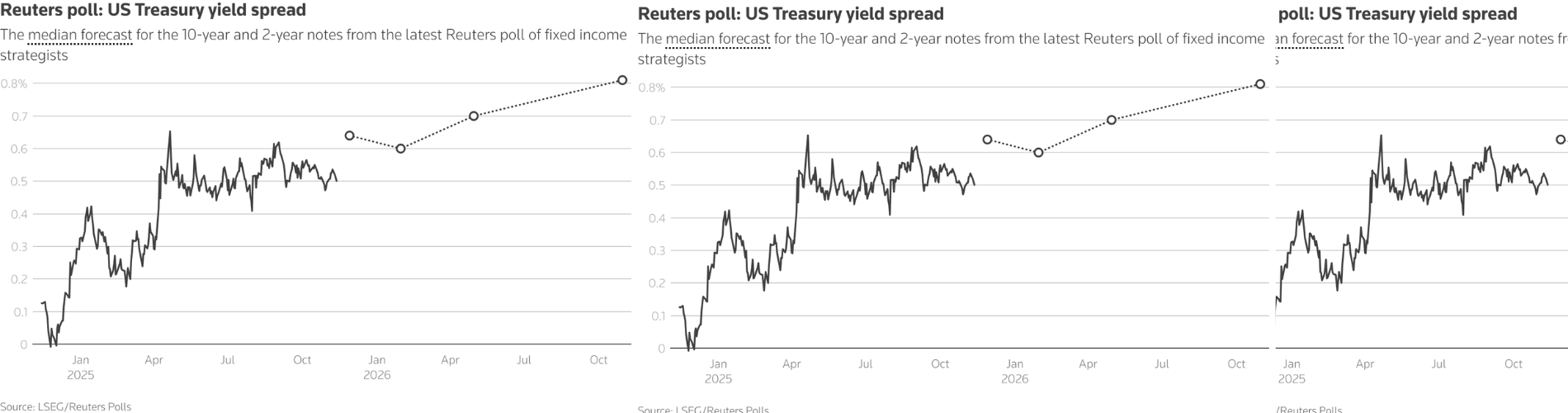
But if I widen my lens and take a sort of long view here, the story of 2025 is quite the opposite. Despite occasional spikes like this one, Treasury yields ended the year lower overall, largely because of Federal Reserve rate cuts and gradually cooling inflation. And that contrast is what makes the bond market so fascinating right now.
This article explores why the U.S. 10-year Treasury yield moved higher recently despite ending 2025 lower overall. It addresses how robust labour market data, Federal Reserve rate cuts, and stubborn inflation motivated bond market activity during the year. It also details the volatility in Treasury yields throughout 2025 and what these movements may presage for investors as they enter 2026.
Why Treasury Yields Moved Higher This Week
The immediate catalyst for the latest movement up in yields came from stronger-than-expected labour market data. According to the U.S. Labour Department, initial jobless claims for the week ending December 27 dropped to 199,000. That’s significantly lower than the previous week’s revised 215,000 and well below the 220,000 economists were expecting.
When I see numbers like these, it sends a clear signal: the labour market is still remarkably resilient. And when it comes to the bond market, strong economic data is usually accompanied by rising yields. The logic is straightforward. If the economy stays strong, inflation pressure could linger, which would constrain how hard the Federal Reserve cuts interest rates.
Christopher Rupkey, chief economist at FWDBONDS, summarised it well when he noted that despite seasonal volatility in jobless claims during the holidays, there’s little evidence that the U.S. economy is heading toward a recession anytime soon. In fact, the data suggests something quite different: a labour market that continues to show stability even amid economic uncertainty.
A Volatile Year for the Bond Market
And while this week’s action made headlines, what has stood out for me is just how volatile the bond market has been in all of 2025. When you zoom out to review the past year, though, the 10-year Treasury yield has been doing its fair share of swinging around as political events and economic data shift expectations for Federal Reserve policy in either direction.
At the beginning of the year, the benchmark yield was comfortably resting above 4.5 per cent, a reflection of worries that inflation could remain stubborn to die down. Then things took an unexpected turn. In early April, when President Donald Trump announced his “reciprocal tariffs” policy, markets reacted sharply. Investors rushed toward safe-haven assets, pushing the 10-year yield down to around 4.045%.
But the calm didn’t last long. Just a week later, after the announcement by the administration that rates would be reduced temporarily to 10 per cent for most of those countries, markets quickly rebounded. The yield surged back toward 4.5 per cent, a reminder of how sensitive bond markets are now to shifts in policy.
For me, it was one of the most vivid reminders that political choices can instantly reverberate for investors across the world’s financial markets.
Also Read: UK Stocks Beat US Stocks In 2025; More Growth Expected In 2026.
The Federal Reserve’s Role in the Yield Story
And of course, no discussion of Treasury yields would be complete without a mention of the Federal Reserve. In 2025, the Fed finally launched the long-awaited interest rate cutting cycle, announcing its first cut that September and two more cuts later in the year.
The goal was simple: ease financial conditions as inflation slowly moved closer to the Fed’s 2% target. But the process hasn’t been smooth. Inflation has indeed cooled compared to previous years, yet it remains slightly above the Fed’s ideal range. At the same time, the labour market has shown only modest signs of softening.
This combination has created a difficult balancing act for policymakers. When the minutes from the Federal Reserve’s December meeting were released earlier this week, it became clear that officials were deeply divided about how quickly interest rates should fall. Some policymakers argued that inflation risks remain, while others believe the economy might slow more sharply if rates stay high for too long.
From my perspective, this division inside the Fed explains why the bond market has remained so unpredictable. Investors are constantly recalibrating expectations about when the next rate cut might arrive. Interestingly, after the meeting minutes were released, traders slightly increased their bets that the next rate cut could come as early as April.
A Strong Labour Market Keeps Changing the Narrative
One factor that keeps complicating the Fed’s job is the continued strength of the U.S. labour market. Despite higher borrowing costs earlier in the year, layoffs have remained relatively low, and hiring hasn’t collapsed either.
In other words, the economy seems to be sitting in an unusual middle ground. We’re seeing low firing, moderate hiring, and steady job creation, conditions that suggest the economy is slowing gradually rather than heading into a sharp downturn.
Some economists had predicted that policy changes, including shifts in trade policy and immigration rules, could create economic disruption. But so far, those fears haven’t fully materialised. Instead, the data continues to show a labour market that, while not booming, is far from weakening dramatically. And as long as the labour market stays strong, Treasury yields will likely remain sensitive to every new economic data release.
Why Treasury Yields Matter for Investors
Whenever I write about Treasury yields, I’m always conscious that many investors focus primarily on stocks. But the truth is that bond yields influence almost every corner of the financial system. They affect:
- Mortgage rates
- Corporate borrowing costs
- Stock market valuations
- Currency movements
- Global capital flows
For example, rising Treasury yields can make bonds more attractive compared to equities, sometimes putting pressure on stock markets. At the same time, falling yields can support risk assets by making borrowing cheaper and encouraging investment. So even a small move of, say, 3 basis points, as we saw this week, can create significant focus in financial markets.
Looking Ahead to 2026
Heading into 2026, the key question for investors is whether Treasury yields will continue to drop or rise once more. So if you ask me, whether or not it is best understood through the lens of three important factors:
- Inflation trends: If inflation continues to head toward the Fed’s 2 per cent target, then further cuts may be appropriate.
- Labour market stability: If job growth stays strong, the Fed could adopt a more cautious approach.
- Policy uncertainty: Trade policies, fiscal spending, and geopolitical tensions may all affect bond market sentiment.
For now, the bond market appears to be sending a mixed message. Yields may drift higher near term as good data arrives, but the broader trajectory still points to a world where interest rates are slowly being eased after years of tightening. And that’s why the story of 2025, even after Wednesday’s jump up, remains one of lower yields overall.
Final Thoughts
When I look at the bond market of today, I observe a system that continuously adjusts itself to new information, economic data, political decisions, and central bank signals.
The increase in the 10-year Treasury yield this week is yet another reminder that the road to lower interest rates isn’t going to be perfectly smooth. But the bigger tendency still points to a phase in financial markets where easing monetary policy, subduing inflation, and solid economic growth are dominating how investors see things.
So for investors trying to understand where the economy might be heading next, keep one eye on the Treasury market, which remains one of the most important indicators.
Also Read: US 10-Year Treasury Yield Slips After Strong GDP Data
Disclaimer
This article is intended for informational purposes, and should not be construed as financial or investment advice. Because market conditions can change quickly, this information should not be used as the basis for investing decisions; investors are urged to do their own research or consult a financial advisor.

Himani Soni
I’m Himani Soni, a finance content strategist with 2+ years at Investik Future. I decode market trends and simplify complex investing concepts into clear, actionable insights for the everyday investor.