
It’s rare that a country once synonymous with economic collapse becomes a talking point among global investors. Yet recently, Venezuela’s financial markets have done just that, capturing headlines not because of despair, but because of dramatic price moves, renewed investor interest, and speculative optimism about the future.
When I first started tracking Venezuela market trajectory as part of my emerging markets watchlist, the narrative was bleak: hyperinflation, capital flight, debt defaults, sanctions, and a deeply politicised economy. Few could have predicted that within months, volatility would turn into what feels like a market renaissance. In this article, I will walk you through what’s driving this shift, what it truly means for global capital, and why you should tread carefully even if the opportunity looks exciting.
What’s Actually Driving the Surge
After analysing flows, macro signals, and political developments, I see the rally as the result of three overlapping forces rather than one single catalyst.
1. Political Shock Repriced Risk Overnight
Markets don’t wait for certainty; they react to probability. Recent geopolitical developments triggered speculation that Venezuela’s leadership structure could change or realign. Whether or not that outcome materialises, investors began pricing in a scenario where:
- Sanctions might ease
- Capital access could improve
- Oil production might recover
In distressed markets, prices often move before fundamentals change. The rally reflects expectations, not confirmed transformation.
2. Distressed Assets Are Revaluing from Extreme Discounts
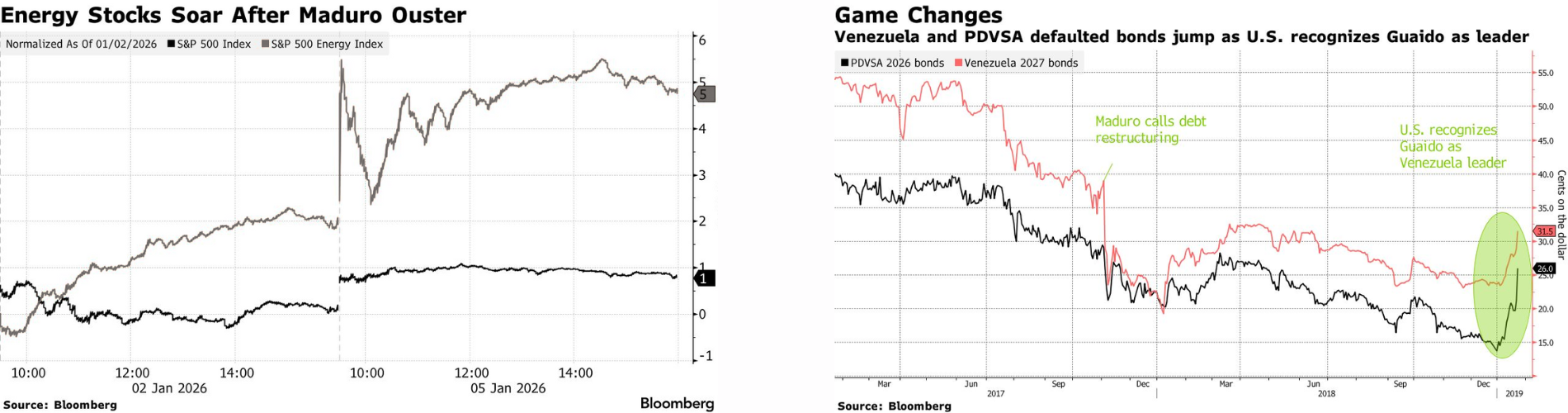
One of the most overlooked elements of this story is the bond market. Venezuela market currently has roughly $60 billion in defaulted sovereign and state-oil debt outstanding, and when arbitration claims and bilateral obligations are included, estimates place total external liabilities between $150 billion and $170 billion.
To put that into perspective:
- Estimated GDP: about $82.8 billion
- Implied debt-to-GDP ratio: roughly 180%–200%
That is an extraordinary burden. And yet, even within that context, some Venezuelan bonds have begun climbing in price. Certain issues have moved from around 31.5 cents on the dollar to above 40 cents, still distressed, but clearly repriced.
This isn’t recovery. It’s speculation on potential restructuring.

3. Illiquid Market Dynamics Amplify Moves
This is the most important point, and the one most casual observers miss. Venezuela’s stock market is extremely small and thinly traded. In markets like this:
- Daily trading volume is low
- Order books are shallow
- Institutional participation is limited
That means even modest buying pressure can move prices dramatically because there simply aren’t enough sellers to absorb demand.
In market-microstructure terms, this is called high price impact elasticity, where marginal trades disproportionately influence price. It’s common in frontier markets and explains why rallies can look spectacular without reflecting underlying economic strength.
The Oil Factor: Important but Misunderstood
Many investors assume Venezuela’s market rally must be tied to oil prices. Surprisingly, that’s not the case. Global crude benchmarks have remained relatively stable:
- Brent crude: about $60–$61 per barrel
- WTI crude: about $57–$58 per barrel
These are not boom-level prices. Yet energy companies with Venezuelan exposure have still rallied:
- Chevron: roughly +6%
- ConocoPhillips: roughly +5.7%
- ExxonMobil: roughly +3.1%
This tells me the move isn’t about oil demand, it’s about future access to oil assets if political conditions change. Venezuela Markets are pricing possibilities, not production.
Also Read: Trump’s 25% Tariff Threaten India’s $1.2B Exports
Structural Reality Check
Even optimistic scenarios must confront hard numbers.
Analysts estimate Venezuela market would need roughly $50 billion–$60 billion in investment just to restore its oil infrastructure to meaningful capacity. Years of underinvestment, sanctions, and operational decline have severely degraded output capability.
That’s before considering:
- Legal claims from creditors
- Arbitration awards
- Infrastructure damage
- Institutional rebuilding
In other words, even if everything goes right, recovery would likely take years, not months.
Who Is Actually Buying?
From what I’m seeing across market reports and institutional commentary, the buyers aren’t retail investors chasing headlines. They are mostly:
- Distressed-debt funds
- Hedge funds
- Frontier-market specialists
- Emerging-market asset managers
These players aren’t betting on Venezuela market becoming stable tomorrow. They’re betting that assets priced for collapse can rise sharply if collapse is avoided. That’s a very different thesis from long-term economic optimism.
My Interpretation as an Investor
Whenever I analyse a situation like this, I separate it into two categories:
Tactical Opportunity: Short-term trades based on sentiment shifts, political events, or liquidity flows.
Structural Opportunity: Long-term investment supported by improving fundamentals. Right now, Venezuela clearly falls into the first category. The rally appears tactical, speculative, and headline-driven rather than the beginning of a durable re-rating cycle. That doesn’t mean profits can’t be made, it just means risk is unusually high, and timing matters more than fundamentals.
Why Most Investors Should Be Careful
Even if the upside sounds exciting, several barriers remain:
- Direct access to Venezuelan markets is limited
- Liquidity risk is extreme
- Policy reversals could erase gains overnight
- Currency instability adds another layer of volatility
For most investors, exposure if any would make sense only through diversified emerging-market or distressed-asset strategies rather than direct bets.
What I’d Personally Do
If I were allocating capital to a situation like this, I would:
- Keep position size very small
- Treat it as speculative, not core investment
- Track political developments weekly
- Set strict exit rules
Frontier opportunities can be profitable, but only when risk is managed aggressively.
Final Thoughts
The recent Venezuela market surge is one of the most fascinating financial stories unfolding right now. After years of being written off entirely, the country has suddenly become a speculative focal point for global capital.
But as I see it, the rally isn’t proof of recovery. It’s proof of how quickly markets can move when expectations change, especially in small, illiquid systems where sentiment drives price more than fundamentals.
For sophisticated investors, this is a case study worth watching closely. For everyone else, it’s a reminder that the biggest percentage gains often come with the biggest hidden risks.
Also Read: Venezuela Bond Bet Pays Off With 30% Gain
Disclaimer
This article is for informational purposes only and does not constitute financial, investment, or trading advice. Investing in frontier or distressed markets involves substantial risk, including potential loss of capital. Always consult a licensed financial advisor before making investment decisions.

Himani Soni
I’m Himani Soni, a finance content strategist with 2+ years at Investik Future. I decode market trends and simplify complex investing concepts into clear, actionable insights for the everyday investor.