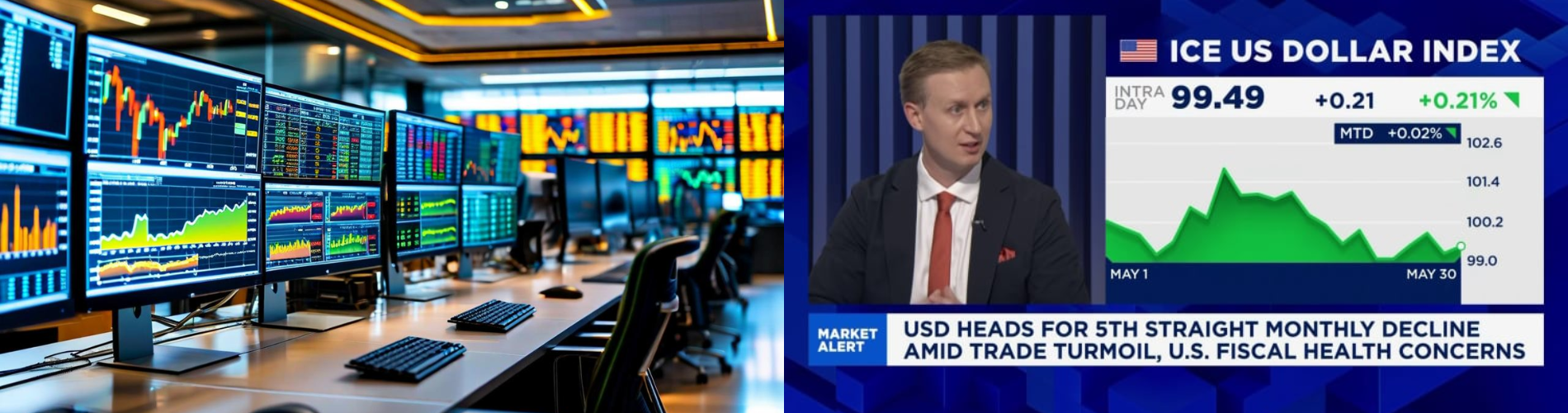

There are mornings in the market when price action feels mechanical, and then there are mornings like this, where every tick seems tied to something much bigger than just earnings or data. As I sit down tracking European markets today, I can’t help but feel that we’re not just reacting to numbers, we’re reacting to narratives unfolding in real time.
European stock markets are expected to open slightly higher this Tuesday. On paper, it looks modest. The UK’s FTSE is likely to open flat, while Germany’s DAX and France’s CAC 40 may inch up by around 0.2%. Italy’s FTSE MIB also seems set for a slightly positive start. But if you’ve been in the markets long enough, you know this already: small moves often hide big stories.
This article talks about the slight positive opening outlook for European markets, but more than that, it has to go through the macro-global things in this move. It points to increasing political tensions in the U.S. involving Federal Reserve Chair Jerome Powell and tariff threats from Donald Trump, as well as geopolitical concerns over Iran. But for now, ahead of U.S. inflation data and soon after bank earnings, investors are cautious on the overall market despite that positive start.
A Calm Opening For European Markets With Uneasy Undercurrents
At first, the setup feels stable. There’s no major economic data expected out of Europe today, and earnings calendars are relatively light. That usually means markets drift, or at least, that’s what textbooks would suggest. But markets are rarely that simple.
This week didn’t begin with just economic optimism; it began with a mix of geopolitical tension and institutional uncertainty. And in my experience, that combination tends to linger beneath the surface, even when indices appear calm.
The Powell-Trump Tension: Why It Matters More Than It Seems
One of the biggest developments I’m watching right now is the situation involving the U.S. Federal Reserve Chair, Jerome Powell. There have been reports of a criminal investigation related to him, which Powell himself has called an effort by former President Donald Trump to bend the central bank to his will. More crucially, Powell has shown he doesn’t intend to resign before his time is up.
Now, if you are asking why that matters for European markets, this is the way I see it: Central banks are supposed to be independent. Any doubt on that independence has had wide-reaching effects across global financial systems.
As an investor, I have learned that markets do not just respond to policies; they respond to the credibility of the institutions behind those policies. If confidence in the Federal Reserve falters, even a little bit, it doesn’t remain contained to the U.S. It travels into currencies, bond yields and ultimately equities, continent by continent.
Iran Tensions: The Geopolitical Layer Investors Can’t Ignore
Alongside the institutional story, there’s also a geopolitical narrative building up, this time centred around Iran. Reports of protests and the subsequent response by authorities have added a layer of uncertainty. But what’s caught my attention more is the warning from Donald Trump: countries doing business with Iran could face a 25% tariff on trade with the U.S.
That’s not a small statement. Trade threats like these rarely remain theoretical. Even if they don’t materialise immediately, they introduce hesitation into global trade flows. And hesitation, in markets, often translates into volatility.
From my perspective, this is where things get interesting and slightly uncomfortable. Because while European indices might open higher today, they’re doing so against a backdrop of rising geopolitical risk. That disconnect is something I always pay close attention to.
Also Read: Trump’s 25% Tariff Threaten India’s $1.2B Exports
Asia’s Strength vs. U.S. Caution
Another piece of the puzzle comes from Asia, where markets traded higher overnight. That kind of momentum often spills into European sessions, at least initially. But then there’s the U.S., and the picture there is a bit more cautious. U.S. stock futures have slipped slightly as investors wait for two key triggers:
- Inflation data
- Major bank earnings, including JPMorgan
Now, if you’ve followed markets closely, you’ll know that inflation data isn’t just another release; it’s often the data point that resets expectations.
The upcoming report is expected to show a 2.7% rise in prices over the past year. That number might not sound dramatic, but in the current environment, even small deviations can shift rate expectations significantly. And when rate expectations shift, everything else follows.
Why I’m Watching Inflation More Than the Indices
Personally, I find myself paying less attention to the opening ticks of the FTSE or DAX today and more attention to what comes next. Because inflation data out of the U.S. will likely dictate:
- Interest rate outlook
- Currency movements
- Risk appetite globally
And that includes Europe. If inflation comes in hotter than expected, we could see a pullback in risk assets. If it’s softer, markets might extend their gains. Either way, today’s slight uptick in European markets feels more like a placeholder than a definitive move.
A Market Driven by Narratives, Not Just Numbers
One thing I’ve realised over the years is that markets don’t move in isolation. They move in context. And right now, the context includes:
- Political pressure on central banks
- Rising geopolitical tensions
- Trade uncertainty
- Upcoming macroeconomic triggers
That’s a lot for markets to process. So when I see European indices expected to rise by 0.2%, I don’t just see optimism, I see resilience. But I also see caution. Because rallies built on uncertain ground can be fragile.
How I’m Positioning Myself Right Now
This is the part where I step back and ask myself a simple question: Am I reacting to the move, or preparing for what could follow? Right now, I’m leaning toward the latter. I’m not following up on the initial advances in European markets. Instead, I’m:
- Watching inflation data closely
- Follow the developments around the Fed’s credibility
- Monitoring geopolitical headlines, especially those related to Iran
In markets like this, I’ve learned that patience usually outperforms impulsiveness.
Key Things I’m Focusing on as an Investor
If you’re tracking markets today, here’s my breakdown:
- Don’t overreact to small moves: A 0.2% rise doesn’t define the trend; it just sets the tone.
- Focus on what’s coming next: Inflation data and U.S. earnings will likely matter more than today’s European open.
- Watch the narrative shifts: Political and geopolitical developments are shaping sentiment more than usual.
- Stay flexible: This isn’t a market where rigid strategies work well.
Final Thoughts: A Quiet Start, But Not a Quiet Market
As European markets prepare for a slightly higher open, it’s tempting to assume stability. But from where I stand, this doesn’t feel like a calm market; it feels like a market waiting. Waiting for data. Waiting for clarity. Waiting for the next headline that could change everything.
And during times like these, I keep reminding myself: Some of the most significant moves in the market aren’t occurring right now, but are actually quietly being prepared for on the sidelines.
Also Read: Venezuela Market Surge 130%: Huge Opportunity or Risk?
Disclaimer
This article is meant for informational/educational purposes only, and expresses personal opinions and understanding of market dynamics. It must not be treated as financial advice. Investors are advised to conduct their own research or consult a financial advisor before making any investment decisions.

Himani Soni
I’m Himani Soni, a finance content strategist with 2+ years at Investik Future. I decode market trends and simplify complex investing concepts into clear, actionable insights for the everyday investor.