
I’ve been following the movements in the US bond market closely over the past few days, and something interesting caught my eye. US Treasury yields, particularly those on the benchmark 10-year, have begun to ease. At first, it seemed like just another part of the usual up and down fluctuations we see from month to month, but when I tied its meaning in with last week’s inflation numbers, a much larger story emerged.
For me, this isn’t just about yields moving slightly. It’s about what that means for interest rates, the equity markets and ultimately the global flow of capital, something that instantly concerns investors like us sitting here in India.
In this article, I explain why US Treasury yields are dropping following the latest inflation data, which has been a touch softer than expected. I also explain what this means for interest rates, stock markets and global investors, as well as what I’m personally keeping an eye on next.
A Subtle Drop in US Treasury Yields, But a Strong Signal
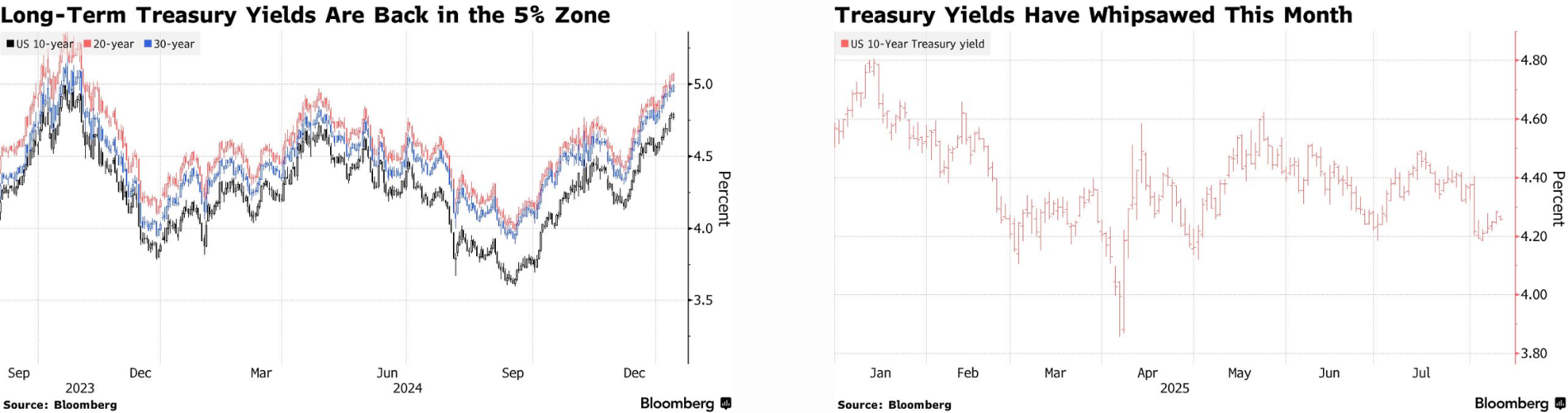
The benchmark 10-year US Treasury yield fell to about 4.17%, after briefly hitting 4.15%, its lowest in more than a week. The 2-year yield also fell, trading around 3.52%, while the 30-year yield slumped to about 4.83%.
Now, a 1 basis point (0.01%) move in either direction doesn’t sound dramatic. But from what I have observed, bond markets do not budge for nothing. Even small changes here tend to mirror broader moves in expectations, especially for inflation and central bank policy.
And this time, the trigger was quite clear.
Inflation Data: The Real Driver Behind the Move
What caught my eye was the most recent inflation print. Core inflation rose just 0.2% month-on-month and 2.6% annually, both coming in slightly below expectations by about 0.1 percentage point. That may seem like a small miss, but in macro terms, it matters.
Meanwhile, headline inflation came in at 0.3% for the month, taking the annual rate to 2.7%, which was exactly in line with estimates. From my perspective, this is exactly what the bond market wanted to see: confirmation that inflation is easing, even if gradually.
Why Markets Reacted Instantly
Whenever inflation data comes in softer than expected, the immediate reaction is usually seen in bond yields. That’s because inflation directly influences interest rate expectations.
Lower inflation leads to less pressure on the central bank, which results in lower interest rate expectations and ultimately causes yields to fall. That’s precisely what played out here. But what I find more interesting is not the immediate reaction, it’s what this means going forward.
The Federal Reserve’s Next Move Still Uncertain
Despite this cooling trend, I don’t think the Federal Reserve is in a hurry to cut rates just yet. That said, there are still a couple of things complicating the situation:
- Inflation is still above the 2% target
- Employment data remains relatively strong
- Price pressures are still “sticky” in parts of the economy
- Broader uncertainty continues to linger
Even Jerome Powell has been circumspect in recent comments. In my view, the Fed appears more likely to “wait and watch” than it is to act hastily and ease policy.
Market Expectations vs Reality
What interests me is that the markets are already pricing in rate cuts in the future. It is now looking for two cuts of 25 basis points each, probably beginning in mid-2024.
Yes, inflation is cooling, but it’s not collapsing. Yes, the labour market is easing, but it’s not weak. This creates a situation where the Fed can afford to stay patient.
Why This Matters for Equity Investors
Whenever bond yields move, equity markets tend to react, sometimes immediately, sometimes with a lag. Here’s how I look at it:
- Falling yields generally support equity valuations
- Growth stocks benefit more due to lower discount rates
- Liquidity conditions improve slightly
But the reason behind the move matters more than the move itself. If yields fall because of slowing growth, that’s a concern. If they fall due to easing inflation, that’s more constructive. Right now, it appears to be a mix of both, which is why I’m staying cautiously optimistic.
A Layer of Uncertainty: Policy and Political Noise
Another thing I can’t overlook is the increasing uncertainty about policy and leadership. Recent events on the Jerome Powell front have made things even more uncertain. So it may not change pretty much anything in the very short run, but it does introduce a little bit of caution to markets. I have always found that even the slightest shift in central bank credibility can make a big difference to the mood of financial markets.
Global Impact: Why Indian Investors Should Care
You might wonder, why should this matter if you’re investing in India? Here’s the reality: U.S. bond yields influence global capital flows.
- Lower US yields lead to capital shifting toward emerging markets.
- Higher US yields lead to capital flowing back to safer assets.
Even a 10-20 basis point move in US yields can influence foreign investor sentiment in markets like India. Personally, I always track US yields as a leading indicator for global risk appetite.
What I’m Watching Next
- Inflation Trend Consistency: One softer print doesn’t confirm a trend. I’ll be watching if inflation continues to move closer toward the 2% target.
- Labour Market Data: A strong job market could delay rate cuts despite cooling inflation.
- Fed Communication: Any shift in tone from the Federal Reserve will be critical.
- Bond Market Direction: A 10-year yield that remains under the 4.20% threshold will suggest further validation of disinflation.
My Takeaway
From my perspective, it’s not a huge inflexion point, but it is an important signal. We appear to be entering an era in which:
- Inflation is easing toward 2-3% levels
- Rate cuts may happen, but not immediately
- Markets remain hopeful, but slightly ahead of fundamentals
For investors, now is not the time for aggressive positioning. It’s a moment for patience and selecting opportunities.
Also Read: US 10-Year Treasury Yield Slips After Strong GDP Data
Disclaimer
This article is not legal advice and strictly reflects the opinion of its author. It is not to be considered financial advice. Before investing, one should always consult a financial advisor.

Himani Soni
I’m Himani Soni, a finance content strategist with 2+ years at Investik Future. I decode market trends and simplify complex investing concepts into clear, actionable insights for the everyday investor.