
As I monitored the markets on Monday, the overall feeling in Asia was decidedly upbeat. The trading week had started on a strong footing, aided by positive cues from the United States and an improvement in investor sentiment the world over.
But underneath this confidence, I could already feel a new layer of caution starting to crystallise, mainly due to movements in energy markets and increasing geopolitical tensions over Iran.
This article will explain why Asian markets closed out the week with a bang, what part the US economic data played, and how surging oil prices and tensions in Iran shaped global sentiment. It also pointed to the major events that investors were monitoring, and what those developments meant at the time.
Why Asian Markets Opened Higher
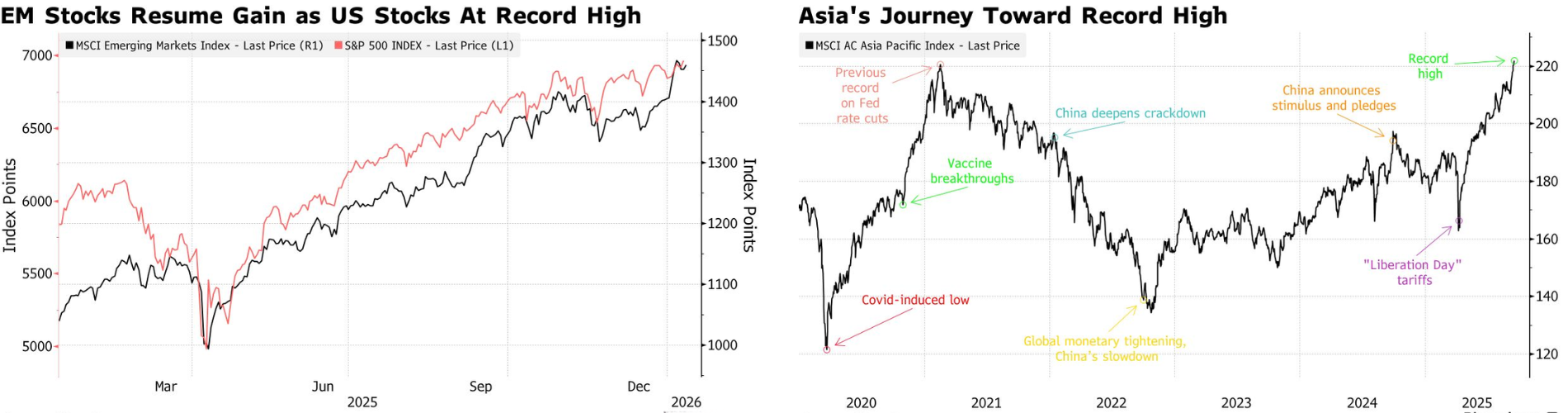
The strong start across Asian markets was not without cause. This was after a strong session on the US last Friday, with major indices pushed higher. The S&P 500 had reached a fresh record high, gaining around 0.6%, while the Nasdaq 100 rose close to 1%. This momentum carried over into Asian trading at the start of the week.
- Hang Seng futures in Hong Kong were up by about 0.6%
- Australia’s S&P/ASX 200 gained roughly 0.3%
- Japan’s markets remained closed due to a public holiday
From my perspective, this was a classic example of how global sentiment flows; strength in US markets often sets the tone for Asia, especially at the start of the week.
US Jobs Data Provided Key Support
One of the major factors supporting this optimism was the latest data from the US labour market. Although the total number of new jobs is marginally lower than expected, what I noticed was a reducing unemployment rate of 4.4%, which emerged as a great signal for me.
As an investor, I saw this as a well-balanced indicator, just strong enough to sustain economic growth but not overheated enough to prompt aggressive rate hikes or create a recession risk. If true, that would suggest the US economy was holding steady, which in turn was helping to boost confidence throughout global markets.
Temporary Relief on Trade Policy Uncertainty
Another factor that supported sentiment at the time was the lack of an immediate US Supreme Court decision regarding Donald Trump’s tariffs’ legality. While this issue remained unresolved, the absence of a ruling effectively reduced short-term uncertainty for businesses and investors.
From my point of view, this did not eliminate the risk; it simply delayed it. However, in the context of market sentiment, even temporary clarity was enough to provide support.
Also Read: Trump Tariffs Could Threaten $86B India-U.S. Trade
Why Iran Was Back at the Centre of Oil Markets
While equity markets were showing strength, the situation in the oil market told a more cautious story. Oil prices had been rising steadily, marking their longest weekly gain since the previous summer. The main motivation for doing so was the situation in Iran that continued to escalate. At the time, reports indicated:
- Intensifying protests across the country
- Internet restrictions imposed by authorities
- Increasingly strict government crackdowns
These developments were causing concern in the region. Markets started to price in the prospect that any major interruption inside Iran could affect global oil supply and change energy flows throughout the Middle East. During this period:
- Brent crude was trading in the range of $62.40-63.30 per barrel
- WTI hovered around $58.20-59.10 per barrel
In my view, there were no extreme prices but an upward trend coupled with geopolitical uncertainty that plain investors couldn’t risk being indifferent to.
A Disconnect Between Market Calm and Global Risks
What struck me most was the divergence between relatively stable equity markets and a deteriorating geopolitical environment. Stock markets remained resilient despite the risk building in the background.
Global geopolitical tension was at its highest level in decades, market strategist Matt Maley wrote. I felt this observation was most apt because it caught the fragile underpinning, which wasn’t explicitly obvious during price action.
This type of dislocation often signals that markets are discounting optimism while underestimating possible dangers.
Key Events Investors Were Watching That Week
Going into the week, there were quite a few notable developments that I was closely watching for potential to sway market direction.
G7 Meeting in Washington: Finance ministers were scheduled to meet to discuss:
- Supply chain security for rare earth elements
- Efforts to reduce dependence on China
These discussions were particularly important for the global trade and manufacturing sectors.
Federal Reserve Speeches: There were expected speeches from important Federal Reserve officials, such as John Williams and Raphael Bostic. By that point, markets were looking for signs of:
- The future direction of interest rates
- The possibility of rate cuts
Even minor shifts in the tone of Fed officials could move global markets.
Economic Data from Asia: Key economic data releases were also in focus:
- South Korea’s export data
- India’s inflation figures
Such indicators were critical to understanding regional growth trends and demand conditions.
Cryptocurrency Market Saw Mild Correction
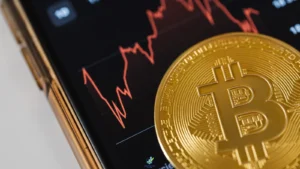
Even as equity markets were climbing, the cryptocurrency market displayed a minor reversal. Bitcoin was priced at approximately $90,482, falling by about 0.2%. To me, this looks like a minor correction, not so much a trend change, perhaps reflecting just caution in light of wider macroeconomic and geopolitical developments.
Also Read: Asia’s Worst-Performing Currency Expected To Remain Weak In 2026
What This Meant for Investors at the Time
Looking at the overall picture, I believe the market environment requires a balanced approach.
On one hand:
- Strong US data supported global equities
- Market momentum remained intact
On the other:
- Higher oil prices created risks of inflation
- Geopolitical tensions introduced uncertainty
For me, this wasn’t a period to be super aggressive; it was more about being selective and realising the potential for volatility triggers.
Final Thoughts
At the start of that week, markets appeared confident, supported by solid economic data and positive global cues. However, the situation in Iran and the steady rise in oil prices served as important reminders that risks were building beneath the surface. As I saw it then, the environment was defined by optimism, but one that required caution and close attention to unfolding global developments.
Also Read: Asia-Pacific Markets Surge as Gold Hits $4,530 Record High
Disclaimer
This article is for informational purposes only and reflects personal opinions. It should not be considered financial advice. Investors are advised to conduct their own research or consult a financial advisor before making investment decisions.

Himani Soni
I’m Himani Soni, a finance content strategist with 2+ years at Investik Future. I decode market trends and simplify complex investing concepts into clear, actionable insights for the everyday investor.