
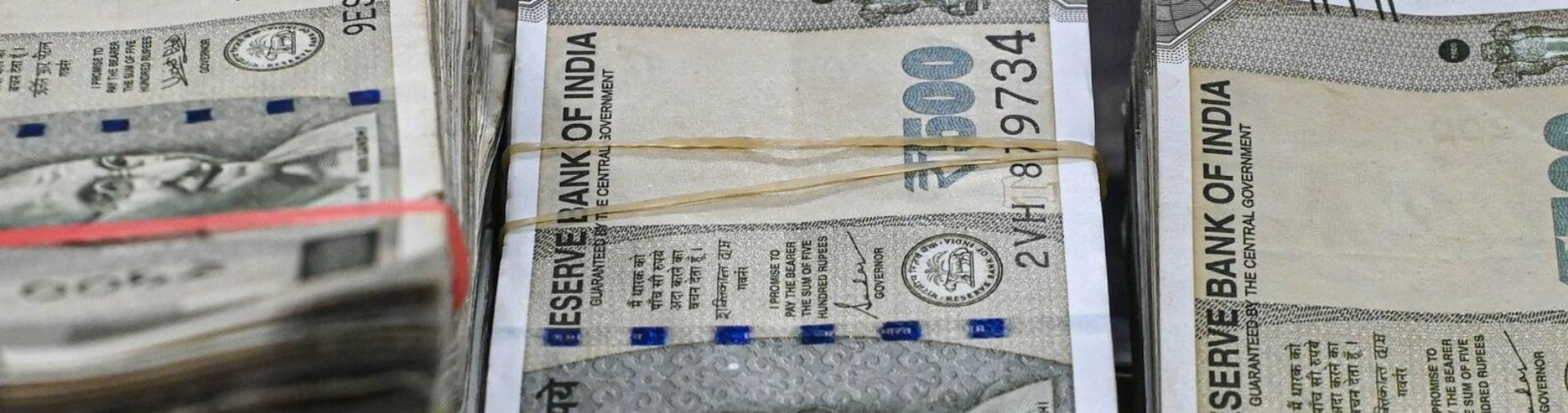
I never thought I’d be writing so much about the USD/INR exchange rate, not because it isn’t important, but because the rupee’s story over the past year has been one of slow-motion tension, not sudden shock. Yet here we are: the rupee, once comfortably in the mid‑80s against the U.S. dollar, has now settled persistently above ₹90, a psychological threshold investors rarely want to see broken, and is widely being called Asia’s worst‑performing currency in 2025 and early 2026.
In this article, I’m going to talk about why this is happening, why it matters more than most people realise, and how I’m personally interpreting the latest data and projections, both for traders and ordinary investors alike.
Why the Rupee Is Asia’s Weakest Currency
I want to start with a clarification: India’s economy is still growing. Growth rates remain robust compared to most peers, inflation is under control, and long‑term fundamentals are solid. But the way the rupee behaves isn’t just a reflection of economic growth; it’s a reflection of capital flows, trade dynamics, and global sentiment.
What’s striking to me is the extent to which two specific factors have dominated the rupee’s narrative in 2025 and into 2026:
- A stalled U.S.-India trade deal
- Persistent foreign portfolio investment (FPI) outflows
Let’s know more about both.
The U.S.-India Trade Deal That Never Arrived
I’ve been monitoring ongoing trade negotiations between India and the United States for months, and the biggest takeaway is this: no clarity has been the worst clarity of all.
Tariffs on Indian exports to the U.S. rose aggressively last year under the Trump administration’s policies, reaching levels as high as 50% on key products. These levies are far above what India’s competitors face and have directly dampened export growth to America, India’s largest export partner.
Instead of a clear path to tariff reductions, what we’ve seen is talk, optimism, negotiation, and delay, a combination that markets hate. In trade negotiations, clarity equals confidence. When firms and investors don’t know what trade terms they will face in six months, they avoid long‑term exposure. And that hesitation ripples, especially when the tariff differential is huge.
From where I sit, this uncertainty has become the main tag‑along driver of the rupee’s weakness, even more than macro data like GDP growth or inflation. Because let’s be clear: companies want to export, investors want certainty, and both are hurt when the future feels hazy.

Foreign Money Is Leaving, And That Matters
If the trade stalemate wasn’t enough, there’s another story playing out in plain sight: foreign investors have repeatedly sold Indian stocks and bonds.
According to recent analyses and central bank indicators, foreign portfolio investors have pulled out significant capital from Indian markets in 2025 and early 2026, contributing to downward pressure on the rupee.
In practical terms, this means:
- Foreign investors sell Indian assets
- They convert INR back to USD
- That increases demand for the dollar
- The rupee weakens
It’s a feedback loop that amplifies currency moves.
Now, I want you to consider something: this isn’t just an institutional story. For every import bill you pay in dollars, for every airline ticket priced in USD, and for any travel or overseas education expense, a weaker rupee directly affects your wallet. When foreign money leaves, it’s not a theoretical statistic; it’s a real cost for real people.
Also Read: India-EU FTA: What a $50 Billion Trade Opportunity Means for the Next Decade
How I See Recent Trends
Let’s look at what’s happening right now, not just in abstract terms:
- The rupee has repeatedly tested and remained above the ₹90/$ mark in recent sessions, a level market pundits once thought would hold as a floor.
- The volatility is still high, and some short-term traders are expecting to see the range of ₹90.50-₹91.50 unless something changes on the trade front.
- Meanwhile, intervention from the Reserve Bank of India (RBI), through forward operations and dollar defence tools, appears to be managing volatility rather than reversing the trend outright.
These are not just numbers; they reflect sentiment. Traders and institutions alike are pricing in continued uncertainty until the U.S.-India trade deal becomes more concrete.
What Does This Mean for You and Your Money?
So what does a weak rupee actually mean for everyday investors or individuals who aren’t FX traders?
- Imported Goods Become Pricier: From electronics to fuels, services quoted in foreign currencies have effectively become more expensive in INR. That’s inflation in disguise.
- Exports May Become Competitively Cheaper: There is a silver lining: the country’s exporters could be winners in a weaker rupee, as their goods would become cheaper for people to buy from overseas. This is one reason why exporters generally would prefer a gentle depreciation.
- Market Sentiment Gets Impacted: Foreign fund outflows can put downward pressure on market returns, making it difficult for local investors to find stable returns.
- Policy Response Matters: If the RBI allows the rupee to “find its level” rather than defending a specific band, then we have to consider the possibility of structural depreciation, not just short‑term noise.

My Personal Investor Takeaway
Here’s my transparent view:
- I believe the rupee’s weakness right now is not a reflection of weakness in India’s economy, but a reflection of unresolved global and trade dynamics.
- The key driver isn’t inflation or GDP, it’s capital flows and policy uncertainty.
- Of all things that could strengthen the rupee, the trade deal with the United States remains the most impactful catalyst.
- Until that clarity arrives, I expect volatility to persist.
Some analysts project the rupee reaching 92 to 93 against the dollar if external pressures continue. Conversely, if the U.S.-India deal progresses meaningfully, forecasts suggest the rupee could stabilise or strengthen near the 89‑level territory.
A Practical Footnote: What Should You Watch?
If you track this yourself as I do, here are a few key levels and events to keep an eye on:
- Trend line around ₹90‑91: a psychological and technical zone
- FPI flow data (NSDL/SEBI reports): these provide early signals
- U.S.–India trade talks updates: real negotiations matter more than rumours
- RBI policy statements & intervention cues
Final Thoughts
The rupee’s journey in 2025‑26 has shown me that currency strength isn’t determined solely by India’s macroeconomic fundamentals; sentiment, trade negotiations, and foreign capital flows play an equally important role. If the U.S.- India trade deal progresses meaningfully and foreign investment stabilises, the rupee’s outlook could improve faster than many expect. Until then, the market is likely to remain volatile, reflecting a structural realignment in how global investors view India.
Also Read: Rupee Opens at 90.65 Against Dollar: What It Means
Disclaimer
I am not a licensed financial advisor. This material has been prepared for informational and educational purposes only, and is not intended to provide, and should not be relied on for, financial or accounting advice. Readers are encouraged to do their own research or consult with a professional before making any investment, trading, or financial decision.