If there’s one tech‑energy development from 2025 that genuinely made me sit up and reflect on the future of AI + energy infrastructure, Octopus Energy’s decision to spin off Kraken Technologies as an independent business. When I first read the announcement, I wasn’t just intrigued; as someone who tracks innovation, sustainability, and markets, I was excited. Not because it was a headline grabber, but because it feels like a defining moment at the intersection of artificial intelligence and real-world utility services.
In this article, I’ll walk you through why this spin-off matters, what it means for Octopus, Kraken, the broader energy market, and, importantly, how this kind of structural shift could shape investor sentiment in tech and energy stocks.
A Personal Reaction: More Than Just a Corporate Shuffle
At first glance, the news sounds simple: Octopus Energy is demerging Kraken Technologies, following a large strategic investment that values Kraken at $8.65 billion (£6.4 billion). But if you peel back the layers, there’s so much more happening here.
I see three major themes:
- Tech is becoming the core of utility businesses
- AI as a value-creation engine, not just a buzzword
- The potential for a significant public market debut
In a world where most legacy utilities lag in digital transformation, Kraken has become a standout example of software redefining an entire industry.
What Exactly Is Kraken Technologies?
Kraken isn’t just another software tool. At its heart, it’s an AI-driven energy platform, built to automate and optimise the operations of energy providers. Think of it this way:
- Instead of humans manually handling billing and customer service, Kraken’s system takes over.
- Instead of inefficient demand forecasting, Kraken uses AI models to optimise usage patterns.
- Instead of siloed billing and engagement channels, everything is connected, data-driven, and predictive.
Kraken now serves 70 million household and business accounts around the world, which really underscores how far energy tech has evolved. The broader international adoption beyond just Octopus convinced me this wasn’t a short-lived internal project.
Why the Spin-Off Decision Was Inevitable
From my perspective, the strategic investors stepping in, including a $1 billion stake purchased by New York-based D1 Capital Partners, signalled that Kraken had outgrown its role as a subsidiary unit.
Let’s be honest: energy competitors often don’t want to rely on a utility rival’s in-house software platform. By spinning Kraken into a standalone entity:
- It gains credibility as a neutral technology provider
- It can sell into markets that Octopus itself couldn’t
- It can expand faster, with fewer ties to a single utility brand
I remember thinking: “This isn’t just growth, this is positioning for global market leadership.”
The Value of Strategic Investors
When investors put serious capital into a company, it reflects more than belief; it reflects expectation. A $1 billion investment at an $8.65+ billion valuation tells us:
- Investors see enduring long-term revenue potential
- They believe Kraken’s tech can scale globally
- They think the software will disrupt traditional utility models
Other investors include Fidelity International and a unit of Ontario Teachers’ Pension Plan, while Octopus will maintain a 13.7% stake in Kraken.
AI and Energy: A Bond That’s Here to Stay
Kraken’s role isn’t peripheral. It’s central:
- AI is now managing millions of customer interactions daily
- AI is optimising peak and off-peak usage
- AI is helping utilities become more cost-efficient and customer-centric
If you’re an investor wondering where AI meets real-world value, Kraken is one of the clearer answers
Also Read: AI In 2026: Money Makers Vs Tech Builders
The IPO Conversation: London vs. US Markets
One of the interesting tangents from the announcement is the possibility of an IPO in either London or the United States.
From where I sit:
- A London listing would be symbolically powerful for European tech markets.
- A U.S. listing could unlock deeper liquidity and broader tech investor access.
Octopus founder Greg Jackson mentioned that Kraken could list “in the medium term” depending on investor support and stock exchange readiness.
What This Means for Octopus Energy Itself
While Kraken steps into independence, Octopus isn’t losing value; it’s refocusing it. A chunk of the capital from the investment goes back into Octopus to fuel growth, which comes at a critical time:
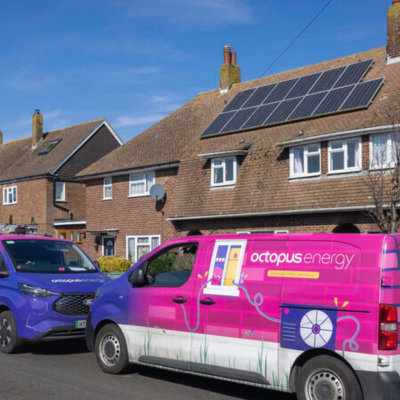
- Octopus recently served 7.7 million households, surpassing British Gas as the UK’s largest energy supplier.
- The company reported a £260 million pre-tax loss, compared with a £78 million pre-tax profit a year earlier, mostly due to warmer weather and reduced energy demand.
This capital injection will almost double Octopus Energy Group’s already strong balance sheet, giving it financial flexibility to navigate challenging market conditions.
Beyond the Headlines: What Investors Should Watch Next
Here’s what I’ll be keeping an eye on:
- Kraken’s Client Growth Outside Octopus: Utility clients adopting Kraken means recurring revenue outside a single business unit, very SaaS-like growth.
- Regulatory Signals Around AI in Energy: As governments grapple with AI regulation, technologies like Kraken’s could become part of national strategy, not just corporate utility.
- IPO Milestones & Valuation Trends: Pre-IPO rounds, secondary market activity, and institutional interest will be key leading indicators.
My Takeaway: A Watershed Moment for AI in Real Infrastructure
I don’t say this lightly: Kraken’s spin-off signals a new chapter in how we value AI in utility sectors.
When a tech unit built on real operational AI, not just theoretical models, separates with strong validation, the message is that AI applied to deeply entrenched industries can create massive economic value.
Disclaimer
The views expressed in this article are my personal interpretations and should not be taken as financial advice. Always do your own research or consult a financial advisor before making investment decisions.