
When I track global inflation trends, I usually expect some level of volatility, especially in export-driven economies. But the latest data from Singapore caught my attention for a different reason: stability. At first glance, steady consumer inflation might sound uneventful. From an investor’s lens, though, it can signal something much more powerful balance.
In this article, let me walk you through what I’m seeing, why it matters, and how I interpret these numbers as someone constantly scanning global macro signals for opportunity.
Inflation Came In Cooler Than Expected, And That Matters
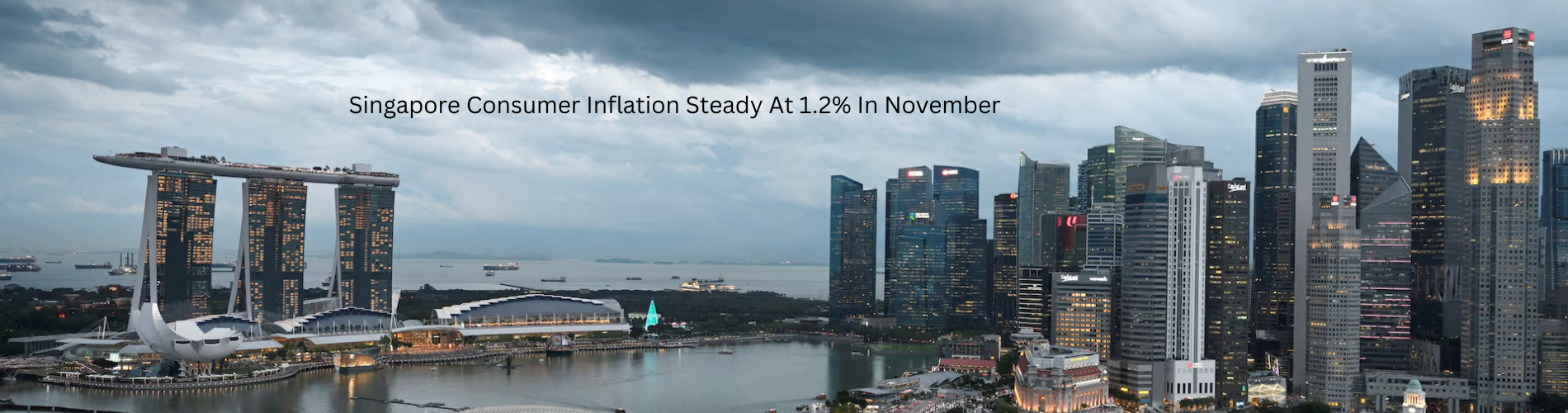
Singapore’s November inflation held steady at 1.2% year-on-year, slightly below economists’ expectations of 1.3%. On paper, that difference looks tiny. In reality, even a tenth of a percentage point miss can shift market sentiment, especially in economies where inflation is already low.
What struck me wasn’t just the number itself. It was why inflation stayed contained. Higher prices in services, especially transport and insurance, were offset by a sharper drop in electricity costs. This tells me two important things:
- Domestic demand hasn’t collapsed.
- Supply-side pressures are easing.
That combination is rare. Usually, inflation drops because demand weakens. Here, the story is more nuanced.
Singapore Consumer Inflation Shows Core Stability
Core inflation, which excludes accommodation and private transport, also printed at 1.2%, again below expectations. I pay close attention to core readings because they strip out volatile components and reveal the true direction of price pressure.
In this case, the takeaway is clear: underlying inflation isn’t accelerating. It’s steady. For policymakers, steady core inflation is almost ideal. It means they don’t need aggressive tightening or emergency stimulus. For investors like me, it signals predictability, and markets love predictability.
Services Inflation Rose, But Not in a Bad Way
One detail many headlines gloss over is that services inflation rose to 1.9%. At first, that might sound concerning. But when I looked deeper, the increase came mainly from:
- Ride-hailing and taxi fares
- Car-pooling costs
- Health insurance
Those are demand-driven categories, not supply shocks. In other words, people are still spending. That’s not inflationary overheating, that’s economic activity holding up.
Meanwhile, retail goods inflation slowed as prices for clothing, footwear, and personal-care appliances declined. Electricity costs also fell, providing a natural counterbalance. To me, this mix suggests something rare: inflation moderation without economic weakness.
The Forward Outlook Is Surprisingly Mild
The outlook from the Monetary Authority of Singapore (MAS) reinforces that impression.
Forecasts indicate:
- Core inflation: around 0.5% in 2025, rising to 0.5%-1.5% in 2026
- Headline inflation: 0.5%-1.0% in 2025, then 0.5%-1.5% in 2026
Those are remarkably subdued projections. For comparison, many developed economies still struggle to push inflation back toward 2%. When a central bank signals inflation will remain low for years, I interpret that as a green light for stable policy conditions, not dramatic interest-rate swings.
Risks Still Exist, And I’m Not Ignoring Them
Even though the numbers look calm, MAS highlighted two potential risks I’m watching closely:
- Supply shocks from geopolitics, which could suddenly raise import costs
- Weaker global demand, which could push inflation even lower
Both scenarios matter because Singapore is deeply tied to global trade. It’s not a closed economy. It thrives when international demand is strong. So while current inflation is stable, it’s still vulnerable to external forces. For investors, that means monitoring global trade data alongside domestic indicators.
Strong Economic Data Adds Another Layer
What really made me pause was how inflation stability coincided with strong growth indicators.
Recent figures showed:
- Non-oil exports jumped 11.6% year-on-year in November (far above the expected 7%)
- GDP grew 4.2% in Q3, beating forecasts
That combination, strong growth plus low inflation, is something policymakers around the world wish they had.
The Ministry of Trade and Industry even upgraded its annual GDP forecast to around 4%, while projecting 1%–3% growth for 2026. Earlier in the year, officials had warned that zero growth was possible. To me, that revision signals confidence. Governments don’t upgrade forecasts lightly.
Also Read: Asia-Pacific Stocks Up After US Markets Hit New Highs
Policy Moves Tell Me Even More Than Data
Numbers show what happened. Policy tells us what leaders think will happen. MAS has kept monetary policy unchanged for the past two meetings after easing earlier this year. That pause suggests officials believe their earlier adjustments are working.
- If inflation were surging again, we’d see tightening.
- If growth were collapsing, we’d see easing.
Instead, we’re seeing neither. That’s usually a sign policymakers think the economy is in a “good enough” zone, not perfect, but stable.
My Personal Investor Takeaway
When I interpret macro data, I ask one question: What does this mean for capital flows?
Stable inflation, strong exports, and upgraded growth forecasts create a macro environment that tends to attract investment.
Here’s why:
- Predictable inflation reduces currency volatility
- Strong trade boosts corporate earnings
- Stable policy lowers financial risk
Put together, those factors often make a country more attractive to global investors searching for steady returns rather than speculative gains. Singapore already has a reputation as a financial haven. These numbers reinforce that perception.
Why This Matters Globally, Not Just Locally
Some readers might wonder why inflation in a small country deserves this much attention.
My answer: Singapore isn’t just any economy. It’s a global trade hub and financial centre. Its data often acts as an early signal for broader trends in Asia-Pacific commerce. If inflation stays contained there while exports rise, it could indicate:
- Supply chains are stabilising
- Energy costs are moderating
- Demand hasn’t collapsed
Those signals matter far beyond their borders.
Final Thoughts: Stability Is the Real Headline
Many investors chase dramatic numbers, spikes, crashes, and surprises. But in my experience, the most powerful signal is often stability.
Singapore’s latest inflation data doesn’t scream for attention. It whispers. And what it’s whispering is this: The economy is steady, demand is intact, and policy is under control. Those aren’t flashy signals. They’re strong ones. And when I see that combination, I don’t ignore it. I watch more closely.
Also Read: Trump Stops Wind Projects, Dominion Shares Fall 4%
Disclaimer
This article reflects personal analysis and interpretation for informational purposes only and should not be considered financial or investment advice. Always conduct your own research or consult a licensed financial advisor before making investment decisions.

Himani Soni
I’m Himani Soni, a finance content strategist with 2+ years at Investik Future. I decode market trends and simplify complex investing concepts into clear, actionable insights for the everyday investor.