Explore SIPs, mutual funds, ELSS, ETFs, fund comparisons, investment strategies, and long-term wealth creation for Indian investors.

Understanding NAV in mutual funds is essential for making informed investment decisions. Here's why a lower NAV doesn't necessarily mean a better fund.
Imagine you're comparing two mutual funds. One has an NAV of ₹18, while another has an NAV of ₹185. At first glance, the ₹18 fund might seem like the better…
Understanding the expense ratio in mutual funds can help investors compare fund costs and make better long-term investment decisions.
Most people researching mutual funds spend their time comparing past returns, star ratings, and fund manager reputations. Almost nobody spends five minutes on the one number that's actually working against…
Understanding how mutual fund returns are calculated is easier when you know the difference between Absolute Return, CAGR, and XIRR.
A mutual fund showing a 15% return doesn't automatically mean it performed better than one showing 12%. The real question isn't just how much your investment has earned; it's how…
Mid-Cap vs Small-Cap Mutual Funds compared through market research, historical performance analysis, and investment planning to help investors understand risk and return differences.
If you're exploring equity mutual funds in India, you've likely come across two categories that sit above large-cap funds on the risk spectrum: mid-cap and small-cap funds. Both offer higher…

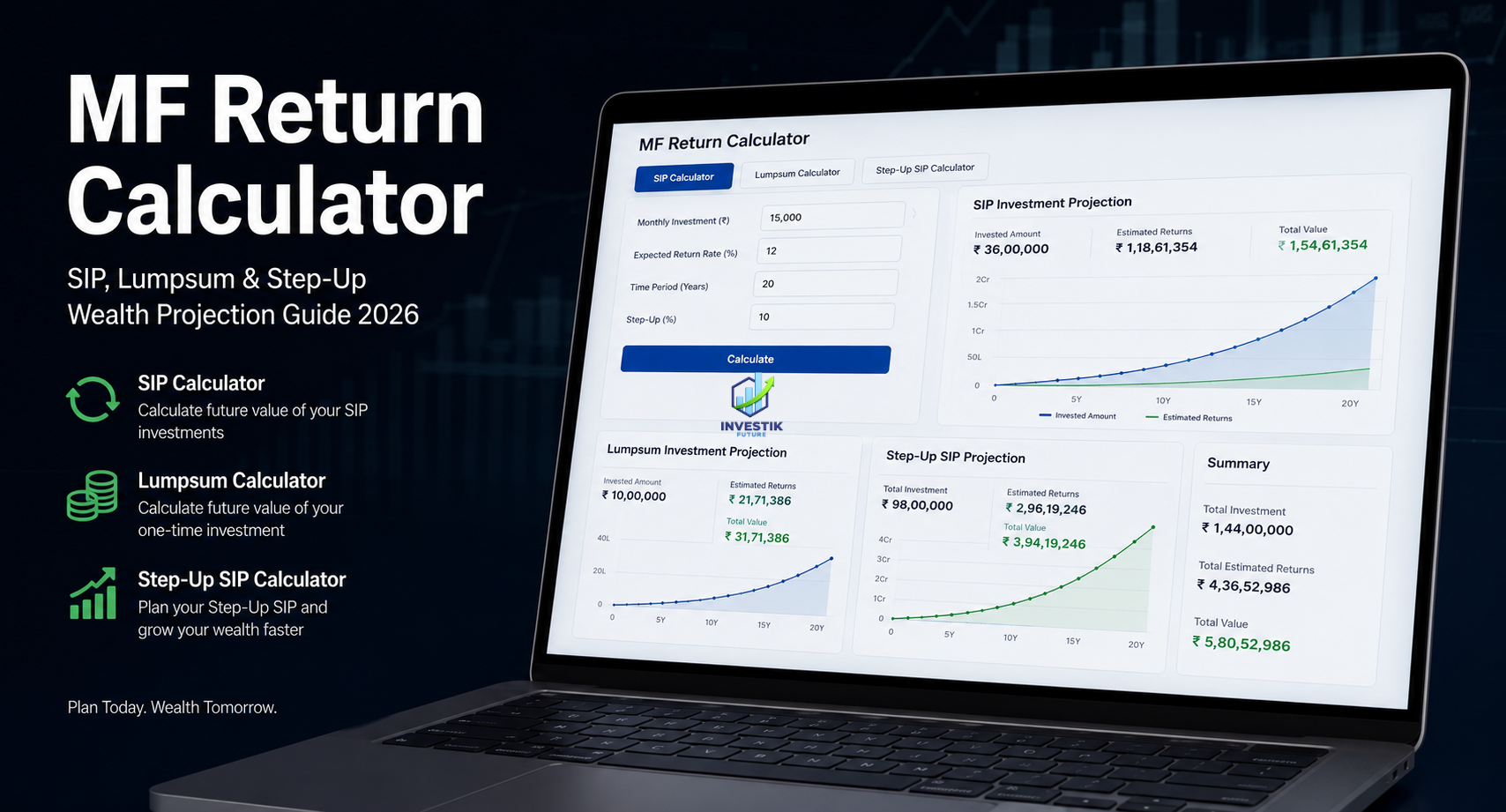
Use an MF Return Calculator to visualise long-term wealth creation through SIP, lumpsum, and step-up investing strategies.
Every serious Indian investor today asks one question before committing money: "How much will my investment actually be worth?" The answer lies in using an MF Return Calculator, a simple…

A data-backed analysis of the best performing mutual funds in India covering top 10 funds, SIP returns, risk ratings, and investor suitability across every major category.
India's mutual fund industry crossed ₹60 lakh crore in Assets Under Management (AUM) in 2024. By 2026, the sector has expanded further, driven by rising SIP participation, digital investing platforms,…
Understanding Equity Mutual Funds: Categories, Risk, Returns & SIP Strategy for Indian Investors
If you have ever asked what are equity mutual funds, or wondered which is better, SIP or equity, you are already thinking about the most important wealth-building question of your…

Compare the cheapest flexi cap funds in India for 2026 by expense ratio, returns and risk. Find low-cost direct plans that keep more of your money invested.
The cheapest flexi cap funds often outperform expensive alternatives over the long term for a simple reason: lower costs. A flexi cap fund with a 1.5% expense ratio and one…