
On September 16, 2026, the US Federal Reserve raised its key interest rate by 25 basis points, taking it to a new range of 3.75%–4.00%. A “basis point” is just a tiny unit used to measure interest rates; 100 basis points equal 1%. So a 25-basis-point move is a quarter of one percent.
This might sound like a small, faraway decision made in Washington. But it isn’t. Whenever the Fed moves its rate, money around the world starts shifting, and that includes money flowing in and out of India. This is why the decision is being watched closely by Indian investors, even though it has nothing to do with India’s own central bank.
Here is what happened, why it happened, and what Federal Reserve interest rate hike could mean for Indian markets, the rupee, and your money.
What did the Federal Reserve decide?
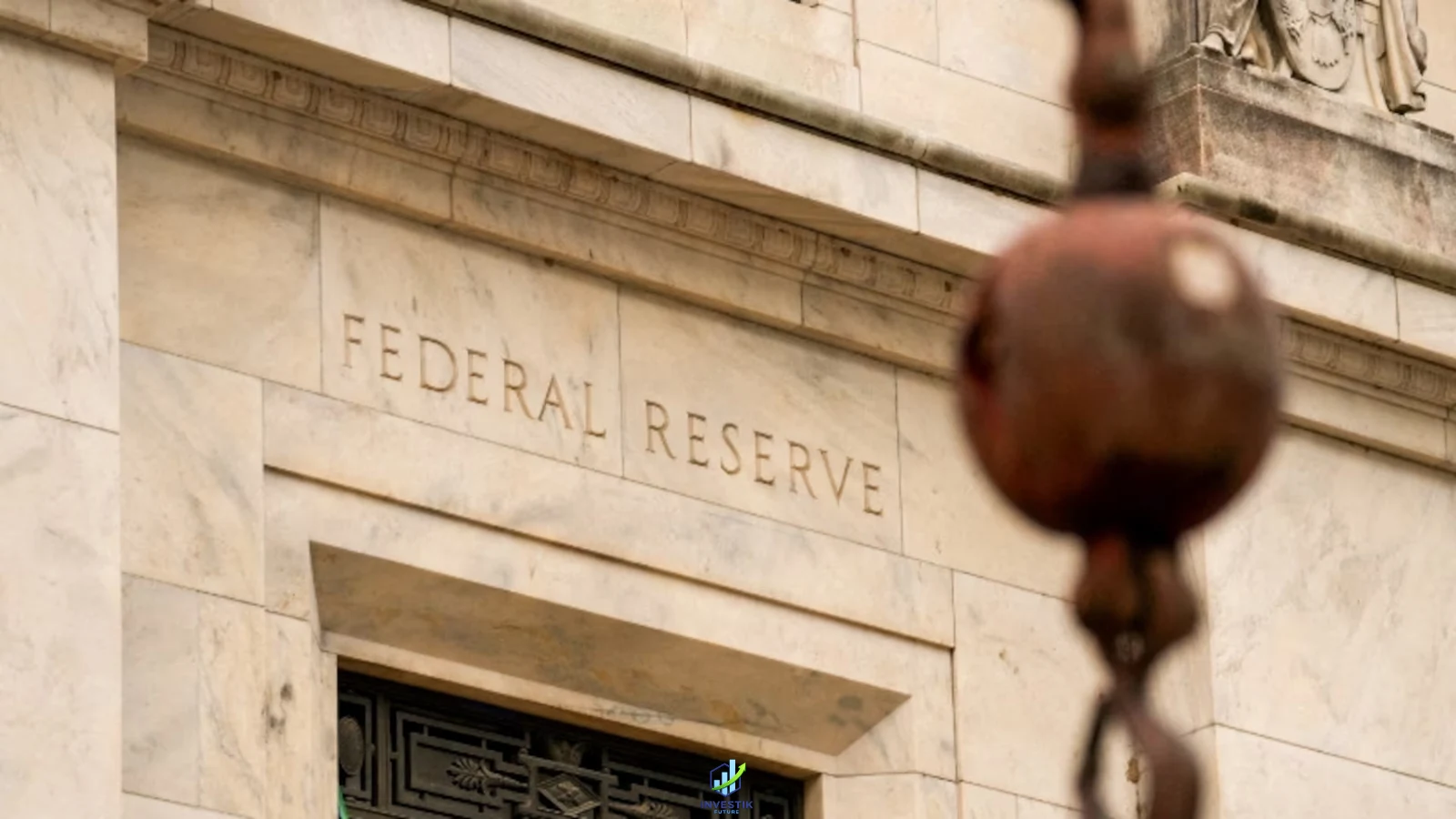
The Federal Reserve is the central bank of the United States. One of its main jobs is to set a rate called the federal funds rate. This is the short-term interest rate at which US banks lend money to each other overnight. It doesn’t sound like it should matter much to ordinary people, but it acts like a starting point for almost every other interest rate in the US economy, from credit cards to business loans to mortgages.
On September 16, 2026, the Federal Open Market Committee (FOMC), the group inside the Fed that votes on this rate, decided unanimously (12-0) to raise it by a quarter of a percentage point. This took the target range from 3.50%–3.75% up to 3.75%–4.00%.
This was the Fed’s first rate increase since 2023.
Why does this matter? Because when the Fed raises rates, it generally becomes a bit more expensive to borrow money in the US. That can slow down spending and investment there, but it can also make US assets, like bonds, more attractive to global investors, which affects money flows everywhere, including in India.
Why did the Fed raise interest rates?
According to the Fed’s own statement released after the meeting, a few things stood out:
Inflation remains elevated. Inflation means the general rise in prices over time; when inflation is high, your money buys less than it used to. The Fed said inflation is still running above its long-term target of 2%, and that this rate increase is meant to help bring inflation back down “in a timelier” way.
The economy is holding up well. The Fed noted that economic activity is expanding at a solid pace, with strong productivity growth and robust capital investment (spending by businesses on things like equipment, technology, and infrastructure).
The job market is steady. Job gains have kept up with the growing workforce, and unemployment hasn’t changed much.
Oil prices have also been an important backdrop, with elevated crude prices adding to inflation concerns. The Fed’s statement also flagged uncertainty linked to geopolitical developments, though it did not go into detail on causes of inflation beyond saying it “remains elevated.”
To be clear about what is fact and what is outside analysis: the points above about inflation, growth, and jobs come directly from the Fed’s official statement. Views from analysts about why exactly the Fed felt forced to act, such as pressure from rising bond yields, are their own interpretation, not something the Fed itself stated as a reason.
What is the Federal Reserve?
The Federal Reserve, often just called “the Fed,” is the central bank of the United States, its equivalent of India’s Reserve Bank of India (RBI). It was created in 1913, and its main goals are to keep prices stable (control inflation) and support maximum employment.
The Fed’s decisions matter well beyond America’s borders because the US dollar is the world’s most widely used currency for trade, loans, and reserves. When the Fed changes its interest rate, it affects the cost of borrowing dollars everywhere, the attractiveness of US investments compared to other countries, and the value of the dollar itself. That ripple effect is why central banks, investors, and governments around the world, including in India, pay close attention every time the Fed meets.
How does a Federal Reserve interest rate hike work?
Here’s the simple chain of events that a Fed rate hike can set off:
The Fed raises its rate, which can make borrowing more expensive in the US. This can cool spending and investment, while US bond yields may rise as investors demand higher returns. A stronger US dollar can also follow as investors seek better returns. These changes can then affect global markets, including emerging markets like India, as money moves between countries and asset classes.
A simple way to think about it: if returns on safe US government bonds go up, some global investors may decide it’s more attractive to keep their money in the US rather than in markets like India, where returns need to be weighed against additional risks like currency movements.
That said, this chain doesn’t always play out the same way every time, or immediately. Markets often move before a Fed decision, based on what investors expect to happen, which is exactly what occurred this time, since most of the September hike was already anticipated.
What does the Fed rate hike mean for the US markets?
Right after the decision and Fed Chair Kevin Warsh’s press conference, US markets reacted as follows on September 16, 2026:
- The Dow Jones Industrial Average fell about 631 points, or 1.21%, closing at 51,461.90.
- The S&P 500 slipped 0.45%.
- The Nasdaq Composite was roughly flat, down just 0.01%.
- The 10-year US Treasury yield (the return on US government bonds due in 10 years) moved back above the 5% mark.
- The 2-year Treasury yield rose to around 4.73-4.74%.
- The US dollar strengthened.
Analysts noted that markets had largely expected this rate hike, so the bigger driver of the reaction was what the Fed signalled about the future, specifically, that the Fed’s September projections pointed to a median federal funds rate of 4.1% at the end of 2026.
It’s worth separating out two things here: the sharp market reaction on the day itself is often short-term and can reverse quickly (US futures were already pointing higher the next morning), while the broader economic effect of higher borrowing costs tends to play out more slowly, over months.
What does the Fed rate hike mean for India?
This is the part that matters most for readers in India. US interest rate changes don’t directly control what happens in India, but they can influence things here through a few channels.
Indian stock markets: Higher US rates can make US bonds more attractive to global investors relative to emerging markets like India. This can affect how much money foreign investors put into or take out of Indian stocks. On September 16 itself, Indian markets actually rose: the Sensex gained 332.63 points (0.45%) to close at 74,336.45, and the Nifty 50 climbed 99 points (0.43%) to 23,217.60, as the hike had been widely expected and easing crude oil prices helped sentiment that day. This shows that a Fed hike doesn’t automatically mean Indian markets fall; the reaction depends on how much of the move was already priced in and what else is happening at the same time.
Foreign investment flows: When US rates rise, foreign portfolio investors (FPIs), big global funds that invest in Indian stocks and bonds, may reassess how much money to keep in India versus safer, higher-yielding US assets. This can add to volatility, especially if FPIs have already been selling, as has been the case in Indian markets in the days around this decision.
Indian government bonds: Rising US Treasury yields can put some upward pressure on Indian bond yields too, since global investors compare returns across countries. This can, in turn, influence borrowing costs in India over time.
The Indian rupee: A stronger US dollar can put pressure on the rupee, although the relationship is not automatic. More on this below.
Gold: Gold prices in India can also be affected, both by global gold price movements and by the rupee’s exchange rate, since gold is priced in dollars internationally.
None of these effects are automatic or guaranteed. They “can” happen, or “may” happen, depending on what else is going on, such as crude oil prices, RBI’s own policy stance, India’s growth outlook, and global risk sentiment.
What does it mean for the Indian rupee?
The US dollar is the currency most global trade and lending is priced in. When the Fed raises interest rates, holding dollar assets can become more attractive because they may now offer better returns. This can lead some investors to move money into the dollar, making it stronger against other currencies.
A stronger dollar can put pressure on the currencies of emerging markets, including the Indian rupee, because it can mean rupee-based assets become relatively less attractive, and Indian imports priced in dollars (such as crude oil) become costlier.
Around the time of this Fed decision, the rupee has been trading under pressure, near the 95.95–96 level against the dollar, partly due to persistent foreign investor selling and elevated crude oil prices, with Brent crude trading above $107–108 a barrel amid ongoing tensions in the Middle East.
It’s important to understand that the rupee’s movement is never driven by the Fed alone. Other factors that influence the rupee include:
- Crude oil prices (India imports most of its oil, so costlier oil can widen the trade deficit and weaken the rupee)
- How much money foreign investors are putting into or taking out of India
- RBI’s own actions to manage currency volatility
- Overall global risk appetite
What does it mean for Indian investors?
Rather than telling you what to buy or sell, which isn’t the goal of this article, here is what market watchers typically track after a Fed decision like this one:
US dollar movement: A stronger dollar can affect the rupee and import costs.
US Treasury yields: Since the 10-year yield has moved back above 5%, this remains a level worth watching, as higher US yields can pull some global money away from riskier emerging-market assets.
Foreign portfolio investment (FPI) flows: These flows into or out of Indian stocks and bonds often shift around Fed decisions, and continued FPI selling has already been a theme in Indian markets recently.
Indian bond yields: These can move in response to both global cues and the RBI’s own stance.
Nifty and Sensex volatility: Short-term swings around major global events like this are common and don’t necessarily reflect long-term trends.
Gold prices: Gold is often viewed as a hedge during uncertain times and can be influenced by both global gold prices and the rupee.
RBI policy expectations: The RBI’s Monetary Policy Committee currently has the repo rate, India’s own key interest rate, at 5.25%, with a “neutral” stance, meaning it isn’t committed to either raising or cutting further. Its next policy meeting is scheduled for early October 2026, and how it responds to global developments, including this Fed decision, will be watched closely.
Future Fed decisions: The Fed’s September projections point to a median federal funds rate of 4.1% at the end of 2026, which is consistent with roughly one more 25-basis-point hike from the current midpoint.
Understanding what these indicators mean can help you follow the bigger picture, without needing to predict exact market moves.
What did the Fed’s latest projections show?
Four times a year, the Fed publishes a “dot plot,” a chart showing where each policymaker thinks the interest rate should be in future years. It’s called a dot plot because each official’s guess is represented by a dot on a chart. This is part of a broader release called the Summary of Economic Projections.
The September 2026 dot plot showed:
- End of 2026: a median (middle) projection of 4.1%, which implies officials expect roughly one more 25-basis-point rate hike before the year ends.
- End of 2027: a median projection of 4.1% as well.
- End of 2028: a median projection of 3.9%.
- Long-run rate (the level the Fed sees as “normal” once the economy is settled): raised slightly to 3.2%.
The Fed also raised its inflation forecasts. It now expects inflation, measured by an index called PCE (personal consumption expenditures), to average around 3.7% in 2026, before easing to about 2.3% in 2027 and 2.1% in 2028, still slightly above its 2% target even by 2028.
It’s important to remember that these are projections, not promises. They are based on how each Fed official currently sees the economy evolving, and they can, and often do, change at the next meeting if new data comes in differently than expected.
What could happen next?
Markets and investors will now be watching several things closely:
- Upcoming inflation data: Fresh inflation reports will show whether price pressures are easing or staying sticky.
- Employment data: Signs of a cooling or overheating job market could shift the Fed’s next move.
- Economic growth figures: Continued strong growth could support further hikes; a slowdown could change the calculus.
- The next FOMC meeting, scheduled for October 27–28, 2026, where the Fed could decide to hike again, hold steady, or take a different path.
- Comments from individual Fed officials, including Chair Kevin Warsh, in speeches and interviews between meetings, since these often hint at the Fed’s thinking before the next official decision.
This article does not attempt to predict what the Fed will do next. Both a further hike and a pause remain possible outcomes, and market expectations can shift quickly based on new data.
Why should Indian investors care about the Fed?
Here’s the simplest way to think about it: the US is the world’s largest economy, and the US dollar plays a central role in global finance and trade. When US interest rates change, money can move between different countries and asset classes, and that can affect currencies, bonds, stocks, and even commodities like gold and oil, including in India.
You don’t need to track every word from the Fed to be a good investor. But understanding the basic chain of cause and effect- US rates up, dollar often stronger, some pressure on emerging-market currencies and flows- helps make sense of why Indian markets sometimes move on days when nothing has actually changed in India itself.
Key takeaway
On September 16, 2026, the US Federal Reserve raised its benchmark interest rate by 25 basis points to a range of 3.75%–4.00%, its first hike since 2023. The Fed said this move was meant to help bring inflation, which remains above its 2% target, back down more quickly, while noting that the US economy and job market remain solid. The Fed’s September projections point to a median federal funds rate of 4.1% at the end of 2026, although projections can change as economic conditions evolve.
India is watching this decision because US rate moves can influence the rupee, foreign investment flows, bond yields, and gold prices here, even though India’s central bank, the RBI, sets its own policy independently based on domestic conditions. Indian investors can keep an eye on the rupee, FPI flows, Indian bond yields, gold prices, and the RBI’s upcoming policy decision rather than trying to predict short-term market moves based on the Fed alone.









FAQs
What is the Federal Reserve?
The Federal Reserve is the central bank of the United States. It sets US monetary policy, including the federal funds rate, to keep prices stable and support employment.
What is the federal funds rate?
It is the short-term interest rate at which US banks lend money to each other overnight. It serves as a base rate that influences borrowing costs throughout the US economy.
What is the latest Federal Reserve interest rate?
As of September 16, 2026, the Fed's target range is 3.75%–4.00%, after a 25-basis-point hike.
Why did the Fed raise interest rates in September 2026?
According to the Fed's own statement, the increase was meant to support a quicker return of inflation to its 2% target, at a time when the US economy, productivity, capital investment, and job market all remain solid.
How does a Fed rate hike affect India?
It can influence Indian stock markets, foreign investment flows, bond yields, the rupee, and gold prices, mainly through its effect on the US dollar and global investor behaviour. The effect is not automatic or guaranteed in any one direction.
ARN Disclosure: Investik Future is an AMFI-registered Mutual Fund Distributor. ARN-341107 — Verify on AMFI ↗. Komal Thakur is the content author and digital marketer; the ARN registration belongs to Investik Future, not to the author personally.