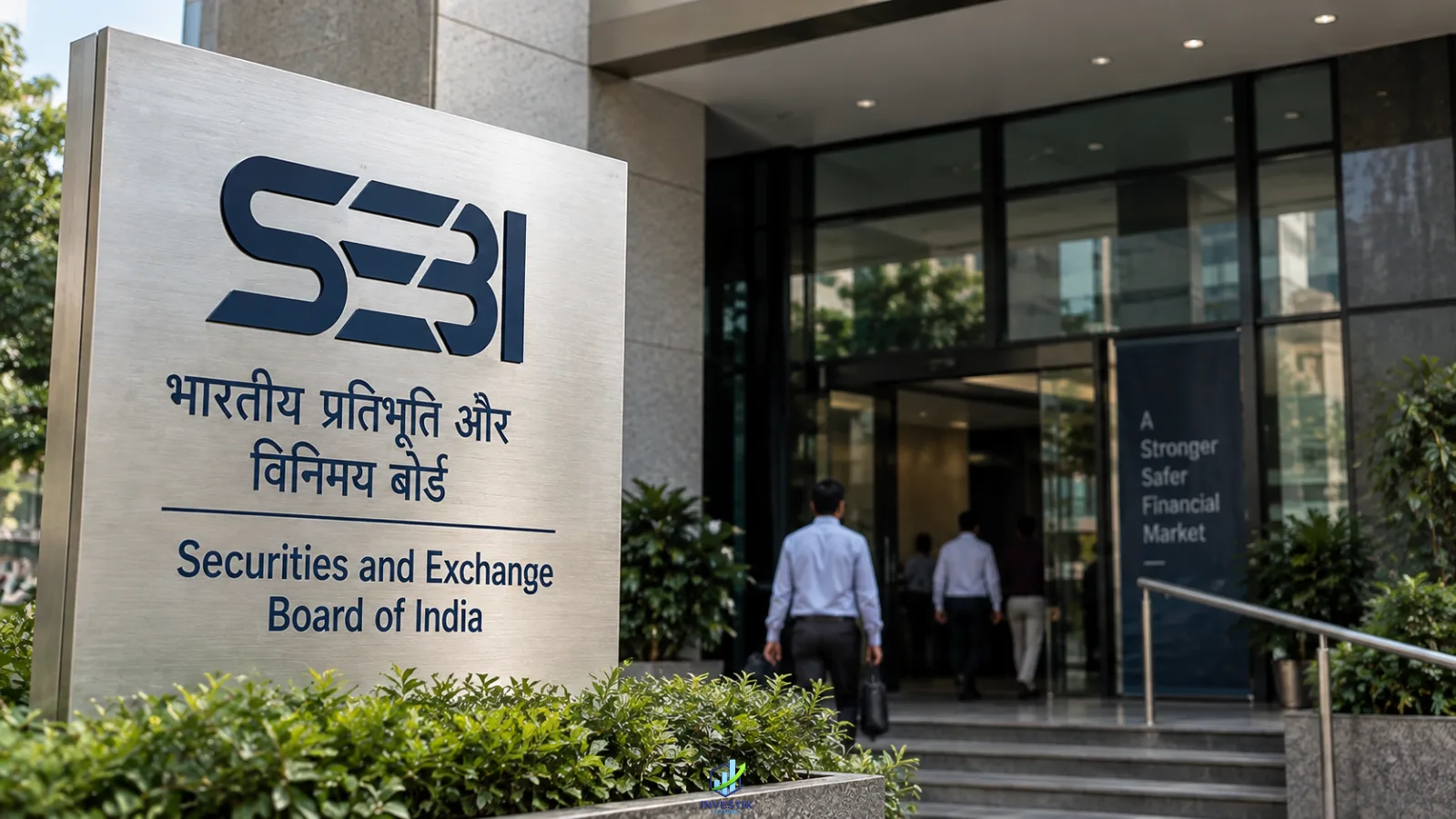

If you’ve checked stock prices in the last few minutes of trading recently and wondered why they jumped around more than usual, you’re not imagining it. The Securities and Exchange Board of India (SEBI) introduced a new system called the Closing Auction Session (CAS) on August 3, 2026, to decide the closing price of certain stocks. A few weeks later, on September 12, 2026, SEBI put out a fresh consultation paper proposing changes to how this system works, especially around expiry days for derivatives contracts.
This article explains what SEBI CAS Rules is, why SEBI is reviewing it so soon after launching it, what changes are on the table, and what all of this means for you as an investor or trader.
What Is CAS?
Every stock has a “closing price” at the end of the trading day. This price matters a lot; it’s used to value mutual funds, calculate index levels, settle certain derivatives contracts, and decide margin requirements.
The Closing Auction Session, or CAS, is a short auction at the end of the trading day used to determine the closing price of eligible stocks, rather than simply picking up the price from the last few trades of normal trading.
Here’s how to think about it. Suppose a stock has been trading around ₹1,000 for most of the day. In the last few minutes before CAS, buyers and sellers submit orders into a separate order book. The exchange doesn’t match these orders instantly, the way it does during normal trading. Instead, it collects all the buy and sell orders for a short period, then works out a single price at which the maximum number of shares can be matched. That price becomes the closing price.
This is different from regular trading, where each order is matched the moment a buyer and seller agree on a price. In CAS, everyone’s orders are pooled together first, and one final price emerges from that pool.
Why does this matter? Because a single large trade in the last few seconds of normal trading can sometimes swing the closing price in a way that doesn’t reflect what most buyers and sellers actually wanted. CAS is meant to reduce that kind of distortion.
Why Did SEBI Introduce CAS?
Before CAS, the closing price of a stock was calculated using the volume-weighted average price, or VWAP, of trades in the last 30 minutes of normal trading. VWAP simply means the average price of all trades in that window, weighted by how many shares changed hands at each price.
SEBI’s stated aim in bringing in CAS was to improve price discovery at the close, that is, to make sure the closing price genuinely reflects the balance of buying and selling interest, rather than being skewed by a handful of large trades near the end of the day. The idea was also to create a more structured, transparent closing process, particularly useful on days when index funds and other large investors need to rebalance their holdings.
CAS wasn’t a sudden decision. SEBI had floated the idea in two earlier rounds of public consultation, in December 2024 and August 2025, before rolling it out for stocks that also have derivatives (F&O) contracts, from August 3, 2026.
How Does the Closing Auction Session Work?
In simple terms, here’s the sequence:
- Normal trading (called the Continuous Trading Session, or CTS) runs through the day as usual.
- As the market approaches closing time, normal trading stops and a brief transition period begins.
- During CAS, buyers and sellers place orders, but these aren’t matched instantly. The exchange’s system calculates something called the Indicative Equilibrium Price, or IEP, throughout the session; this is the price at which the most shares could currently be matched if the auction ended right now. Think of it as a running estimate that updates as new orders come in.
- At the end of the auction, the exchange finalises the matching, and the resulting price becomes the official closing price for that stock.
The idea is that pooling orders and matching them at a single price can make the closing price less sensitive to individual last-minute trades than it sometimes was under the old VWAP method.
What Happened After CAS Was Introduced?
Since CAS went live on August 3, 2026, SEBI has been collecting feedback from stock exchanges, brokers, institutional investors, and other market participants. Media reports and discussions on social media have flagged concerns about how the Indicative Index Value, essentially an indicative reading of where an index like the Nifty or Sensex is headed, based on individual stocks’ IEPs, moved during the auction window, particularly on days when derivatives contracts were expiring.
To be clear, it would be inaccurate to say CAS caused market crashes or manipulation. What the regulator and market participants have observed is that the new system was followed by sharp, sometimes confusing price movements during the closing window, especially around expiry days, which raised questions about how well CAS was interacting with the derivatives market. SEBI’s own consultation paper frames this as something it is actively reviewing, not as evidence that CAS itself has failed.
Why Are F&O Expiry Days Important?
F&O stands for “futures and options”; these are derivative contracts whose value is based on an underlying stock or index, rather than the stock itself. If you’ve heard of people “trading Nifty options” or “buying Reliance futures,” that’s F&O trading.
Every futures and options contract has an expiry date, a fixed day on which the contract ends and gets settled. On that day, the final price of the underlying stock or index is used to calculate how much money changes hands between buyers and sellers of the contract. This final price is called the settlement price.
Here’s a simple way to picture it: if you’re holding a Nifty options contract that expires today, the payout you get depends heavily on where the Nifty index closes. So even a small, unusual movement in the closing price on expiry day can have an outsized effect on how derivatives contracts settle, which is exactly why SEBI is now looking closely at how CAS calculates that final settlement price.
What Changes Has SEBI Proposed?
SEBI’s September 12, 2026 consultation paper sets out several proposed changes. It’s important to underline: these are proposals open for public comment, not rules that have already been implemented.
Changes to Derivatives Settlement Prices
SEBI has proposed two possible approaches for calculating the settlement price of index and single-stock derivatives on expiry days.
VWAP, as explained earlier, is simply the average trading price over a period, weighted by trading volume. The two options SEBI is weighing are:
- Blended VWAP: the settlement price would be calculated using trades from both the last 30 minutes of normal trading and the 10-minute CAS window, blending the two.
- CTS VWAP (interim continuation): the settlement price would continue to be based only on trades during the last 30 minutes of normal trading, as an interim arrangement, without factoring in the CAS window.
SEBI has not decided between these two options yet; both are on the table for stakeholder feedback.
Changes to Market Timings
SEBI has proposed two alternative timing structures for how the trading day winds down:
| Timing | Option A | Option B |
| Normal trading (CTS) ends | 3:30 pm | 3:15 pm |
| CAS | After 3:30 pm | 3:15 pm – 3:25 pm |
| F&O trading ends | 3:45 pm | 3:30 pm |
Under both options, the transition gap between normal trading and CAS would shrink from the current five minutes to as little as one minute, and the extra derivatives trading window that continues after CAS would be cut from 10 minutes to 5 minutes.
Changes to Indicative Index Value
During CAS, exchanges currently disseminate an Indicative Index Value (IIV), which is derived from the Indicative Equilibrium Prices of individual stocks and gives a running sense of where an index is headed as the auction unfolds. SEBI has proposed stopping the dissemination of this index-level figure during CAS, because its movements during the auction have been confusing. Individual stock-level IEPs would continue to be available even if this change goes through.
Changes to Order Cancellation
A limit order is simply an order to buy or sell at a specific price you set, rather than at whatever the current market price happens to be. SEBI has proposed that once CAS begins, limit orders placed within 1% of the reference price could still be cancelled as before. But orders placed, or modified to sit beyond 1% and up to the existing 3% price band, would no longer be allowed to be cancelled during the auction, though price-improving modifications would still be permitted.
Changes to Iceberg Orders
An iceberg order is a large order that’s deliberately split up, so that only a small visible portion shows in the market at a time, while the rest stays hidden, the way most of an iceberg sits below the waterline. SEBI has proposed that any portion of an iceberg order left unexecuted at the end of normal trading would convert into a regular limit order once CAS begins, with the entire remaining quantity fully disclosed rather than staying partly hidden.
Why Is SEBI Making These Changes?
Taken together, these proposals are aimed at smoothing out a handful of practical issues that surfaced once CAS went live: making the settlement price calculation clearer and less prone to sudden swings, reducing confusion caused by a fluctuating indicative index value, tightening up order behaviour so the auction isn’t disrupted by late cancellations, and giving exchanges a bit more breathing room by shortening some of the transition windows. SEBI has framed this explicitly as a review and refinement of the CAS framework based on real-world experience, not an admission that the system has failed.
What Do the SEBI CAS Changes Mean for F&O Traders?
If you trade futures and options, these proposals are directly relevant to you. Depending on which settlement methodology SEBI eventually finalises, your expiry-day payouts could be calculated slightly differently than they are today. The proposed changes to order cancellation rules and iceberg orders could also affect how you manage positions in the final minutes of trading.
Shorter transition windows mean less time to react between the end of normal trading and the start of the auction. This article isn’t the place for trading strategy, but it’s worth knowing that expiry-day mechanics are likely to shift once SEBI finalises its decision.
What Do the CAS Changes Mean for Ordinary Investors?
If you’re a regular equity investor, someone who buys and holds stocks or invests through mutual funds, you don’t need to become an expert in auction mechanics to keep investing sensibly. That said, it helps to know why closing prices matter: closing prices are also used in calculating the value of securities held by mutual funds, which feeds into their NAV, so unusual movements at the close can occasionally show up in ways you notice, like a fund’s NAV looking slightly different than you expected on a particular day.
You may occasionally see a stock’s price move a bit unusually in the last few minutes of trading, particularly on expiry days for that stock’s derivatives. Such movements have raised questions about how the CAS mechanism interacts with F&O settlement, which is one of the issues SEBI is now reviewing. The proposed changes are more directly relevant to F&O traders than to long-term equity investors, but it’s still useful context for understanding why your app or broker’s closing price might occasionally look a little different from what you expected during the last few minutes of the day.
Is SEBI Removing CAS?
No. SEBI’s current consultation paper is about reviewing and adjusting specific parts of the CAS framework, settlement methodology, timings, and certain order-handling rules, not scrapping the system altogether. The regulator has been fairly consistent in framing this as fine-tuning based on early experience, rather than a rollback. Whether particular proposals get adopted, modified, or dropped will depend on the feedback SEBI receives and its own further deliberation.
What Happens Next?
SEBI has invited public comments on all seven proposals through its consultation portal, with a deadline of October 3, 2026. Stock exchanges, brokers, institutional investors and individual market participants can all submit feedback. Once the comment period closes, SEBI will review the feedback and decide on the final framework, which may look somewhat different from what’s currently proposed. There’s no confirmed date yet for when a final decision will be announced.
Key Takeaway
CAS is a new mechanism, introduced on August 3, 2026, for deciding the closing price of stocks that also have derivatives contracts, and it was brought in to improve how closing prices are discovered. Its early implementation has raised some concerns, particularly around expiry-day behaviour and how it interacts with derivatives settlement, and SEBI has responded with a consultation paper proposing changes to settlement methodology, market timings, and a few order-handling rules.
None of these changes are final yet; they’re open for public comment until October 3, 2026, and the eventual rules could differ from what’s currently on the table. The changes are more directly relevant to F&O traders, while ordinary equity and mutual fund investors mainly need to understand why closing prices may sometimes behave differently than before.




FAQs
What is CAS in the stock market?
CAS, or the Closing Auction Session, is a short auction held at the end of the trading day to determine the official closing price of certain stocks, replacing the earlier method of simply averaging the last 30 minutes of regular trading.
What does CAS stand for?
CAS stands for Closing Auction Session.
Why did SEBI introduce CAS?
SEBI introduced CAS to improve price discovery at market close and reduce the chance that a handful of large, last-minute trades could distort a stock's closing price.
When does the Closing Auction Session take place?
CAS runs in the final minutes of the trading day, after regular continuous trading ends. Exact timings are currently under review as part of SEBI's September 2026 consultation paper, which proposes two alternative timing structures.
Why is SEBI reviewing CAS?
After CAS went live on August 3, 2026, SEBI received feedback about unusual price movements during the auction window, especially around derivatives expiry days, and is now proposing adjustments to address these concerns.
ARN Disclosure: Investik Future is an AMFI-registered Mutual Fund Distributor. ARN-341107 — Verify on AMFI ↗. Komal Thakur is the content author and digital marketer; the ARN registration belongs to Investik Future, not to the author personally.