
India is hosting the BRICS Summit 2026 in New Delhi on September 12–13, bringing together leaders from some of the world’s major emerging economies. But what exactly is BRICS, what will be discussed at the summit, and why should Indian investors and businesses care? Here’s a simple look at what the summit could mean for India’s economy, markets and investors.
What Is BRICS?
BRICS is a group of major emerging economies that work together on trade, finance, technology and development. The name originally stood for Brazil, Russia, India, China and South Africa, the five founding members.
The BRIC countries held their first leaders’ summit in 2009, in Russia. South Africa joined the group in 2010, turning BRIC into BRICS. Over time, more countries joined. As of 2026, BRICS has 11 full members: the original five, plus Egypt, Ethiopia, Iran, Saudi Arabia, the United Arab Emirates, and Indonesia. Several other countries participate as BRICS partner countries, but they are not full members.
In simple terms, BRICS aims to give developing and emerging economies a bigger say in how the world’s trade, finance, and governance systems work.
What Is the BRICS Summit?
BRICS is the group. The BRICS Summit is the yearly meeting where leaders of member countries come together to discuss shared priorities and cooperation.
At the summit, heads of state, government officials, and experts discuss areas such as trade, investment, energy, technology, and financial cooperation. Countries also invite partner nations and other guests to some sessions. Joint statements made here can shape how member countries work together over the next year, though most changes take time to show up in the real world.
Why Is the BRICS Summit 2026 Important?
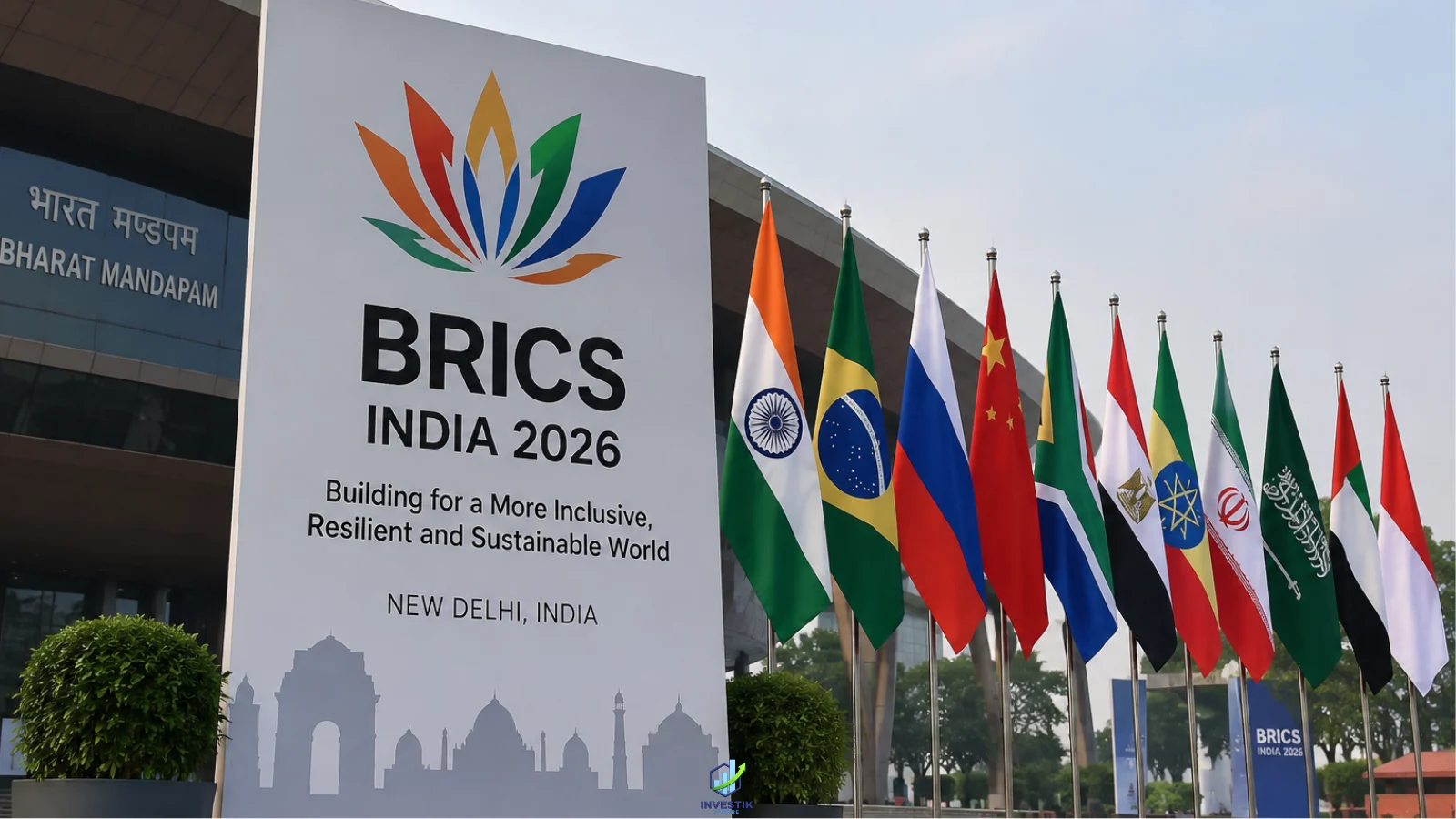
India is hosting the 18th BRICS Summit in New Delhi on September 12 and 13, 2026, at Bharat Mandapam, Pragati Maidan. This is India’s fourth time chairing BRICS, after 2012, 2016 and 2021.
India’s theme for its 2026 chairship is “Building for Resilience, Innovation, Cooperation and Sustainability,” built around a broader idea of putting people first. As the host and chair, India gets to help shape the agenda, and its priorities this year include strengthening trade and financial cooperation, promoting digital payments, and pushing for more representation for developing countries in global institutions.
Because India is hosting and chairing the summit, its priorities are especially relevant to Indian businesses, trade policy, and investors.
What Are the Main Issues Being Discussed?
Trade and Investment
BRICS countries are discussing ways to make trade and investment between member nations easier- think fewer barriers and more cooperation on manufacturing and supply chains. For India, this could open more doors for exporters and businesses looking at BRICS markets.
Local Currency Trade
This means countries settling some trade using their own currencies (like the rupee or the yuan) instead of routing everything through the US dollar. It doesn’t mean the dollar disappears from trade; it means BRICS nations want more options.
Cross-Border Payments
Cross-border payments are payments made between people or businesses in different countries. BRICS countries are discussing cheaper, faster ways to make these payments. India’s Unified Payments Interface (UPI) is also relevant to these discussions around digital and cross-border payments, given its scale in domestic transactions.
Energy Security
Energy security means having a stable and reliable supply of oil, gas, and other energy sources. India imports a large share of its energy, so discussions among BRICS countries, several of which are major oil and gas producers, matter for India’s energy costs and planning.
Supply Chains
A supply chain is the network of steps and companies involved in making and delivering a product, from raw materials to the final item reaching a customer. BRICS countries want these chains to be more reliable and less dependent on any single country, which could affect where manufacturing and sourcing decisions happen in the future.
Technology and Digital Economy
The summit agenda includes discussions on digital trade, artificial intelligence and technology cooperation. This covers things like data rules, digital payment systems and rules for emerging technologies, areas where India’s IT and digital services sector has a stake.
Infrastructure and Development
The New Development Bank (NDB) is a bank set up by BRICS countries to fund infrastructure and development projects in member nations. It has already disbursed billions of dollars for projects like transport, water, and clean energy. India has received significant financing from the New Development Bank for infrastructure and development projects.
How Could BRICS Affect India’s Economy?
Here’s the honest picture: some of this is already happening, and some is still being discussed or planned.
Already happening:
- India trades and invests with other BRICS nations today, and initiatives like the NDB have already funded infrastructure projects in India.
- UPI is already used domestically at massive scale and is being explored for international linkages.
Could happen in the future, depending on outcomes at the summit and beyond:
- Easier trade terms with BRICS partners could help Indian exporters in sectors like textiles, pharmaceuticals and engineering goods.
- Growth in local-currency trade could reduce some currency-conversion costs for Indian businesses, though this would take years to scale up.
- More cooperation on supply chains could help Indian manufacturing, including MSMEs (small and medium businesses), if they get better access to raw materials or markets.
- Energy cooperation could influence how India manages its energy import costs, though global oil prices depend on many other factors too.
It’s important not to treat summit discussions as guaranteed changes. Many of these ideas take months or years of follow-up work before they show real-world results.
What Could BRICS Mean for Indian Markets?
This is where it’s worth being careful. News about a big summit often gets linked to stock market predictions, but that connection is usually overstated.
Developments in trade, energy, currency arrangements, foreign investment, infrastructure and technology could, over time, influence sectors connected to these themes. For instance, investors may watch export-oriented sectors because trade cooperation is on the agenda, or energy and infrastructure sectors because of NDB-linked financing.
That said, there is no reliable way to say that the Nifty, Sensex, or any specific stock will rise or fall because of this summit. Markets react to a wide range of factors, corporate earnings, interest rates, global cues, and much more, not just to one diplomatic event. Any major change in trade or investment flows could affect specific sectors, but the timeline and scale of that impact are not something anyone can predict with certainty right after a summit.
What Should Indian Investors Watch?
If you follow this space, here’s a simple checklist of what actually matters, and why:
- Major agreements announced at the summit: these signal what countries have actually committed to, versus what is just discussed.
- Trade-related announcements: these can hint at which sectors might see policy support.
- Currency and payment initiatives: updates here show how far local-currency trade or cross-border payment systems have actually progressed.
- Energy-related developments: these can affect input costs for several industries.
- Investment commitments: pledges of foreign investment into India, or by India into BRICS partners, are worth tracking over time.
- New Development Bank announcements: new funding approvals can point to upcoming infrastructure activity.
- Changes affecting Indian businesses: particularly for exporters and manufacturers with BRICS exposure.
- Follow-up actions after the summit: summit statements are just the starting point; what happens in the following months tells you whether anything materialized.
What the BRICS Summit Does Not Mean
A few common misunderstandings worth clearing up:
- BRICS is not a single country or a government; it’s a group of independent nations that choose to cooperate on specific issues.
- BRICS is not the same as the G20 or G7, which are different groupings with different memberships and goals.
- Discussions about using local currencies for trade do not mean BRICS is creating one common currency. No such currency exists or has been agreed upon.
- A summit announcement does not automatically translate into an immediate change in stock prices, trade flows, or the economy. Real-world impact, if any, typically takes time to unfold.
Key Takeaway
BRICS matters to India because it’s a platform where India can shape conversations on trade, finance, energy, and technology alongside other major emerging economies. The 2026 summit is especially significant since India is hosting and chairing it, giving the country more influence over the agenda.
For investors, the summit is best treated as a source of information, not a trading signal. Keep an eye on concrete agreements and follow-up action in the months ahead, rather than reacting to summit headlines alone.









FAQs
What is the BRICS Summit?
It's the annual meeting where leaders of BRICS member countries discuss cooperation on trade, finance, technology, energy, and other shared priorities.
Which countries are members of BRICS in 2026?
BRICS has 11 full members in 2026: Brazil, Russia, India, China, South Africa, Egypt, Ethiopia, Iran, Saudi Arabia, the United Arab Emirates, and Indonesia. Several other countries participate as partner nations, but they are not full members.
Why is India hosting the BRICS Summit 2026?
India took over the BRICS chairmanship on January 1, 2026, on a rotating basis among member countries. As chair, India is hosting the 18th BRICS Summit in New Delhi on September 12–13, 2026.
How can BRICS affect India's economy?
Potentially through trade cooperation, infrastructure funding from the New Development Bank, energy discussions, and technology partnerships, though many of these effects would unfold gradually, not immediately.
Does BRICS have a common currency?
No. Discussions around using local currencies for trade among BRICS nations are separate from any idea of a single shared BRICS currency, which does not currently exist.
ARN Disclosure: Investik Future is an AMFI-registered Mutual Fund Distributor. ARN-341107 — Verify on AMFI ↗. Komal Thakur is the content author and digital marketer; the ARN registration belongs to Investik Future, not to the author personally.