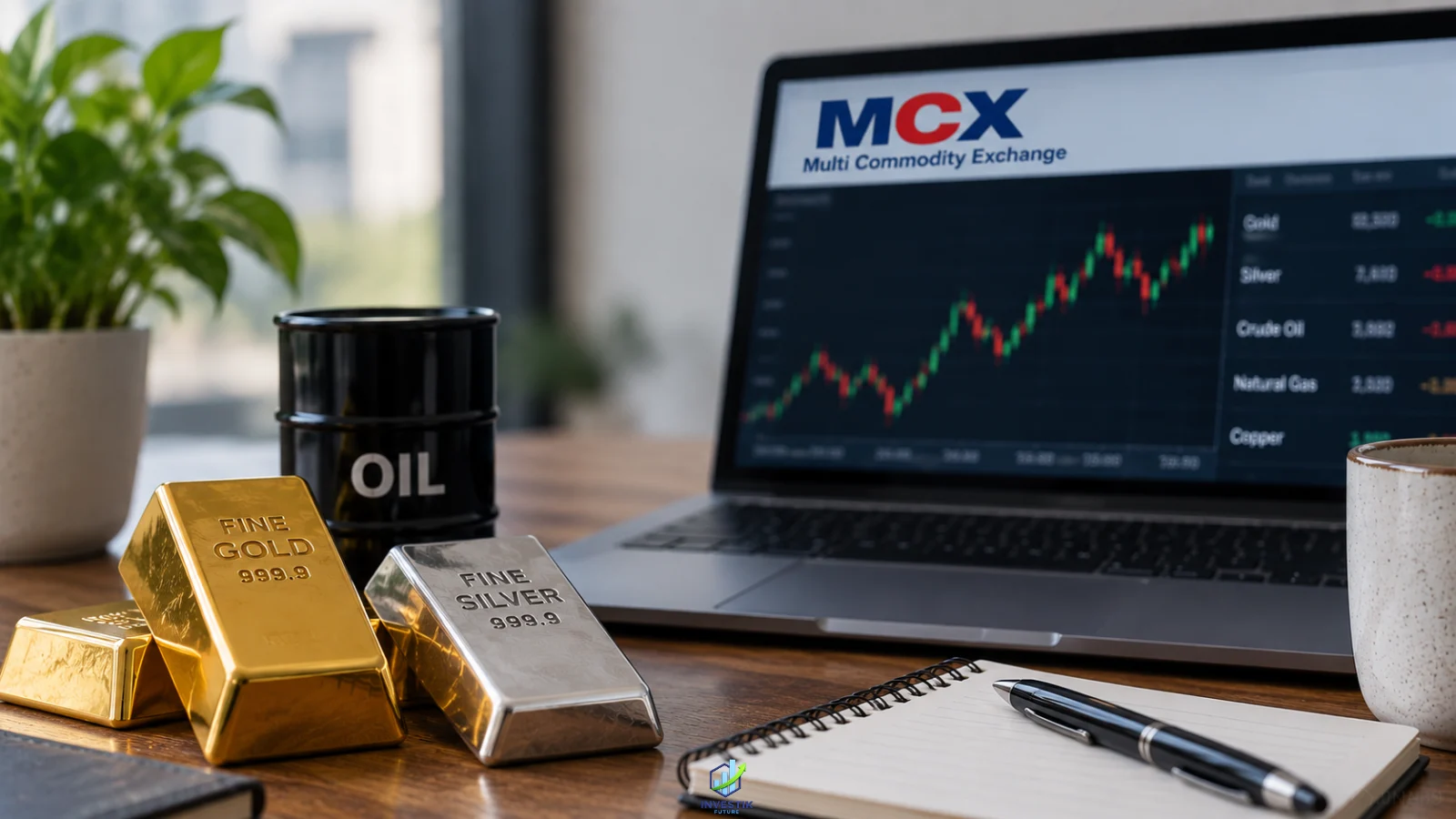

You often hear that gold, silver, or crude oil is “trading on MCX.” But what does that actually mean? Are traders buying the physical commodity, or are they simply trading its price? And what exactly happens when you place an MCX trade?
MCX can sound complicated at first, especially when terms like futures, contracts, and margins enter the picture. But the basic idea is fairly simple. This article explains what MCX is, how commodity trading works, and the key risks beginners should understand.
What Is MCX?
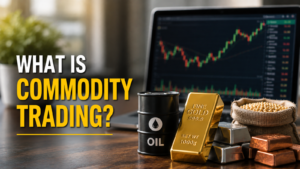
MCX stands for Multi Commodity Exchange of India Limited. It is one of India’s major exchanges for trading commodities, but not commodities themselves. What gets traded on MCX are contracts based on the prices of commodities like gold, silver, crude oil, and natural gas.
An “exchange,” in simple terms, is just an organised marketplace. Instead of two people finding each other on their own to make a deal, an exchange brings buyers and sellers together in one place, sets common rules for how trading happens, and keeps track of who owes what to whom. NSE and BSE are exchanges for stocks. MCX is an exchange for commodities.
Here’s the part that trips up most beginners: trading on MCX rarely means buying physical gold, silver, or oil and taking it home. When someone “buys gold on MCX,” they are usually buying a contract whose value is tied to the price of gold, not a gold bar sitting in a locker. Most participants never touch a single ounce of the actual commodity.
How Does MCX Work?
At its most basic, MCX works like this:
The exchange brings buyers and sellers together and matches their orders based on the rules of the market.
A trader who wants to buy a contract linked to, say, silver, places an order through their broker. The exchange’s system matches that order with someone willing to sell a similar contract. MCX doesn’t buy or sell anything itself; it simply provides the platform, the rules, and the infrastructure that let this matching happen fairly and transparently, and it keeps records of every trade.
Behind the scenes, there’s also a clearing and settlement process that makes sure both sides of a trade actually get what they’re owed. You don’t need to understand the technical machinery of this to grasp how trading works; just know that the exchange acts as the neutral middle layer that makes trading between strangers possible.
What Commodities Are Traded on MCX?
MCX offers contracts across a few broad categories:
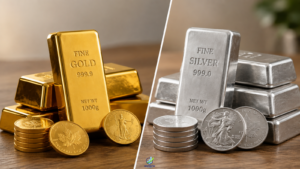
- Bullion: gold and silver
- Energy: crude oil and natural gas
- Base metals: copper, zinc, aluminium, lead, nickel
- Agricultural commodities: select agricultural contracts, depending on current MCX listings
This is not an exhaustive list, and it isn’t meant to be. Exchanges periodically add, remove, or modify which contracts are available for trading. If you want to know exactly what’s tradable right now, the most reliable source is MCX’s own website, where the current list of active contracts is published.
How Does Commodity Trading Work?
This is the part that matters most, so let’s slow down.
Commodity trading on an exchange like MCX generally follows this sequence:
- A trader picks a commodity, say, gold.
- They choose a contract for that commodity. Contracts differ by things like the quantity they represent and when they expire.
- They take a position, either a “buy” (if they expect the price to rise) or a “sell” (if they expect the price to fall).
- The value of the contract moves as the price of the underlying commodity moves in the market.
- The position is eventually closed or settled, following the specific rules of that contract.
Here’s a simple, fictional way to picture it. Imagine Raj thinks gold prices are going to rise over the next month. Instead of buying physical gold, he buys a gold contract on MCX at today’s price. If gold’s price rises before Raj closes his position, the value of his contract rises with it, and he can sell the contract for a profit. If gold’s price falls instead, his contract loses value, and closing it out would mean a loss.
Notice what didn’t happen anywhere in this example: Raj never went to a jeweller, never took delivery of gold, and never stored anything. He was trading the price movement, not the metal itself.
What Is a Commodity Futures Contract?
Most of what happens on MCX involves something called a futures contract. Here’s what that means in plain language.
A futures contract is an agreement to buy or sell a specific quantity of a commodity at a set price, with the contract ending on a specific future date called the expiry date. Every futures contract specifies exactly how much of the commodity it covers (say, 1 kilogram of silver) and exactly when it expires.
Traders use these contracts because they let people take a position on where they think a price is heading, without needing to handle the physical commodity at all. In most cases, traders close out their position before the contract expires, meaning they sell what they bought (or buy back what they sold), rather than actually taking delivery of gold bars or barrels of oil. Whether physical delivery is even possible, and how it works, depends on the specific contract, so it’s worth checking the details before assuming either way.
We won’t go deeper into the more technical theory behind derivatives here; for a beginner, the key idea is: a futures contract is a time-bound agreement whose value tracks a commodity’s price.
Simple Example of an MCX Trade
Let’s walk through one more example, purely to illustrate the mechanics, not as advice.
Suppose a trader, let’s call her Meera, buys a crude oil futures contract because she expects oil prices to rise due to global supply concerns.
- If oil prices rise: The value of Meera’s contract increases. If she closes her position now, she books a profit: the difference between the price she bought at and the current, higher price.
- If oil prices fall instead, the value of her contract decreases. Closing her position now would mean a loss: the difference between her buying price and the current, lower price.
This example is entirely fictional. Real contract sizes, price movements, margin requirements, and brokerage charges vary and change over time, so this is meant only to show how profit and loss work mechanically, not to suggest what might happen with any real trade.
What Are Margin and Leverage in Commodity Trading?
These two terms are important to understand because they can significantly increase both the potential gains and losses from commodity trading.
Margin is the amount of money you need to set aside with your broker to open and hold a position, but it’s usually only a fraction of the contract’s full value, not the whole amount. Think of it as a security deposit that the exchange and your broker require to make sure you can cover potential losses.
Leverage is the flip side of margin. Because you only need to put up a fraction of the contract’s value, a relatively small amount of your own money can control a much larger contract value. This means your gains can be magnified, but so can your losses. A small price move can turn into a large gain or a large loss on your actual investment, which is one of the main reasons commodity trading carries more risk than many beginners expect.
How Are MCX Commodity Prices Determined?
Commodity prices on MCX aren’t decided by the exchange; they’re shaped by real-world supply, demand, and global market forces, including:
- Global commodity prices: prices of many commodities traded in India are influenced by international benchmarks
- Supply and demand: production levels, inventories, and consumption patterns
- Currency movements: particularly the US dollar, since many commodities are priced internationally in dollars
- Interest rates: which affect the broader cost of holding and financing commodities
- Geopolitical events: conflicts, sanctions, or trade disputes that disrupt supply
- Weather and production conditions: especially relevant for agricultural commodities and energy supply
For example, if global crude oil prices rise because of a supply disruption somewhere in the world, crude oil contracts on MCX typically move in the same direction, adjusted for the rupee-dollar exchange rate. India imports the vast majority of its oil, so international price shifts tend to show up quickly in domestic contract prices.
MCX Trading vs Buying Physical Commodities
This is where a lot of beginner confusion happens, so let’s compare the two directly.
| Aspect | MCX Commodity Trading | Buying Physical Commodities |
| What you own | A contract linked to the commodity’s price | The physical commodity |
| How the transaction works | Buying/selling contracts through a broker | Buying from a jeweller, dealer,r or retailer |
| Storage | Not required | Required |
| Contract expiry | Yes | No |
| Price movements | Affect the contract’s value; leverage can amplify gains and losses | Affect the value of the physical commodity |
| Purpose | Price exposure or hedging | Consumption, gifting, or physical holding |
Neither approach is inherently “better”; they serve different purposes. Someone buying gold jewellery for a wedding has a completely different goal than someone trading a gold futures contract on MCX.
What Are the Risks of MCX Commodity Trading?
Commodity trading is not the same as simply buying and holding a physical commodity, and it comes with risks that are worth taking seriously:
- Price volatility: commodity prices can move sharply and unpredictably, sometimes within a single day
- Leverage: as covered above, this magnifies both gains and losses
- Margin requirements: if the market moves against your position, you may need to add more margin to keep the position open
- Possibility of losing money quickly: because of leverage, losses can accumulate faster than in simple buy-and-hold investing
- Contract expiry: positions need to be actively managed and closed or rolled over before expiry
- Brokerage and other charges: transaction costs, exchange fees and taxes all affect your actual returns.
- Global events: prices can be affected by events far outside your control, such as international conflicts or supply shocks
None of this is meant to exaggerate the risks, but it also shouldn’t be downplayed. Commodity trading is generally considered higher-risk than many other forms of investing, largely because of leverage and price volatility combined.
Who Can Trade on MCX?
Individuals generally cannot trade directly on MCX. Trading happens through brokers who are registered members of the exchange. A beginner who wants to trade commodities would typically need to open a commodity trading account with a SEBI-registered broker, complete the required KYC (know-your-customer) documentation, and fund the account before placing trades.
Specific account requirements, eligibility rules, charges,s and regulations can change over time, and they’re set by the exchange and by India’s market regulator, SEBI (Securities and Exchange Board of India). If you’re considering opening an account, it’s worth checking MCX’s official website or a registered broker’s website for the latest requirements rather than relying on older information.
MCX vs NSE and BSE: What’s the Difference?
| Feature | MCX | NSE / BSE |
| Main focus | Commodities | Mainly stocks and other financial products |
| Examples | Gold, silver, crude oil, natural gas, base metals | Shares, ETFs, bonds, ds and other securities |
| Trading | Commodity derivative contracts | Stocks and other securities |
These exchanges simply serve different markets. MCX exists specifically for commodity derivatives, while NSE and BSE are primarily equity and securities exchanges. Neither is “better” than the other; they’re built for different kinds of trading.
Is MCX the Same as Commodity Investing?
Not exactly. MCX is one specific way to get exposure to commodity price movements, through futures (and, for some commodities, options) contracts. But it isn’t the only route.
Depending on the commodity, people can also gain exposure through other products, such as commodity-linked mutual funds or exchange-traded funds, where such options exist. These products work differently from direct MCX trading and carry their own set of features and risks. This article isn’t a recommendation for any particular approach, just a note that “commodity exposure” isn’t limited to trading futures contracts on MCX.
Key Takeaway
By now, you should have a much clearer picture of what MCX actually is:
- MCX is a commodity exchange in India, a marketplace, not a shop.
- It provides a platform for trading commodity contracts, not physical commodities themselves.
- Commodity trading is generally based on price movements, not on buying and holding the physical commodity.
- Futures contracts have expiry dates and specific, standardised terms.
- Margin lets you control a larger contract with a smaller amount of money, but leverage magnifies both gains and losses.
- Understanding a contract’s terms and risks thoroughly before trading it matters more than almost anything else.
The next time you see a headline about gold or crude oil prices moving on MCX, you’ll know exactly what’s happening behind those words.



FAQs
What does MCX stand for?
MCX stands for Multi Commodity Exchange of India Limited, one of India's major exchanges for commodity derivatives trading.
What is MCX used for?
MCX provides a platform where traders can buy and sell contracts linked to the prices of commodities like gold, silver, crude oil, natural gas, and base metals.
Can I buy physical gold on MCX?
Not directly. Trading on MCX generally involves contracts linked to gold's price, not the physical metal itself. Physical delivery is possible for certain contracts under specific conditions, but it's not how most trading works.
What commodities can be traded on MCX?
Broad categories include bullion (gold, silver), energy (crude oil, natural gas), base metals (copper, zinc, aluminium, and others), and select agricultural commodities. The exact list can change, so check MCX's current contract listings for accuracy.
What is a futures contract on MCX?
It's an agreement to buy or sell a fixed quantity of a commodity at an agreed price, to be settled by a specific expiry date. Most traders close their position before expiry rather than take physical delivery.
ARN Disclosure: Investik Future is an AMFI-registered Mutual Fund Distributor. ARN-341107 — Verify on AMFI ↗. Komal Thakur is the content author and digital marketer; the ARN registration belongs to Investik Future, not to the author personally.