
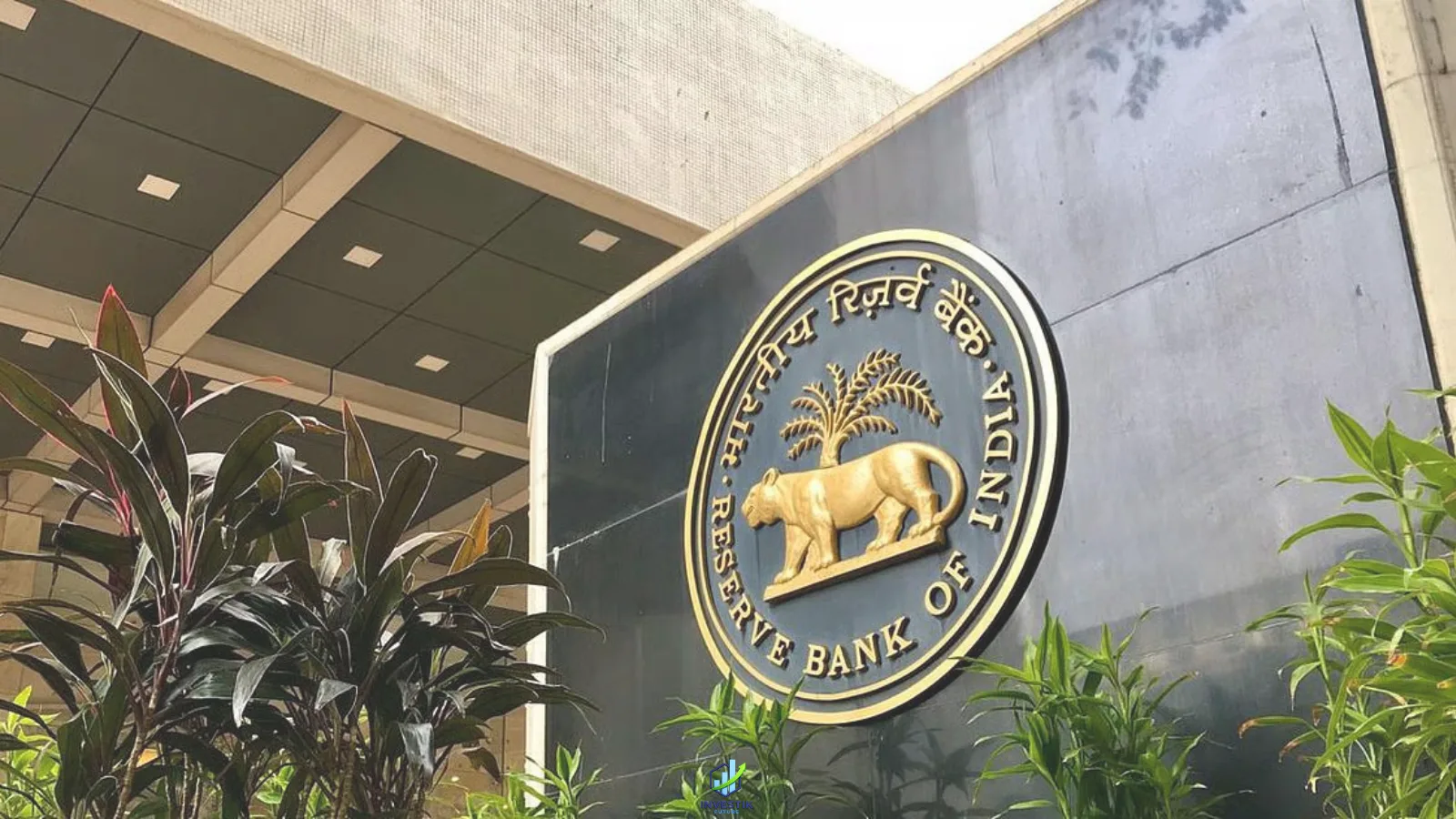

Over the past few weeks, I have been quietly watching the Indian currency markets, and one thing has become increasingly apparent: the pressure on the rupee is far from over. RBI NRI deposits are now coming into focus as global uncertainties rise and geopolitical tensions mount, with the Reserve Bank of India (RBI) appearing to prepare its next steps. According to central bank and market experts, this could include bringing back incentives for NRI deposits, possibly through a revival of the FCNR(B) route in the upcoming April MPC meeting.
If this does happen, it will not be any ordinary policy adjustment; it is more likely to be a strategic intervention aimed at stabilising the rupee and rebuilding foreign inflows.
The article discusses how the RBI boost foreign inflows to stabilise the falling rupee amid a spate of global uncertainties. It discusses the decline in NRI deposits, compares it with the 2013 successful strategy and explains how the move may help currency, boost sentiment, give a positive signal to investors, but also talks about it as a short-lived solution for deeper economic problems.
RBI NRI Deposits: Why Is RBI Turning to Them Again?
To me, this shift is not as much experimental as it is essential. The numbers clearly show stress building up.
NRI deposits have seen a sharp decline of nearly 26%, dropping to $14.35 billion between April 2025 and January 2026. What concerns me even more is the dramatic fall in FCNR(B) inflows, from $7.02 billion last year to just $0.94 billion this year. That’s not just a slowdown, it’s a collapse.
At a time when India needs stable foreign currency inflows to manage its current account pressures and rising import bills (especially fuel), such a drop creates a significant gap. This is where I think RBI’s strategy becomes clear:
- Attract dollar inflows through NRI deposits
- Reduce pressure on forex reserves
- Stabilise the rupee without aggressive rate hikes
The Rupee’s Struggle: What I’m Seeing in the Market
If you’ve been watching the currency markets, you’d notice that the rupee’s recent weakness isn’t random. Since the escalation of tensions in West Asia earlier this year, the rupee has already depreciated by around 3%, and FY26 has turned out to be one of its worst years in a decade, with nearly 10% depreciation.
Even though the RBI recently tightened rules around offshore speculative trading, I feel those measures are more defensive than corrective. They may slow volatility, but they don’t solve the root problem: lack of sustained dollar inflows. And that’s exactly why reviving FCNR(B) deposits could be a game-changer.

FCNR(B): A Proven Strategy That Worked Before
What makes this move particularly interesting to me is that it’s not new; it’s a tested playbook.
In 2013, during the taper tantrum, the RBI opened a special swap window for FCNR(B) deposits. Banks were permitted to exchange dollar deposits at a concessional rate of 3.5%, well below the rates in the market.
The result:
- Nearly $30 billion in inflows
- Stabilisation of the rupee
- Strengthening of forex reserves
That episode demonstrated one thing unequivocally: when well-structured, NRI deposit schemes can yield swift and effective results. Now, more than a decade later, the RBI may be considering a similar approach, but the environment is very different this time.
What’s Different This Time? My Take
While the strategy may be familiar, the execution won’t be as easy. Here’s why, in my view, this time is more difficult:
- Interest rates globally are higher, particularly in the US, making it costlier to attract dollar deposits
- Emerging markets are all competing with one another for foreign money, and competition for capital is strong.
- Geopolitical risks are high, and investors are much more cautious than ever
Thus, even if the RBI were to restart FCNR(B) inducements, the resultant cost of raising those deposits would still be much higher than what it was in 2013. But despite all this, I think RBI could still go ahead, as the other option, continued rupee depreciation, is much riskier.
Why the Gulf Region Matters More Than Ever
One of the metrics that caught my eye was the concentration of NRI deposits. Indian banks maintain FCNR(B) deposits, of which more than 40% are from the United Arab Emirates (UAE). This tells me two things:
- The Gulf continues to be an important source of foreign inflows
- Any policy on moves against NRI deposits will rely heavily on sentiment in these areas
If RBI designs attractive schemes, even a moderate revival of flows from the Gulf could dramatically boost India’s external position.
What I Expect from the Upcoming RBI MPC Meeting
In anticipation of the April 8 MPC meeting, here is what I am personally looking at:
- Interest Rate Decision: The consensus is that the RBI may leave rates unchanged. That’s a view I share; raising rates now would hurt growth without fixing currency problems.
- Liquidity Measures: There will likely continue to be a strong focus on liquidity management. The RBI may also continue to tweak short-term liquidity for full stability.
- FCNR(B) or NRI Deposit Incentives: This should be the most important trigger in my view. Any indication of such moves could lift sentiment in the markets immediately.
Also Read: RBI MPC 2026: Rising Risks Drive Cautious Policy Outlook

How This Impacts Investors and the Economy
That potential move has many implications, from an investor’s perspective:
For Currency Markets:
- May help stabilise the rupee in the short to medium term
- May reduce volatility
For the Banking Sector:
- Banks could see improved foreign currency deposits
- Margins may be impacted depending on swap costs
For Equity Markets:
- Positive sentiment, especially for financial stocks
- Reduced macro uncertainty
For Retail Investors Like Us:
Even if you aren’t investing directly in forex, currency stability affects everything from inflation to how well your stock portfolio is doing.
Final Thoughts: A Strategic Move, Not a Shortcut
After analysing all the data and past trends, I see this RBI move as a strategic stabilisation step rather than a quick fix. Reviving FCNR(B) deposits could:
- Bring immediate dollar inflows
- Support the rupee
- Boost market confidence
But it won’t address structural issues such as trade deficits or global volatility. Yet under the circumstances, it may be the most effective tool available to the RBI.
Also Read: India IPO Pipeline 2026 Boom: Huge Opportunity Emerging
Frequently Asked Questions (FAQs)
1. What are FCNR(B) deposits?
FCNR(B) accounts are fixed deposits in foreign currency with Indian banks for NRIs that allow them to hold their funds in currencies such as USD without losing money due to exchange rate changes.
2. Why is RBI planning to revive FCNR(B) deposits?
To attract foreign currency inflows, stabilise the rupee and offset a sharp decline in NRI deposits.
3. How did FCNR(B) deposits help in 2013?
During the taper tantrum, they absorbed almost $30 billion in inflows and cushioned the rupee.
4. What risks are associated with this strategy?
Higher global interest rates would increase the cost of raising deposits, making the scheme costly for banks and the RBI.
5. Will this move strengthen the rupee immediately?
It might boost sentiment and lower volatility, but long-term stability relies on wider economic dynamics.
Disclaimer
This article is for informational and educational purposes only, and reflects personal opinions and analysis. This should not be construed as financial or investment advice. Readers are encouraged to seek investment advice from a qualified professional. Market conditions are dynamic, and historical performance does not always guarantee future success.

Himani Soni
I’m Himani Soni, a finance content strategist with 2+ years at Investik Future. I decode market trends and simplify complex investing concepts into clear, actionable insights for the everyday investor.