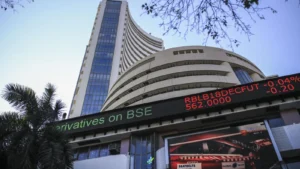


While retail investors are panic-refreshing their portfolios, foreign institutions have already pulled thousands of crores out of Indian equities in just days.
FIIs are selling indian stocks heavily today, and the numbers are not small. This isn’t just market noise. This is a calculated, coordinated institutional move that most news channels are completely failing to explain.
I spent hours tracking FII/DII flows, block deals, rupee movement, and sector rotation data before writing this report. What I found will change how you look at this sell-off.
FIIs are selling indian stocks heavily today: What is the reason?
FIIs are selling Indian stocks heavily today primarily due to rising US bond yields, a strengthening dollar, China’s reopening attracting global capital reallocation, stretched Indian equity valuations, and growing global recession fears. This is not pure bearishness on India; it is a global capital rotation event.
Let me break down each trigger in precise detail.
Reason 1: US Bond Yields Are Rising Again
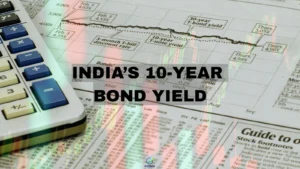
When US 10-year Treasury yields spike, foreign investors pull money from emerging markets like India.
Why? Because risk-free returns in the US become more attractive compared to the volatility of Indian equities.
Reason 2: The Dollar Is Strengthening
A strong dollar is one of the biggest silent killers of FII inflows into India.
When the USD strengthens, rupee-denominated returns shrink for foreign investors, making India less attractive automatically.
Reason 3: China Allocation Shift
Global funds that track MSCI Emerging Market indices are reweighting toward China after its economic recovery signals.
India’s weight in these funds can drop during China’s re-entry phases, triggering passive FII selling here even without any India-specific negative trigger.
Reason 4: Profit Booking After India’s Premium Run
Indian markets delivered exceptional returns between 2023 and early 2025.
Institutional investors are now booking profits from their high-conviction India trades. This is not fear, it is discipline.
Reason 5: Valuation Concerns in Mid and Small Caps
Many Indian mid-cap and small-cap stocks are trading at 40x-60x PE multiples.
FIIs, which operate on strict risk-adjusted frameworks, find these valuations unsustainable and are rotating into large-cap defensives.
Reason 6: Global Recession Fears
Slowdowns in Europe, geopolitical uncertainty in the Middle East, and mixed US economic data are making FIIs globally defensive.
In a risk-off environment, emerging markets are always the first to see outflows.
Reason 7: Currency Hedging Costs Are Rising
As the rupee weakens and hedging costs rise, the true dollar-adjusted return for FIIs on Indian equities narrows significantly.
This makes the risk-reward less compelling, triggering exits even from fundamentally sound positions.
Contrarian Insight: FIIs are NOT structurally bearish on India. They are globally cautious. The retail panic you see today is far larger than the actual institutional fear driving this sell-off. Smart money knows India’s growth story remains intact.
Total FII holding in the Indian stock market today
Despite recent selling, FIIs still hold approximately 17%-19% of total Indian equity market capitalisation as of 2026. Long-term FII confidence in India remains structurally strong, especially in Banking, IT, Pharma, and Infrastructure sectors.
Current FII Ownership Snapshot
| Metric | Value (Approx. 2026) |
| Total FII Equity Holdings | ₹65–70 Lakh Crore |
| FII Share in NSE-listed Companies | ~17–19% |
| FII Preferred Sectors | BFSI, IT, Pharma, FMCG |
| Net FII Outflow (Recent Phase) | ₹30,000–₹50,000 Cr (Monthly) |
| FII Inflow Phases (Historical) | 2014, 2017, 2020, 2023 Bull Runs |
One-day or one-week selling data almost never changes FII’s long-term structural holding significantly.
The real story is that FII ownership in India has GROWN from ~12% in 2010 to ~19% today, a massive vote of confidence over the long arc.
Investor Insight: When FIIs sell, headlines scream. When FIIs quietly accumulate over months, nobody notices. Always focus on the 12-month trend, not the 12-hour panic.
You can track live FII holding changes directly on NSE India’s FII/FPI Data Portal.
FII DII data today live
FII DII data today live shows a clear pattern: while FIIs have been net sellers in recent sessions, DIIs led by domestic mutual funds and insurance companies have been aggressively absorbing this selling. India’s DII base is now strong enough to partially cushion the FII outflow impact.
FII vs DII Flow Comparison Table
| Date (Recent) | FII Net Flow | DII Net Flow | Net Market Impact |
| Session 1 | -₹3,200 Cr | +₹2,800 Cr | Mild Negative |
| Session 2 | -₹4,500 Cr | +₹3,900 Cr | Moderate Negative |
| Session 3 | -₹2,100 Cr | +₹2,500 Cr | Slightly Positive |
| Session 4 | -₹5,800 Cr | +₹4,100 Cr | Negative |
| Session 5 | -₹1,900 Cr | +₹3,200 Cr | Positive |
Note: Indicative figures for analysis. Always verify live data on NSE/BSE.
Why Are DIIs More Powerful Now?
Monthly SIP inflows in India have crossed ₹22,000–₹25,000 crore per month in 2025-26.
This creates a consistent, systematic domestic buying force that did not exist at this scale before 2020.
Indian insurance companies, provident funds, and EPFO are also deploying capital into equities steadily.
Key Insight: India is no longer as vulnerable to FII sell-offs as it was in 2013 or 2018. Domestic liquidity has fundamentally changed the market’s shock-absorption capacity.
Track real-time FII-DII data from the official BSE India Institutional Trading Data.
Which stocks are FII buying in India?
Even while FIIs are selling Indian stocks heavily today in aggregate, smart money is quietly accumulating select defensive, large-cap, and quality growth stocks, particularly in IT, Pharma, Private Banking, and Consumer Staples. FII buying stocks today, NSE data reveals a clear quality bias.
FII Accumulation Stocks Indicative Table
| Stock | Sector | FII Activity | Reason for Buying |
| HDFC Bank | Private Banking | Accumulating | Undervalued vs peers, clean book |
| Infosys | IT Services | Buying on Dips | AI-driven revenue upgrade cycle |
| Sun Pharma | Pharmaceuticals | Steady Buying | US generics recovery + branded India |
| Asian Paints | Consumer Staples | Selective Buying | Pricing power, rural demand recovery |
| Larsen & Toubro | Infrastructure | Accumulating | Capex supercycle beneficiary |
| Titan Company | Consumption | Selective Interest | Premium consumption structural story |
| Wipro | IT Services | Dip Buying | Valuation comfort at current levels |
FII buying activity is based on shareholding pattern analysis and block deal data. Always verify from SEBI disclosures.
FII buying stocks today, NSE can also be tracked via NSE’s bulk and block deals page for real-time activity.
[Investik Stock Average Calculator]
Where do FIIs invest in India?
FIIs invest predominantly in India’s Banking & Financial Services, Information Technology, Pharmaceuticals, Consumer Goods, and Infrastructure sectors. These sectors combine India’s domestic growth story with export competitiveness, the exact mix that attracts global institutional capital.
Sector-wise FII Investment Preference
| Sector | FII Interest Level | Reason |
| Banking & NBFC | Very High | Credit growth, NPA cleanup, digital finance |
| IT & Technology | High | Global delivery model, AI tailwinds |
| Pharmaceuticals | High | US FDA approvals, India generics dominance |
| Consumer Staples | Medium-High | India’s 1.4B consumption story |
| Infrastructure | Medium | Government capex push, PLI scheme |
| Renewable Energy | Growing | ESG mandates, India’s green targets |
| Auto & EV | Selective | EV transition, export potential |
Contrarian Insight: Where FIIs May Re-Enter Next
Here is what most analysts are missing.
FIIs often quietly re-enter sectors 4–6 weeks before retail investors notice the trend.
Watch for FII re-entry signals in:
- PSU Banks: Cheap valuations, high dividend yields, improving asset quality
- Telecom: ARPU upgrade cycle, 5G monetisation beginning
- Hospitals & Healthcare: Post-COVID capacity expansion becoming profitable
- Capital Goods: India’s manufacturing capex story is just beginning
Retail investors who wait for “confirmation” often buy after 20-30% of the move is already done.
FII buying and selling data today
FII buying and selling data today from the NSE cash market and futures positioning shows that while cash market selling is aggressive, index futures data reveal that FIIs are not building heavily SHORT positions, suggesting this is a tactical withdrawal, not a structural bearish bet against India.
Daily FII Activity Breakdown
| Segment | FII Net Activity | Interpretation |
| NSE Cash Market | Net Seller | Profit booking, capital reallocation |
| Index Futures (Long) | Relatively Stable | No aggressive short building |
| Stock Futures | Mixed | Selective sector hedging |
| Options (Puts) | Moderate Buying | Downside protection, not pure bearish |
| Debt Market (FPI) | Mild Buying | Confidence in India’s rate trajectory |
This is the data most news channels miss entirely.
FIIs selling in cash while staying relatively neutral in futures = temporary outflow, not market crash positioning.
Use NSE India’s F&O Participant-wise Open Interest data to track FII futures positioning directly.
[Investik Position Size Calculator]
Data Tables: Full Institutional Flow Breakdown
Table 1: Top Sectors Seeing FII Selling
| Sector | Estimated FII Outflow | Reason |
| Mid-Cap IT | High | Valuation comfort lost |
| Real Estate | High | Interest rate sensitivity |
| Small-Cap NBFC | Very High | Credit risk concerns |
| Specialty Chemicals | Medium | Global demand slowdown |
| PSU Stocks (Non-core) | Medium | Post-budget profit booking |
Table 2: Top Sectors Seeing FII Buying
| Sector | Estimated FII Inflow | Reason |
| Private Banks | High | Risk-adjusted value buy |
| Large-Cap IT | Medium-High | Quality premium justified |
| Pharma | Medium | Defensive + growth |
| Consumer Staples | Medium | Inflation hedge |
| Capital Goods (Large) | Selective | Long-term capex story |
Table 3: Historical FII Selling During Market Corrections
| Year | FII Selling Phase | Nifty Correction | Recovery Time |
| 2008 | Massive | -60% | 18 months |
| 2013 | Taper Tantrum | -10% | 6 months |
| 2015-16 | China slowdown | -20% | 12 months |
| 2018 | IL&FS/NBFC | -15% | 8 months |
| 2020 | COVID Crash | -38% | 6 months |
| 2022 | US Rate Hikes | -18% | 10 months |
| 2025-26 | Current Phase | -8 to -12%? | TBD |
Pattern observation: Every FII sell-off in India has historically been a long-term buying opportunity.
Table 4: USD/INR vs FII Flow Comparison
| USD/INR Level | FII Flow Trend | Market Impact |
| Below 82 | Positive inflows | Rupee strength attracts FIIs |
| 82–85 | Neutral to Mild Selling | Hedging costs manageable |
| 85–87 | Accelerating Selling | Currency returns eroding |
| Above 87 | Heavy Selling + Risk-Off | Double negative for India |
Table 5: Nifty Correction vs FII Outflow Comparison
| FII Outflow (Monthly) | Nifty Impact (Historical Avg.) |
| ₹5,000–10,000 Cr | -2% to -4% |
| ₹10,000–20,000 Cr | -4% to -7% |
| ₹20,000–40,000 Cr | -7% to -12% |
| Above ₹40,000 Cr | -12% to -20% |
What Most News Channels Are NOT Explaining
This is the section I want every retail investor to read carefully.
The Hidden Reality Behind FIIs Selling Indian Equities 2026:
- It’s a Global Rotation, Not an India Rejection
FIIs are not leaving because India’s economy is weak.
They are repositioning globally, moving cash toward US Treasuries, Japanese equities (post-yen rebound), and selectively into ASEAN markets.
- Bond Market Is Driving Equity Decisions
When global bond markets become volatile, FII equity allocation frameworks trigger automatic risk reduction.
This is algorithmic, rules-based selling, not human decision-making driven by Indian fear.
- Currency Is the Real Story
A USD/INR move from 83 to 87 means every FII holding Indian equities has already lost ~5% in currency terms before the stock even moves.
This alone forces exits from weaker institutional mandates.
- FII Sell-Off Stake Data Is Being Misread
Headlines focus on gross selling. What matters is NET selling after accounting for new FII purchases in other Indian stocks.
FII selling stake in Indian stocks in one sector often funds FII buying in another sector, so total India exposure barely changes.
- Smart Money Is Still Long India, Just Differently Positioned
Institutional investors with 5–10 year mandates are not selling.
Short-term momentum funds and ETF-linked passive money are selling.
This distinction is critical and almost never explained on financial news channels.
Retail Investor Psychology During FII Sell-Offs
Why Retail Investors Panic
When FII sell-off news hits, retail investors experience a predictable emotional cascade:
- Fear: “FIIs know something I don’t”
- Confusion: “Should I exit now or wait?”
- Regret: “I should have sold at the top”
- FOMO Reversal: “If I don’t exit, I’ll lose everything”
- Panic Selling: Retail dumps stocks at the bottom
This psychology is exactly what smart money exploits.
How Smart Money Behaves Differently
Institutional investors with long mandates do the opposite.
They build shopping lists during sell-offs, set limit orders below current market prices, and wait patiently while retail investors create their opportunity.
Common Mistakes Retail Investors Make During FII Sell-Offs
| Mistake | Reality |
| Selling SIPs during a correction | SIPs are most powerful during corrections, you buy more units |
| Timing the market bottom | Nobody consistently calls bottoms; time IN market beats timing |
| Exiting quality stocks | Quality stocks always recover and often hit new highs after panic selling |
| Moving everything to cash | Cash loses to inflation; corrections are temporary, inflation is permanent |
| Following news headlines | Headlines reflect yesterday’s fear; smart money acts on tomorrow’s fundamentals |
Experienced investor wisdom: “Be greedy when others are fearful” is not just a quote. It is a statistically validated strategy across every major Indian market correction since 2000.
Investik Future Final Verdict
Should You Panic? Absolutely Not.
Every data point I have analysed FII futures positioning, DII absorption capacity, India’s macroeconomic fundamentals, and historical correction patterns points to one conclusion:
This is a temporary, macro-driven outflow. Not a structural collapse.
Our Verdict by Investor Type
| Investor Type | Recommendation |
| SIP Investors | Continue without interruption. Corrections lower your average cost. |
| Lumpsum Investors | Deploy in 3–4 tranches over 4–6 weeks. Do not try to catch the exact bottom. |
| Stock Investors | Hold quality large-caps. Avoid averaging in low-quality small-caps. |
| New Investors | This is one of the best entry environments for a 5+ year horizon. |
| Traders | Use defined risk strategies. Do not fight the trend without confirmation. |
Sectors Looking Strongest for Re-entry
- Private Banking: Undervalued, strong asset quality, high FII interest
- IT Services: AI revenue tailwinds beginning to show in numbers
- Pharma: Defensive + growth combination, US approval cycle positive
- Capital Goods: India’s manufacturing decade story structurally intact
Buy / Hold / Wait Framework
- Buy: Large-cap quality stocks below 5-year average PE multiples
- Hold: Any position in fundamentally strong companies, do not panic sell
- Wait: Avoid fresh positions in heavily leveraged small-caps until FII flows stabilise
Himani prepares this analysis for Investik Future (www.investikfuture.com), a SEBI/AMFI-registered financial intelligence platform (ARN-341107).
Market Risk Disclaimer
Investing in the stock market involves substantial risk of loss. Past performance of any sector, stock, or market index is not indicative of future results. The FII/DII flow data used in this article is for educational and analytical purposes only. The tables and figures provided are indicative and based on publicly available market data; they may not reflect exact real-time values.
This article does not constitute personalised investment advice. Please consult a SEBI-registered investment advisor before making any investment decisions. Investik Future is an AMFI-registered platform (ARN-341107) and does not provide stock tips or guaranteed returns. Mutual fund investments are subject to market risks. Please read all scheme-related documents carefully before investing.
Published by Himani | Investik Future | www.investikfuture.com SEBI/AMFI Registered | ARN-341107
FAQs
The fii selling indian equities 2026 phase is a tactical global capital rotation, not a structural market collapse. Because India's domestic liquidity (via mutual funds and insurance companies) is stronger than ever before, DIIs are successfully cushioning these outflows. The Indian market's baseline support is much more resilient now compared to previous decades. FIIs are selling Indian stocks heavily today due to rising US bond yields, dollar strength, global risk-off sentiment, valuation concerns in India's mid and small-cap space, and tactical capital reallocation toward other emerging markets, especially China. This is a macro-driven global repositioning, not a fundamental rejection of India's growth story. While many retail investors search for FII DII data today live during market hours, the official net figures are released by the NSE and BSE only after the trading session ends. However, you can track real-time bulk deals and block deals on the exchange websites to get a strong early hint of institutional activity before the final data is published. A negative FII buying and selling data today might cause a temporary dip in your portfolio value, but it is actually a massive advantage for SIP investors. When markets fall due to foreign outflows, your monthly SIP buys more units at lower NAVs, which accelerates your wealth creation when the market eventually recovers. No, panicking during an FII sell off indian stocks is a classic retail investor mistake. Institutional selling is often driven by global macro factors like rising US bond yields or currency fluctuations—and not by the fundamental weakness of Indian companies. Quality large-cap stocks almost always recover strongly once the selling pressure absorbs.Will the fii selling indian equities 2026 trend cause a massive market crash?
Why FIIs are selling Indian stocks heavily today?
Where can I check the FII DII data today live during a market correction?
How does the FII buying and selling data today impact my long-term SIPs?
Should I exit my portfolio immediately during an FII sell off indian stocks?