

Bitcoin falls below $83,000 on Thursday, October 22, after failing to hold on to its recent gains. The cryptocurrency had climbed close to $84,800 late on Wednesday before falling to around $82,800, according to OKX data.
The decline comes amid mixed reactions to major US tech earnings and continued concerns about inflation and interest rates. But what is driving the latest dip, and does it signal a broader downturn?
In this article, we explain the key factors behind Bitcoin’s price decline and what investors should watch next.
Bitcoin Price Today: Why Has It Fallen Below $83,000?
One possible explanation is that the rally lost momentum after a mixed reaction to big US tech earnings.
SpaceX reported strong third-quarter results on Tuesday evening. Its revenue was $14.6 billion, well above analyst estimates. Tech shares rose on Wednesday, and Bitcoin also rose during the broader market rally. However, the timing alone does not prove that SpaceX’s results caused Bitcoin’s rise.
Later on Wednesday, Tesla and Meta reported. Both beat estimates, but their shares moved in opposite directions after the market closed. Tesla fell around 2% to 3%, as investors reacted to cautious comments on its spending on robotics and chip-making. Meta rose around 2% to 3%. Some market reports said the mixed reaction left investors unsure about the AI trade, which is the bet that heavy spending on artificial intelligence will bring big profits. Bitcoin then gave back its gains.
A price move like this can have several causes, and none is confirmed as the main one.
3 Key Reasons Behind the Bitcoin Fall
1. Mixed tech earnings and AI worries
Investor sentiment simply means how confident or nervous people feel about the market. When big tech companies leave investors unsure, many become more careful. They often sell riskier assets first, and Bitcoin is usually treated as one of them.
2. Inflation and interest-rate worries
Inflation means prices of everyday goods and services keep rising. The US Bureau of Labor Statistics reported that consumer prices in September were 3.7% higher than a year earlier, up from 3.4% in August. Energy prices were up 20.4% over the year.
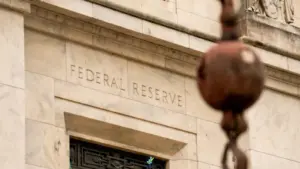
The Federal Reserve, the US central bank, raised its interest-rate target range to 3.75%-4.00% on September 16, and it meets again on October 27–28. High interest rates make safer options like bank deposits and government bonds more attractive. That can reduce demand for assets like Bitcoin, which pay no interest. This is background pressure rather than a trigger for today’s dip.
3. Oil prices and Middle East tension
On October 8, Bitcoin also slipped below $83,000. Reports of possible US military action against Iran had pushed oil above $102 a barrel and raised bond yields, which are the interest rates governments pay to borrow. Higher oil prices can feed inflation, which is why markets watch them closely.
The reports on October 22 do not clearly confirm whether oil or the Middle East played a part today. It is best seen as earlier pressure that may still be affecting sentiment.
What Do Bitcoin ETF Flows Tell Us?
A Bitcoin ETF is a fund that lets people invest in Bitcoin through a regulated market product, without holding the coin themselves. US spot Bitcoin ETFs recorded net inflows of roughly $525 million on October 21, according to the cited daily flow data. This means more money entered the funds than left them that day. The funds had lost money in the first half of October, so one strong day does not settle the trend.
ETF flows are one indicator of investor demand, but they do not explain Bitcoin’s price movement on their own.
Why Does Bitcoin React to Economic News?
Bitcoin has no company, profits, or central bank behind it. Its price depends largely on how much people want to own it. When expectations about interest rates, inflation, or the economy change, that demand can change quickly.
It also does not always move with stocks, gold, or other investments. Sometimes it rises when stocks rise, and sometimes it does not. That is why one news item rarely explains a price move completely.
What Does the Bitcoin Falls Mean for Investors?
A one-day move does not show where Bitcoin is heading. Prices can recover after a dip, or keep sliding. Nobody can say which, and confident online predictions are often just guesses.
It also helps to keep the bigger picture in mind. Bitcoin is still roughly a third below its record of about $126,000 from early October 2025. A past high is no guarantee that the price will return there.
Cryptocurrency prices can swing sharply within hours, and losses are possible. Decisions made in a panic, or because of a social media post, are often regretted later. This article is for information only and is not investment advice.
What Should Investors Watch Next?
The Federal Reserve meeting on October 27–28: The date is confirmed. The Fed’s decision and its comments on inflation can shift expectations for interest rates, which affects riskier assets like Bitcoin.
US inflation data on November 10: The Bureau of Labor Statistics is scheduled to release October’s consumer price figures that day. They will show whether inflation is cooling or staying high.
Daily ETF flow data: Continued inflows would suggest large investors are still buying. A switch back to outflows would point to weaker demand.
The Bottom Line
Bitcoin slipped below $83,000 after a short rally faded, possibly because investors were unsure how to read big tech earnings. Inflation and interest-rate worries add pressure in the background, and oil prices and Middle East tensions have been a factor earlier this month. ETF money has recently been flowing in. Where Bitcoin goes next is uncertain.
FAQs
Why has Bitcoin fallen below $83,000?
Bitcoin fell below $83,000 after giving up its recent gains. Mixed reactions to US tech earnings, inflation concerns, and interest-rate expectations may have affected investor sentiment, although no single cause has been confirmed.
Will Bitcoin's price fall further?
Bitcoin could fall further or recover, but neither outcome is certain. Its price may depend on investor sentiment, economic data, interest-rate expectations, and demand in the cryptocurrency market.
How do US interest rates affect Bitcoin prices?
When US interest rates remain high, safer investments such as government bonds may become more attractive. This can reduce demand for riskier assets like Bitcoin, although the relationship is not always direct.
What do Bitcoin ETF inflows and outflows mean?
ETF inflows mean more money entered Bitcoin exchange-traded funds than left them during a given period. Outflows mean more money left than entered. These figures can offer clues about investor demand, but they do not determine Bitcoin's price on their own.
Is Bitcoin a risky investment?
Yes. Bitcoin prices can change sharply within a short period, and investors can lose a significant part of their money. Anyone considering cryptocurrency should understand the risks and avoid making decisions based only on short-term price movements.
ARN Disclosure: Investik Future is an AMFI-registered Mutual Fund Distributor. ARN-341107 — Verify on AMFI ↗. Komal Thakur is the content author and digital marketer; the ARN registration belongs to Investik Future, not to the author personally.