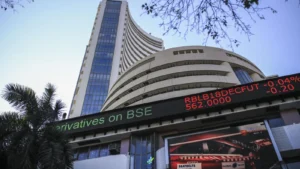


The stock market can be humbling, even for the most confident investors, and Thursday morning was a reminder of that. The numbers were hard to ignore when I opened the market dashboard. Adani Group stocks were bleeding red, and it took just a few minutes for the scale of destruction to become clear, with over ₹2.45 lakh crore in market-led capitalisation erased
It wasn’t just another day of volatile trading for retail investors like me. It was a moment that called for a pause, a rethink, and a deeper dive into how global allegations, governance concerns, and market sentiment can crash together in hard ways.
explain to you what the ₹2.45 lakh crore fall in Adani Group’s market value translates into for investors like us. Beyond the headlines and sharp intraday cuts, see what triggered the sell-off, why international allegations are significant from an Indian market perspective, and how governance risks can wash away growth stories in a flash.
A Sharp Fall That Shook the Markets
The sell-off was quick and brutal. Adani Enterprises tumbled close to 23%, while Adani Ports and Adani Energy Solutions hit the 20% lower circuit. Adani Green Energy, Adani Total Gas, Adani Power, Ambuja Cements, ACC, NDTV, and Adani Wilmar followed suit, some touching their lowest permissible trading limits for the day.
This wasn’t happening in isolation. The broader market felt the pressure, too. The BSE Sensex slipped over 500 points, and the NSE Nifty fell close to 187 points. But the real catalyst wasn’t domestic earnings or macro data at all; it came from thousands of kilometres away.
The Allegations That Sparked the Panic
US prosecutors also alleged Gautam Adani and his nephew Sagar Adani, as well as other executives of the conglomerate, were part of a scheme to pay USD 250 million in bribes to Indian government officials from 2020 through 2024. The alleged aim was to secure favourable solar power contracts that could generate more than USD 2 billion in profits.
What makes this case particularly serious is the global angle. According to US authorities, these alleged payments were concealed from American investors and financial institutions. That detail alone brings the matter under US jurisdiction, even though the business operations are largely based in India.
Breon Peace, the US Attorney for the Eastern District of New York, described it as an “elaborate scheme,” while the U.S. Securities and Exchange Commission has filed a parallel civil case alleging securities violations. As of now, the Adani Group has not issued a detailed public response.
Also Read: Adani Enterprises to exit Adani Wilmar in a $2B multi-phase deal.
Why This Matters More Than Just One Business Group
From an investor’s point of view, this episode goes far beyond a single conglomerate. The Adani Group is deeply embedded in India’s infrastructure story, ports, power, renewable energy, cement, logistics, and media. When a group of this scale faces governance-related allegations, systemic confidence takes a hit.
This situation reinforces that lesson. Markets don’t wait for court verdicts; they react instantly to uncertainty.
The Renewable Energy Angle Investors Can’t Ignore
What stands out to me is that these allegations centre around solar power contracts, a sector that has been aggressively promoted as India’s future growth engine. Renewable energy stocks have been a favourite among long-term investors betting on sustainability, ESG themes, and government support.
If regulatory scrutiny intensifies, it could slow project execution, raise financing costs, and impact valuations, not just for one group, but for the sector as a whole. Events like this make that question even more relevant.
What I’m Watching as the Story Unfolds
As tempting as it is to react emotionally, panic selling, or bargain hunting, I’ve discovered that patience breeds observation, and observation is where clarity lives. Here’s what I’m personally tracking:
- Official Response from the Adani Group: Silence creates more suspicion than negative news. A transparent, detailed response matters.
- Regulatory Developments: Indian regulatory action or further disclosures from US agencies could govern market direction.
- Debt and Funding Channels: The Adani Group relies heavily on global financing. If lenders reassess risk, refinancing could become costlier.
- Institutional Investor Behaviour: FIIs and large domestic funds often signal how serious the situation is by their actions, not statements.
Should Retail Investors Buy the Dip?
This is the question flooding my inbox, and honestly, there’s no one-size-fits-all answer. If you’re a short-term trader, volatility like this can be brutal. Lower circuits limit exits, and sentiment can remain negative longer than expected.
If you’re a long-term investor, the decision depends on:
- Your risk tolerance
- Exposure concentration
- Belief in management governance
- Time horizon of 7–10 years
A Broader Lesson I’m Taking Away
Every major market shock leaves behind a lesson. For me, this one reinforces three truths:
- No stock is too big to fall
- Governance risk deserves as much weight as growth potential
- Global markets are deeply interconnected
Indian investors can no longer view US regulations, foreign prosecutors, or international investors as “external” factors. In today’s market, they matter immensely.
Final Thoughts
The Adani Group stock crash is an ongoing story, and what may be a definitive conclusion today might change tomorrow. But as investors, we aren’t in the business of predicting headlines; we’re in the business of managing risk, gathering information from multiple angles, and strategizing according to our financial goals.
I’ll keep monitoring this situation closely and post updates when more verified information becomes available. For now, caution, context, and clarity remain far more valuable than courage.
Also Read: Adani Wipeout Fails to Break Foreign Investor Trust
Disclaimer
This article reflects my personal views as a market observer and investor. It is not investment advice. Stock market investments are subject to market risks. Readers are advised to consult a certified financial advisor before making any investment decisions. The information presented is based on publicly available reports and developments as of the time of writing.

Himani Soni
I’m Himani Soni, a finance content strategist with 2+ years at Investik Future. I decode market trends and simplify complex investing concepts into clear, actionable insights for the everyday investor.