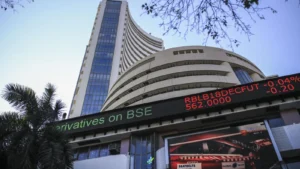


I’ve followed the markets long enough to know that sometimes prices move not because of earnings, not because of policy, but simply because of perception. That’s exactly what caught my attention when MSTC Ltd shares jumped nearly 6% to ₹771.30 on the BSE after the company disclosed a scheduled one-on-one meeting with ace investor Ramesh Damani.
At first glance, this looked like just another routine exchange filing. But markets rarely react this sharply to routine disclosures. So I dug deeper, not just into the news, but into what such meetings signal beneath the surface.
In this article, I break down what really lies behind MSTC’s sudden stock movement after news of a high-profile investor meeting. Rather than just reporting the price rise, I explore how markets interpret such signals, why investor attention alone can move stocks, and how I personally analyse whether such developments actually matter for long-term investing decisions.
Why This News Made Me Sit Up
I’ve seen hundreds of corporate announcements over the years. Most pass quietly. But when a respected market participant schedules a meeting with a company, and that too a one-to-one interaction, the market interprets it as a possible signal of interest, validation, or due diligence.
The filing also mentioned another scheduled meeting with Modifi Investment Services Private Limited. Again, routine on paper. But markets don’t trade on paper. They trade on psychology. Here’s what I’ve learned: Stocks don’t always rise on facts. Sometimes they rise out of curiosity.
The Psychology Behind Investor Meetings
When I first started studying institutional behaviour, one pattern stood out: If a well-known investor is even rumoured to be studying a company, market participants start asking why.
It doesn’t mean the investor will buy. It doesn’t mean they like the stock. It simply means they’re interested enough to ask questions. And in markets, interest itself can move prices.
In MSTC’s case, the government still holds roughly 64.75% equity. That makes it a PSU with a relatively tight public float compared to fully private firms. When float is limited, even modest buying interest can move prices sharply.
What MSTC Actually Does, And Why That Matters
Many retail investors I talk to don’t fully understand MSTC’s business. They assume it’s just another PSU trading stock. But I see it differently. MSTC operates across multiple e-commerce-related service segments, including:
- Digital auctions
- Scrap trading platforms
- Coal and mineral sales portals
- Government asset disposal systems
In simple words, MSTC sits at the intersection of government, digital infrastructure, and marketplaces. That combination is unusual and sometimes undervalued because it doesn’t fit neatly into one sector box.
Why ramesh Damani’s Name Moves Markets
Over time, I’ve noticed that certain investors carry signalling power. Damani is one of them. Public data shows he holds over 1% equity stakes in companies such as:
- Protean eGov Technologies
- Goldiam International
- Panama Petrochem
- Vadivarhe Speciality Chemicals
According to portfolio tracking platform Trendlyne, his disclosed holdings are worth roughly ₹163.6 crore.
Now, here’s the thing I always remind readers: Successful investors don’t just buy randomly. They research deeply before even initiating conversations. So when someone like Damani schedules a meeting, markets instinctively wonder: Is he studying the company for a potential investment?
Also Read: Cement Stocks Jump 3–5% as Strong Fundamentals Drive Re-Rating
What I Think the Market Is Really Pricing In
From my experience, price reactions like this usually reflect one of three expectations:
- Anticipation of Smart Money Entry: Retail traders often believe that if a seasoned investor is looking, something positive might be brewing.
- Validation Bias: Investors who already hold the stock feel reassured. This sometimes leads to additional buying, pushing prices higher.
- Speculative Momentum: Short-term traders jump in purely because they expect others to react.
Personally, I don’t treat such rallies as confirmation. I treat them as signals to investigate further.

What I Look for Before Getting Excited
Whenever I see a stock rise on news like this, I run through a checklist:
- Has anything changed fundamentally?
- Are earnings improving?
- Is valuation still reasonable?
- Is debt under control?
- Is management execution consistent?
If the answer to these questions is “no,” I assume the move is sentiment-driven rather than value-driven.
A Lesson I Learned the Hard Way
Years ago, I bought a stock simply because a well-known investor had shown interest. The price rose briefly, and then fell when no stake purchase materialised.
That experience changed how I interpret such announcements. Now I see them as: Starting points for research, not reasons to buy.
How I Personally Interpret MSTC’s Case
Here’s my honest take:
- The meeting itself is neutral news.
- The price reaction is sentiment.
- The real story will be revealed only if something concrete follows.
If Damani eventually discloses a stake purchase, that’s information. If nothing happens, this rally may fade just as quickly.
The Bigger Insight Most Investors Miss
Many traders focus on who is meeting with a company. I focus on why a company might attract attention. For MSTC, potential attraction factors could include:
- Niche digital infrastructure business
- PSU backing (perceived safety)
- Platform-based revenue model
- Potential operating leverage
These structural elements matter far more than a meeting schedule.

How I’d Approach This Stock Now
,If I were evaluating MSTC today, I would:
- Study financials for the last 5 years
- Check margin stability
- Compare valuation with peers
- Track institutional shareholding trends
- Watch future disclosures closely
I wouldn’t buy just because someone famous scheduled a meeting.
The market loves stories. But wealth is built on analysis. Whenever you see headlines like: “Stock jumps after investor meeting” Pause. Ask questions. Investigate.
Because in investing, reacting is easy. Understanding is profitable.
Final Thought
I’ve learned that markets often react first and understand later. MSTC’s sudden rise after announcing meetings is a classic example of sentiment moving ahead of substance.
Will this turn into something meaningful? Maybe. Is there enough information to invest? Not yet. And that distinction is where disciplined investors separate themselves from the crowd.
Also Read: Adani wipeout impacts, but won’t shake foreign investor confidence in India.
disclaimer
This article is the author’s personal analysis and opinions only for educational purposes. This is not investment advice or a recommendation to buy or sell any stock. Always perform your own analysis or consult with a SEBI-registered financial adviser prior to making any investment decisions.

Himani Soni
I’m Himani Soni, a finance content strategist with 2+ years at Investik Future. I decode market trends and simplify complex investing concepts into clear, actionable insights for the everyday investor.