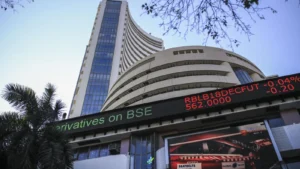


When I opened the market screens this morning, I didn’t expect Indian solar stocks and renewable energy stocks to bleed this sharply. But within minutes, it was clear that the US decision to slap steep countervailing duties on solar imports from India had rattled the entire sector.
Stocks like Waaree Energies and Premier Energies cracked hard, with double-digit losses that instantly wiped out weeks of gains. As someone who closely tracks the clean energy theme, not just as a trend, but as a long-term investment story, this move deserves a deeper look beyond the red tickers flashing on the screen. This isn’t just a bad trading day. It’s a reminder of how global policy decisions can abruptly change sentiment in Indian markets.
This article explains why Indian solar and renewable energy stocks declined sharply after the United States imposed high countervailing duties on solar imports from India. It looks at what triggered the sell-off, how the US trade action could affect Indian solar manufacturers and export-heavy companies, and why the market reaction was selective rather than a full-sector collapse. Written from a first-person investor perspective, the piece focuses on understanding the broader impact of global policy decisions on Indian markets and what retail investors should realistically watch out for next.
What Exactly Triggered the Sell-Off?
The selling pressure came in the wake of a preliminary ruling from the US Commerce Department that suggested imposing countervailing duties of approximately 126% on solar cells and modules imported into the US from India. The United States argues that Indian producers enjoy excessive government subsidies that make their products unfairly competitive in the US market.
India was not the only target on the firing line. Indonesia and Laos were also targeted, but the steepest penalty among the three goes to India.
The fallout was immediate:
- Waaree Energies plunged nearly 15%
- Premier Energies slipped over 12%
- Vikram Solar, Waaree Renewable Technologies, and Solex Energy followed suit
Interestingly, not every renewable stock collapsed. Some names showed relative resilience, suggesting selective selling rather than a complete sector rejection.

Why This Matters More Than a One-Day Fall
Here’s what concerns me, not the percentage fall, but the structural implication.
The US is one of the largest export markets for Indian solar manufacturers. According to trade data, imports from India, Indonesia, and Laos together accounted for nearly two-thirds of total US solar imports in 2025, with a combined value of about $4.5 billion.
If these duties are finalised:
- Indian solar exports to the US could become commercially unviable
- Margins for export-heavy companies may take a serious hit
- Expansion plans based on overseas demand might need recalibration
This isn’t about sentiment alone. It’s about earnings visibility.
There’s More Trouble Ahead: Anti-Dumping Probe Still Pending
What makes the situation more uncomfortable is that this is only the first round. The US Commerce Department is expected to announce another ruling next month on whether solar exporters sold products below their cost of production. If that happens, anti-dumping duties could be added on top of the existing countervailing duties.
In simple terms: What looks bad now could still get worse. As an investor, this is precisely the kind of uncertainty that markets despise and punish swiftly.
Who Filed the Complaint, and Why It Matters
The case stems from a petition filed by the Alliance for American Solar Manufacturing and Trade, which includes some of the largest U.S. manufacturers such as First Solar and Hanwha Qcells.
Their argument is simple: Foreign solar modules, in particular from India, are damaging domestic manufacturing by using subsidy-fueled pricing to undercut U.S. manufacturers. This aligns with the US focus on energy independence and putting manufacturing jobs back in the US.

How I’m Reading the Market Reaction
One thing I noticed today was the lack of panic selling across all renewable stocks. Some companies saw only mild declines, while others even traded flat.
That tells me two things:
- The market is distinguishing between export-heavy and domestically focused players
- This is not an exit from renewables, it’s a re-rating based on risk exposure
India’s renewable energy story is still intact. Government targets, domestic solar capacity expansion, and policy support haven’t vanished overnight. But export-linked valuations may need resetting.
Also Read: Trump’s 25% Tariff Threaten India’s $1.2B Exports
Should Retail Investors Be Worried?
If you’re a long-term investor like me, here’s how I’m thinking about it:
- Short term: Volatility is inevitable. Stocks linked to US exports may remain under pressure until clarity emerges.
- Medium term: Companies may pivot towards domestic orders or alternative export markets.
- Long term: India’s renewable push is structural, not cyclical.
That said, this is not the time to blindly average down just because prices look cheaper. Policy risk is real, and it deserves respect.
What I’m Personally Watching Next
Over the coming weeks, I’ll be tracking:
- Final US duty decisions
- Management commentary from affected companies
- Any diplomatic or trade-level response from India
- Order book diversification announcements
Markets move on narratives, but earnings decide trends.
Final Thoughts
Today’s fall in Indian solar stocks isn’t just another market dip; it’s a lesson in how interconnected global trade, policy, and investing have become.
As someone who believes in the renewable energy theme, I’m not writing this sector off. But I am re-evaluating expectations, especially for companies heavily dependent on exports to the US.
Sometimes, the smartest move in investing isn’t buying or selling, it’s waiting with clarity.
Also Read: US Tariff Shift to 15%: Can India Gain A Strong Edge?
Disclaimer
This article is for informational and educational purposes only. The views expressed are personal opinions and should not be considered investment advice. Readers are advised to conduct their own research or consult a certified financial advisor before making any investment decisions. Stock market investments are subject to market risks.

Himani Soni
I’m Himani Soni, a finance content strategist with 2+ years at Investik Future. I decode market trends and simplify complex investing concepts into clear, actionable insights for the everyday investor.