

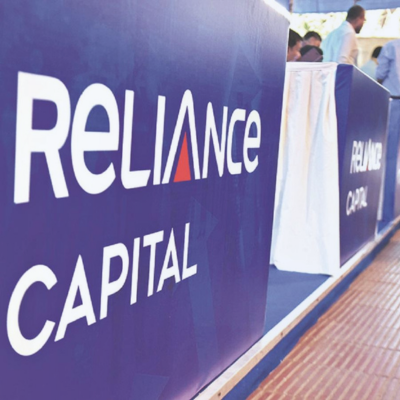
When I track major restructuring stories in India’s financial sector, very few stand out the way the acquisition of Reliance Capital by IndusInd International Holdings Ltd (IIHL), part of the Hinduja Group, does.
In my view, this isn’t just another distressed-asset resolution. It’s a strategic consolidation move that could reshape competition in India’s banking, financial services, and insurance (BFSI) ecosystem over the next decade.
In this article, let me break down what’s happening, why it matters, and what I think investors should watch closely.
The Deal Timeline, Almost at the Finish Line
According to statements from Ashok P Hinduja, Chairman of IIHL, most procedures tied to the resolution are already complete. The remaining formalities, handled by the administrator and Committee of Creditors, are expected to wrap up within weeks. Once share delisting concludes (typically 4–6 weeks), funds will be transferred to creditors, and Reliance Capital will officially come under IIHL’s fold.
The acquisition itself stems from a ₹9,650 crore winning bid approved by the National Company Law Tribunal. IIHL also infused an additional ₹200 crore to strengthen solvency, a signal, in my opinion, that the buyer intends to rebuild rather than strip assets.
Why This Acquisition Is Strategically Huge
From an investor’s lens, this transaction isn’t just about buying a distressed NBFC. It’s about acquiring a ready-made financial ecosystem.
Reliance Capital isn’t a single business; it’s a holding structure with multiple financial subsidiaries spanning:
- Insurance
- Securities brokerage
- Asset reconstruction
- Commercial finance
- Wealth services
Buying this platform allows IIHL to leapfrog years of organic expansion.
Personally, I see three strategic advantages:
- Instant Market Presence: Creating a diversified BFSI platform takes about 8–10 years from scratch. This deal shortens that timeline considerably.
- Cross-Selling Potential: IIHL can create cross-selling opportunities for all banking, insurance, and investment services; globally, most of the successful financial conglomerates thrive on this model.
- Customer Base Leverage: Through its banking division, IndusInd Bank has over 41 million customers at thousands of front-end outlets, even in villages, providing the group with a great distribution channel for insurance and investment products.
The $50 Billion Ambition, Realistic or Too Aggressive?
IIHL has set an audacious target: to take the BFSI business valuation from around $ 15 billion today to $50 billion by 2030.
That sounds ambitious at first glance. But when I analyze the numbers, it’s not unrealistic if execution is disciplined. To achieve this, the group plans to focus on:
- Digitalisation of services
- Customer experience upgrades
- Bancassurance partnerships
- Value creation through restructuring
In fact, bancassurance, the strategy of selling insurance through bank networks, could become the biggest growth driver. Compared to the world, India’s insurance penetration is still low, meaning there’s massive headroom for growth.
Divesting 35 Subsidiaries, Smart Capital Allocation Move
One such decision that I find notable is IIHL’s proposal to divest 34–35 out of the total 39 subsidiaries of Reliance Capital. Most of these have been described as small or shell entities.
Why does this matter? Because successful turnarounds rely on focus, not expansion. Through the sale of non-core units (expected proceeds ₹up to 1,000 crore), IIHL will be able to:
- Reduce complexity
- Improve governance clarity
- Generate liquidity
- Pay down debt
- Reinvest in high-growth segments
It’s a classic restructuring strategy: simplify before scaling.
Management Continuity, A Rare but Smart Move
Unlike many acquisitions where new owners flush out leadership, IIHL has said it will keep existing management for the time being. I think this is a good thing personally.
If you combine that with the fact that a company is surviving multiple crisis years and still making profits, it generally means the operational teams thoroughly know how to manage their business.
However, governance oversight will strengthen. Five directors, including Moses Harding, John, and Arun Tiwari, have already received approval from the Reserve Bank of India for board induction.

Branding Strategy, Why the Name Might Change
For up to three years, IIHL can continue operating under the Reliance Capital name as permitted by regulators. But the group is already working with branding agencies to eventually blend or transition toward the IndusInd identity.
From a brand strategy perspective, this makes sense. The Reliance name still carries recall, but it also carries legacy baggage tied to governance issues under the Anil Dhirubhai Ambani Group era. A gradual rebranding allows:
- Customer trust retention
- Reputation reset
- Smooth market transition
What Led to Reliance Capital’s Collapse?
To truly understand why this deal matters, we need context.
In November 2021, the RBI had superseded Reliance Capital’s board over corporate governance issues and payment defaults. Administrator Nageswara Rao Y was appointed to lead the order and publish invites for takeover bids. It was among India’s biggest financial-sector insolvency proceedings.
The resolution process has taken years, underscoring the complexity of financial holding companies and the regulatory scrutiny that comes alongside them.
My View: What Investors Should Watch Next
Here are the major milestones that I will be watching myself:
- Completion of Transaction: Upon fund transfer and legal closure, IIHL will definitely commence its turnaround journey.
- Divestment Execution: Successful subsidiary divestitures ahead of deadlines indicate strong buyers.
- Digital Transformation Rollout: Management has pushed digitalisation. Competitiveness will be based on the speed of tech integration.
- Profitability Metrics: Investors need to track within 6-8 quarters:
- ROE trends
- Net interest margins
- Insurance premium growth

IPO Possibility in Two Years
Interestingly, IIHL has indicated its intent to file an IPO for Reliance Capital about two years after starting operations.
If that happens, it could become one of India’s most-watched listings, not because it’s a new company, but because it would represent a turnaround listing, a rare phenomenon in Indian markets.
Why This Deal Matters for India’s Financial Sector
From a macro perspective, I think this acquisition indicates three things:
- India’s Insolvency Framework Works: Large distressed financial firms can be resolved rather than liquidated.
- Global Capital Still Sees Opportunity in India: IIHL is Mauritius-based, providing another optimal portfolio for global capital still seeing opportunity in India.
- Consolidation Phase Has Begun: The BFSI industry is entering a new phase wherein survival will be determined by scale, technology, and capital strength.
Final Thoughts, My Personal Take
Having researched distressed asset deals for years, I have observed a pattern: most acquisitions fail not due to weak assets but because of poor integration execution.
In this case, IIHL seems to be taking a measured approach:
- Retaining management
- Selling non-core assets
- Strengthening governance
- Leveraging existing banking distribution
If execution matches intent, this could become one of India’s most successful financial turnarounds of the decade.
And if they truly scale to a $50 billion valuation by 2030, early observers of this deal may look back and realise this was the moment the transformation began.
Also Read: Why Big Tech Is Rapidly Investing Billions In India.
Disclaimer
The opinions expressed in this article are for informational purposes only and reflect personal analysis. This is not investment advice and should not be construed as a recommendation to buy or sell any stock or financial instrument. This is not investment advice, and investors should do their own research or consult a qualified financial adviser before making investment decisions.

Himani Soni
I’m Himani Soni, a finance content strategist with 2+ years at Investik Future. I decode market trends and simplify complex investing concepts into clear, actionable insights for the everyday investor.