
When Shadowfax Technologies finally rang the bell on January 28, I was watching the screen closely, not because I expected fireworks, but because this IPO had already sent mixed signals before listing. A technology-led logistics company with strong brand associations, marquee investors, and a decent subscription number should ideally command confidence on debut. But the market had other plans.
Shadowfax shares are listed at a nearly 9% discount to the IPO price, delivering a reality check not just for short-term IPO hunters but also for anyone tracking India’s logistics and quick-commerce story.
In this article, I’ll walk you through what actually happened, why the listing disappointed, what the numbers really say, and most importantly, what investors should realistically do next.
Shadowfax IPO Listing: What Happened on Day One?
Shadowfax Technologies made its stock market debut at ₹112.60 on the NSE, compared to an IPO issue price of ₹124 per share. That’s a discount of around 9.19%, which clearly categorises the listing as weak.
On the BSE, the stock fared marginally better but still opened at a discount, listing at ₹113, down 8.87% from the issue price.
At listing, Shadowfax commanded a market capitalisation of approximately ₹6,509 crore, a respectable number, but one that didn’t excite the market given the valuation expectations baked into the IPO.
What stood out to me immediately was that this wasn’t a panic-driven sell-off. Instead, it looked like measured caution from institutional and retail participants alike.
Grey Market Expectations vs Reality
One of the biggest talking points before listing was the Grey Market Premium (GMP)—or rather, the lack of it.
Just days before listing, Shadowfax was trading at a grey market discount of around 2–3%, with unlisted shares hovering near ₹120–121. Earlier in the month, optimism was higher, with GMP estimates briefly showing a 12–13% discount, but that sentiment eroded quickly as broader market conditions weakened.
To me, this was the first clear sign that the IPO would struggle on debut. When GMP fails to build momentum, listing gains become unlikely—and Shadowfax followed that script almost perfectly.
IPO Subscription Numbers: Good, But Not Great
Despite the weak listing, Shadowfax’s IPO was not a failure on the subscription front.
Here’s how the numbers stacked up:
- Overall subscription: 1.68 times
- Retail investors (RII): Over 2x
- Qualified Institutional Buyers (QIBs): Over 2x
- Non-Institutional Investors (NII): Only 54%
The weak NII response stood out. Typically, strong NII participation adds listing-day fuel. In the case of Shadowfax, their lukewarm interest signalled valuation concerns more than any business doubts.
IPO Structure and Fundraising Details
Shadowfax had raised a total of ₹1,907.2 crore through its IPO, consisting of:
- Fresh issue: ₹1,000 crore
- Offer for Sale (OFS): ₹907.2 crore
A few major shareholders participating in the OFS included Flipkart, Qualcomm, Eight Roads Ventures, and NewQuest Asia Fund, all well-known names.
The price band was fixed at ₹118–₹124, and investors had to apply for a minimum of 120 shares, implying an investment of ₹14,160 at the upper band.
Where Will the Money Go?
According to the draft prospectus, Shadowfax plans to use fresh issue proceeds for:
- Expanding logistics and delivery infrastructure
- Renting new first-mile and last-mile delivery centres
- Setting up additional sorting hubs
- Branding and marketing initiatives
- Potential inorganic acquisitions
- General corporate purposes
From a long-term perspective, these uses are logical. However, the market wanted proof of margin expansion, not just growth plans.
Anchor Investors: Strong Names, Strong Signal?
Before the IPO, Shadowfax raised ₹856.02 crore from 39 anchor investors.
Notable participants included:
- ICICI Prudential Mutual Fund
- Nippon India MF
- Motilal Oswal AMC
- Bandhan MF
- HSBC MF
The largest anchor investor was ICICI Prudential, which invested nearly ₹190 crore across multiple schemes.
While this added credibility, anchor participation alone wasn’t enough to override concerns around valuation and profitability metrics.
Understanding the Business: Why Shadowfax Still Matters
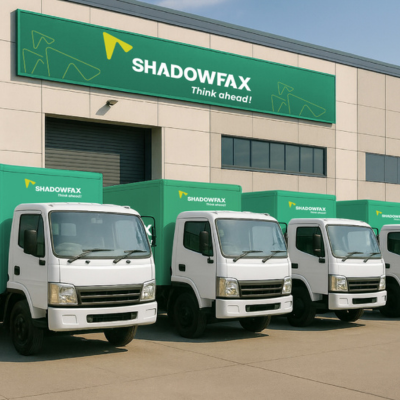
Shadowfax is not a small or unknown player.
The company operates across:
- 2,300+ cities
- 14,700+ PIN codes
- Clients include Flipkart, Meesho, Swiggy, Blinkit, Nykaa, Zomato
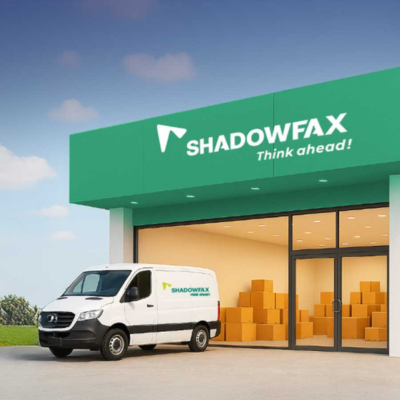
Its asset-light, gig-based delivery model allows rapid scaling without heavy capex. The company has also shown strong revenue growth (around 30%+ CAGR) in recent years and turned EBITDA-positive in FY24.
Then Why Did the Stock List Weak?
This is where valuation enters the picture.
At the upper IPO price, Shadowfax was valued at:
- EV/EBITDA of ~100x+
- Thin operating margins
- High client concentration (top client ~50% of revenue)
When compared with listed peers like Delhivery, the valuation appeared aggressive, especially in a market environment where investors are demanding profitability—not just growth narratives.
In my view, the market wasn’t rejecting Shadowfax’s business—it was rejecting the price at which it was offered.
Buy, Sell, or Hold? My Personal View
Here’s my honest, no-hype assessment:
If you already got an allotment:
- Long-term investors: HOLD, but track execution closely
- Short-term investors: Listing gains were never on the table; consider risk management
If you missed the IPO:
- Don’t rush in immediately
- Let the stock find its natural support levels
- Watch quarterly numbers, margin trends, and client diversification
Shadowfax is a high-risk, high-expectation stock—not a defensive play.
What I’ll Be Watching Going Forward
For me, Shadowfax’s future performance depends on three key factors:
1. Margin expansion in a competitive logistics space
2. Reduced dependence on top clients
3. Sustained profitability without aggressive discounting
If the company executes well, today’s weak listing may look insignificant in hindsight. But if growth slows or margins disappoint, valuation pressure will remain.
Final Thoughts
Shadowfax’s weak listing is not a failure, it’s a reminder. A reminder that even strong businesses cannot escape valuation discipline, especially in cautious markets. As an investor, I see this debut not as a red flag, but as a pause, a moment where expectations reset, and fundamentals take centre stage.
The real verdict on Shadowfax will not be delivered on listing day but over the next few earnings cycles.
Also Read: IndusInd Bank Q3FY26: Profit Slumps Nearly 90% YoY Despite Sequential Recovery
Disclaimer
This article is for educational and informational purposes only. The views expressed are personal and do not constitute investment advice. Stock market investments are subject to market risks. Readers are advised to consult a SEBI-registered financial advisor before making any investment decisions. Neither the author nor InvestikFuture.com is responsible for any financial losses arising from the use of this information.

Himani Soni
I’m Himani Soni, a finance content strategist with 2+ years at Investik Future. I decode market trends and simplify complex investing concepts into clear, actionable insights for the everyday investor.