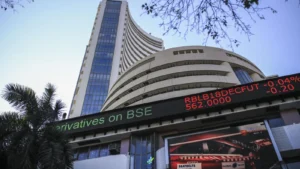


I’ve been watching the markets closely today, and the OMC stocks are under pressure once again. Crude oil prices have spiked sharply as geopolitical tension escalates globally, and this is reflected in the Indian OMC stocks.
What we are seeing today is not just another run-of-the-mill decline, but rather the classic convergence of global geopolitics and domestic market realities.
The article highlights that Oil marketing company (OMC) stocks like Indian Oil Corporation (IOC), Hindustan Petroleum Corporation Limited (HPCL) and Bharat Petroleum Corporation Limited (BPCL) are under pressure as crude oil prices go up over $110 amid increasing global tension. Higher oil prices mean that those companies will have to pay more for their input, squeeze their margins and affect their stock price performance right now, while ongoing geopolitical uncertainty and supply disruptions continue to drive volatility in the market.
OMC Stocks Slip as Oil Prices Spike
Looking at the markets this afternoon, shares of major OMCs were in the red:
- Indian Oil Corporation (IOC) slipped by nearly 2%
- Hindustan Petroleum Corporation Limited (HPCL) slipped over 1%
- Bharat Petroleum Corporation Limited (BPCL) also fell around 1.5%
At first glance, these may not seem like massive cuts. But from an investor’s perspective, this reflects deeper concerns brewing beneath the surface. The primary trigger? Brent crude prices are soaring past $110 per barrel.
Why OMC Stocks Are Falling Today
From my experience analysing energy stocks, the relationship here is quite straightforward but critical. OMCs like IOC, BPCL, and HPCL operate on tight marketing margins. When crude oil prices rise sharply:
- Input costs increase significantly
- Fuel prices do not always rise in line with the average due to political and regulatory sensitivities.
- Margins get squeezed
This puts pressure on profitability straight away. And that pressure is building right now.
The Real Trigger: Escalating Global Conflict
The bigger story, though, is outside the stock market. The persistent hostilities between the United States, Israel and Iran have upended global oil supply networks. What concerns me the most is how fast this has turned into a full-on energy crisis.
Heavy limitations are put in place on the Strait of Hormuz, one of the world’s most vital oil delivery chokepoints. The route alone accounts for a large share of oil shipments worldwide. Any disruption here isn’t just a question of supply; it threatens the underpinnings of crude pricing everywhere.
Saudi Aramco’s Pricing Move Signals Tight Supply
One other development that received my attention is the aggressive pricing strategy of Saudi Arabia. Saudi Aramco has raised the official selling price of its Arab Light crude for Asia to a record premium of $19.50 per barrel.
To me, this sends a strong signal: supply is tightening, and producers are capitalising on the situation. This kind of pricing power usually appears only during periods of extreme imbalance between supply and demand.
Is This Turning Into a Global Energy Crisis?
Through an investor’s lens, this situation is beginning to appear larger than just a temporary disruption. Here’s what we’re already witnessing:
- Soaring prices for crude and refined products
- Inflationary pressures are building globally
- Increased input costs for industries
- Slowing economic momentum
If the trend continues, it could become a larger macroeconomic problem.
Ceasefire Talks: Hope, But Not Yet Relief
There is a little bit of optimism in the air. The United States, Iran and regional mediators are reportedly discussing an extension of a potential 45-day ceasefire.
But from what I understand, a breakthrough in the next 48 hours looks unlikely. And markets hate uncertainty.
Trump’s Warning Adds Fuel to the Fire
Over the weekend, Donald Trump escalated the situation further by warning of severe military action if Iran does not reopen the Strait of Hormuz.
Iran has rejected these demands, and as of now, the route remains largely restricted. This kind of rhetoric only increases volatility in oil markets, and that volatility is exactly what is hurting OMC stocks today.
A Small Relief: Iraq Oil Flows Continue
Amid the chaos, there is a slight silver lining. Iran has indicated that Iraq could be exempt from the restrictions. Additionally, Iraq’s State Organisation for Marketing of Oil (SOMO) has stated that shipments will continue.
While this doesn’t solve the larger issue, it does prevent a complete supply freeze. And in markets like these, even partial relief matters.
Also Read: ONGC Drops Despite Oil Above $100: Policy Risks Surge
What This Means for Investors
To me, this is just a prime example of the way that certain global geopolitical factors can settle in on domestic stocks. If you’re watching the OMC stock market, here’s what you need to know.
- These counters are considered to be very price sensitive with respect to crude oil.
- Margins remain vulnerable during periods of high oil prices
- Pricing dynamics can also be further influenced by government intervention
In the near term, volatility will likely stay elevated.
My Take: Caution Is Key Right Now
For my part, I do not think now is the time for aggressive bets on OMC stocks. The circumstance is dynamic, and excessive variables are at work:
- Geopolitical tensions
- Oil supply disruptions
- Policy decisions
- Currency movements
So, until the global picture becomes clear, I would like to remain cautious and see how things play out.
Frequently Asked Questions (FAQs)
1. Why are OMC stocks falling today?
The decline in OMC stocks is primarily associated with the steep rise in crude oil prices that increases input cost and hence compresses margin.
2. How does crude oil price impact OMC companies?
Increased crude prices increase the costs of procuring fuel, and if retail prices of fuel don’t rise proportionately as well, profitability falls.
3. What is the role of the Strait of Hormuz in oil prices?
The Strait of Hormuz is an important passage for oil around the world. Any impact on this is felt intensely in terms of supply, driving prices up.
4. Will OMC stocks recover soon?
Recovery is contingent significantly on the resolution of geopolitical tensions and a stabilisation of crude oil prices.
5. Should investors buy OMC stocks during this dip?
It depends on risk appetite. Volatility is still high in the short-term, so cautious investing is recommended.
Disclaimer
This article is for informational purposes only and is based on personal opinion at the time of market conditions. This is not financial or investment advice. Any investment decision should be made based on your own research or information from a certified financial advisor. All investments in the market are subject to risks, and past performance does not guarantee future results.

Himani Soni
I’m Himani Soni, a finance content strategist with 2+ years at Investik Future. I decode market trends and simplify complex investing concepts into clear, actionable insights for the everyday investor.