

When I saw Wipro jump nearly 2% on a Monday morning, my first instinct was to check if this was just another routine rally. But the deeper I went, the clearer it became, this isn’t just about a stock reacting to news. This is about positioning, scale, and survival in a slowing IT demand cycle. The trigger? A more-than-$1 billion strategic deal with Olam Group, and I think it could well be one of the defining transactions of Wipro in recent years.
This article breaks down why Wipro’s $1 billion-plus deal with the Olam Group is more than just another order book filling up; it’s a decision that could change the growth trajectory for Wipro. It notes how the deal offers long-term visibility on revenues, augments Wipro’s push into large, transformation-led projects and that it is further aided by the planned acquisition of Mindsprint.
A Deal That Comes at the Right Time
Let’s be honest, the IT services sector has not been lucky in recent times. Demand softness, deferred client spending and macro uncertainty have kept companies like Infosys and TCS on their toes. So when Wipro announced an eight-year engagement with strong revenue visibility, I immediately saw why the market reacted positively.
This isn’t just a large deal; it’s a long-term commitment. The fact that it includes a committed spend of $800 million tells me one thing: predictability. And in today’s environment, predictability is a premium.
Why the Market Liked It Instantly
Wipro’s stock climbed 1.78% to ₹198.38, but the reaction wasn’t just about the headline number. Here’s how I see it:
- Large deal wins signal confidence from global clients
- Long-duration contracts ensure stable cash flows
- Transformation-led deals carry better margins
This isn’t a short-term outsourcing contract. It’s a deep transformation partnership, and those tend to stick. If you’ve been tracking IT stocks as I have, you’ll know that the street rewards visibility over volatility.
The Mindsprint Angle: The Real Game Changer?
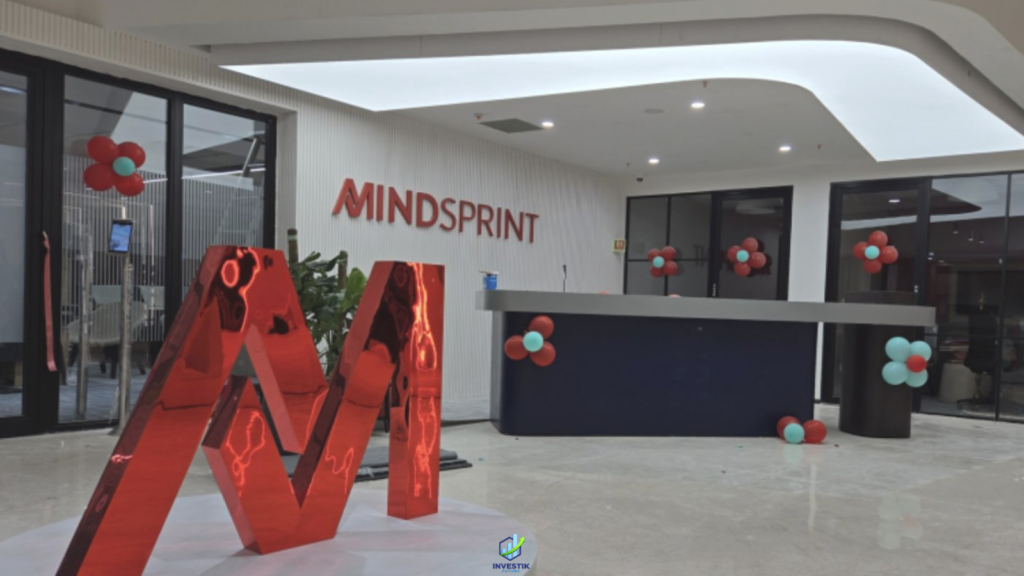
What caught my attention even more than the deal itself was Wipro’s planned acquisition of Mindsprint. Now this is where it gets interesting.
Mindsprint brings:
- Strong supply chain expertise
- Deep presence in food and agribusiness
- Proven digital transformation capabilities
And when I connect the dots, it’s obvious this wasn’t just a random acquisition. It’s also strategically aligned with the Olam deal. Post its completion, Mindsprint will operate as a wholly owned subsidiary of Wipro. To me, this signals a capability-led expansion, not just scale for the sake of it.
“Farm-to-Fork” Is Not Just a Buzzword
Wipro’s CEO Srinivas Pallia mentioned strengthening their “farm-to-fork” capabilities, and I think that phrase deserves more attention than it’s getting.
Why? Because global supply chains, especially in food, are undergoing a massive transformation:
- Traceability is becoming essential
- AI-led logistics optimisation is rising
- Sustainability tracking is now mandatory
With this deal, Wipro isn’t just entering a niche; it’s embedding itself into the core of agribusiness operations. And that’s a space with long-term, non-cyclical demand.
Olam’s Strategy: Focus, Simplify, Scale
From Olam’s side, CEO Sunny Verghese made it clear that this partnership is part of a broader reorganisation strategy. Here’s my understanding: Olam is:
- Sharpening focus on core verticals
- Simplifying operations
- Leveraging partners for transformation
And Wipro is a perfect fit in that puzzle. What I find interesting is the focus on end-to-end transformation and not just covering IT services.
Why This Deal Feels Different From Typical IT Contracts
I’ve been tracking the IT sector for some time, and one thing I’ve observed is that not all large deals are created equal. This one stands out because:
- It’s Industry-Specific: This was not your typical IT outsourcing; this deal had deep roots in agribusiness and food supply chains.
- It Combines Services and Capability Acquisition: The Mindsprint integration adds a new layer of capability, above mere execution.
- It has AI at Its Core: Solutions driven by AI are a necessity, not an option; they’re key to digital transformation.
Also Read: Technology Funds Drop in IT Rout 2026
What This Means for Wipro’s Growth Story
For a firm like Wipro that has often been perceived to be trailing its peers in terms of growth momentum, this deal may prove to be a game-changer. Here’s why I’m cautiously optimistic:
- Stronger deal pipeline perception
- Improved margin potential from transformation deals
- Better positioning in niche, high-growth sectors
But I’ll also say this: execution will be everything. A deal of this scale can either:
- Become a benchmark success story, or
- Turn into a margin-diluting challenge

My Take as an Investor
If you ask me whether this deal changes the Wipro story overnight, the answer is no. But does it shift the narrative?
Absolutely. For me, this means that Wipro is:
- Moving beyond traditional IT outsourcing
- Investing in domain-specific capabilities
- Playing the long-term transformation game
And that’s precisely what investors are looking for in today’s market.
Also Read: Oracle Financial Shares Rise 4% Despite Massive Layoffs
Frequently Asked Questions (FAQs)
1. Why did Wipro shares rise after the Olam deal announcement?
Shares of Wipro also rose as the deal offered long-term revenue visibility, comprised a significant committed spend and strengthened its footprint in transformation-led contracts.
2. What is the total value of the Wipro-Olam deal?
It is worth more than $1 billion in value, and includes a committed spend of approximately $800 million.
3. What role does Mindsprint play in this deal?
With Mindsprint, Wipro augments its supply chain and digital transformation capabilities, which adds more industry focus to the partnership.
4. What does “farm-to-fork” mean in this context?
That means handling your entire food supply chain, from production to gut, digitally with AI and data-based solutions.
5. Is this deal enough to drive long-term growth for Wipro?
It’s certainly a positive, but execution, margins and the ability to close similar scale deals will determine long-term growth.
Disclaimer
This article is for informational purposes only and does not necessarily reflect the opinions or interpretations of its author. It is not financial advice, investment recommendation or a solicitation to purchase any securities. People should do their own research and get advice from a qualified investment adviser before making investment decisions. Investments in the market are subject to risks, and past performance does not guarantee future results.

Himani Soni
I’m Himani Soni, a finance content strategist with 2+ years at Investik Future. I decode market trends and simplify complex investing concepts into clear, actionable insights for the everyday investor.