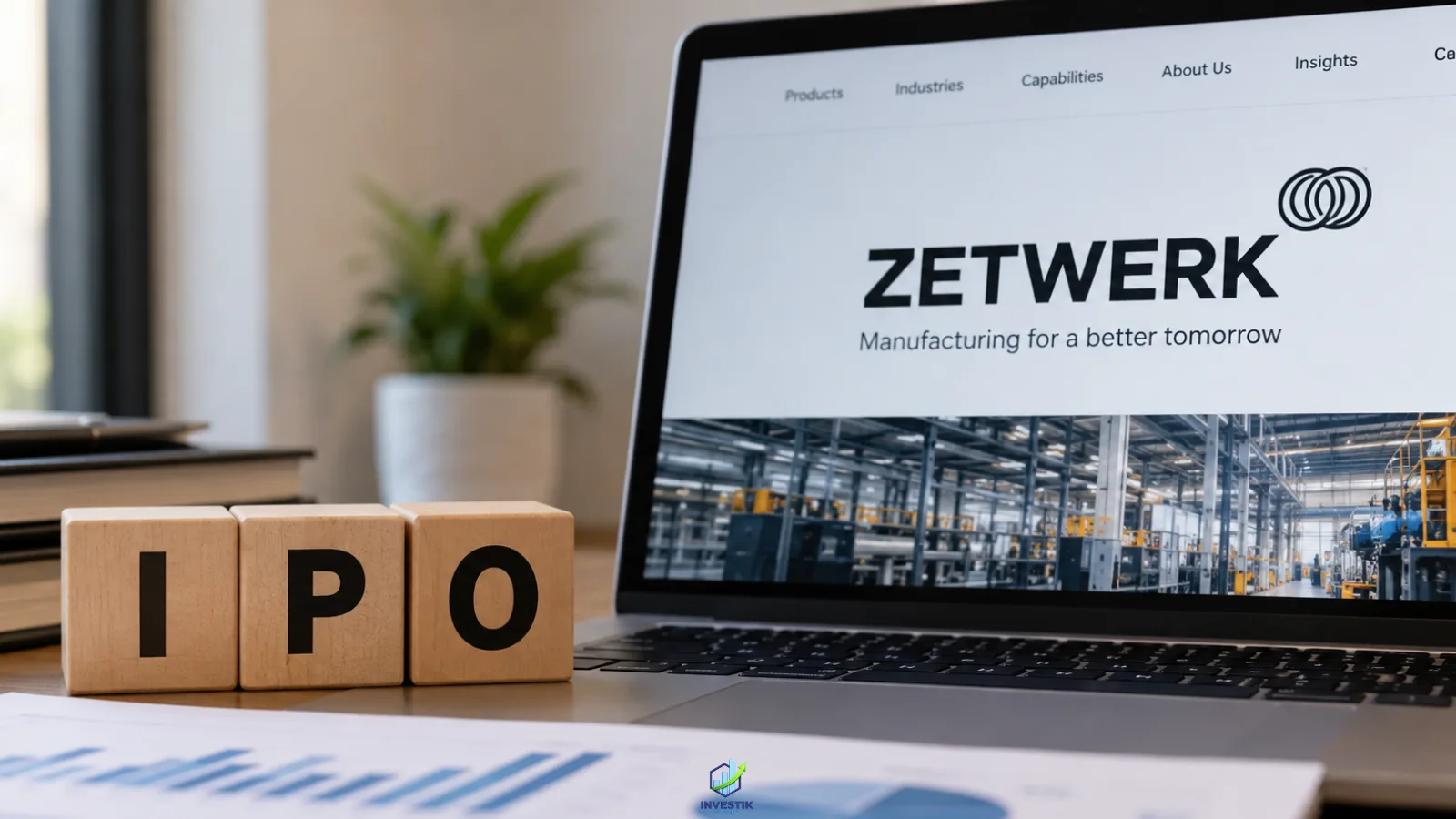

Zetwerk is launching an IPO worth about ₹5,012 crore, which opens on October 15, 2026, and closes on October 19. The price band is ₹143 to ₹151 per share. The issue has a fresh issue of ₹2,830 crore and an offer for sale (OFS) worth about ₹2,182 crore at the upper price.
Retail investors must bid for at least 99 shares, or ₹14,949 at the upper price. Zetwerk is a Bengaluru-based manufacturing platform that connects businesses with manufacturers and handles production for customers in energy, electronics, and defence. It reported higher revenue in FY26, but also a larger loss.
This article explains the Zetwerk IPO, including its price band, important dates, issue size, business model, and financial performance. It also covers the company’s growth prospects, key risks, use of IPO proceeds, and factors investors should consider before applying.
Zetwerk IPO: Key Details
| Detail | Information |
| IPO opening date | October 15, 2026 |
| IPO closing date | October 19, 2026 |
| Anchor investor bidding | October 14, 2026 |
| Price band | ₹143 to ₹151 per share |
| Lot size | 99 shares |
| Minimum investment (retail) | ₹14,949 at the upper price |
| Total issue size | About ₹5,012 crore |
| Fresh issue | ₹2,830 crore |
| Offer for sale (OFS) | 14.45 crore shares, about ₹2,182 crore at the upper price |
| Allotment date | October 21, 2026 (tentative) |
| Listing date | October 23, 2026 (tentative) |
| Stock exchanges | NSE and BSE |
These IPO terms are as announced by the company and reported in its red herring prospectus (RHP). Investors should confirm them in the final RHP, available on the NSE and BSE websites.
A fresh issue means the company creates and sells new shares, so the money goes to the company. An OFS means existing shareholders sell some of their shares, so the money goes to them. Eligible employees get a discount of ₹14 per share.
What Does Zetwerk Do?
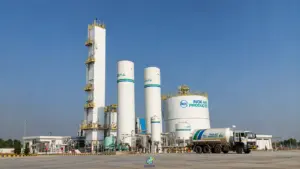
Zetwerk is a manufacturing platform. A business that needs a product or industrial component can place an order with Zetwerk instead of finding factories itself. Zetwerk then manages design, manufacturing, quality checks, and delivery, using its own factories and a network of outside suppliers. As of March 31, 2026, it had 26 manufacturing facilities of its own in India, Spain, Germany, and the USA, and 6,979 third-party suppliers across 26 countries.
It runs two businesses:
- Manufacturing: This makes up about 59% of revenue. It supplies energy products, precision products, and capital goods, and earns revenue from customer orders for these products and related services.
- Ecosystem (Terra91): This makes up about 41% of revenue. Zetwerk buys metals and petrochemicals from suppliers and sells them to customers.
Its customers come from utilities, renewable energy, consumer electronics, AI infrastructure, aerospace, defence, oil and gas, and industrial automation. In FY26, India contributed about 83% of revenue and the USA about 14%. International markets made up about 29.6% of manufacturing revenue.
Zetwerk IPO Price Band, Lot Size and Minimum Investment
The price band is ₹143 to ₹151 per share. The final issue price will be decided within this range after the bidding.
The lot size is 99 shares. Retail investors can bid for one lot or more, in multiples of 99 shares. The minimum amount is calculated at the upper price:
₹151 × 99 shares = ₹14,949
Higher bidding categories need larger amounts. For example, small non-institutional investors must bid for at least 14 lots, or 1,386 shares, which comes to ₹2,09,286 at the upper price. Category rules and eligibility conditions can differ, so check the RHP before applying.
As reported in the RHP, about 75% of the shares are reserved for qualified institutional buyers, about 15% for non-institutional investors, and about 10% for retail investors.
Zetwerk IPO Issue Size and Use of Proceeds
The total issue size is about ₹5,012 crore. Here is how it splits:
- Fresh issue (₹2,830 crore): This money goes to Zetwerk. The company raised this from ₹2,600 crore in its updated draft filing in August.
- OFS (14.45 crore shares, about ₹2,182 crore): This money goes to the selling shareholders, not to the company. Sellers include promoters Amrit Pratik Acharya and Srinath Ramakkrushnan, who are selling about 1.42 crore shares each, as well as investors such as Peak XV, Accel and Lightspeed.
According to the RHP as reported, the company plans to use the fresh issue money as follows:
| Purpose | Amount |
| Repay or prepay borrowings of the company | ₹1,300 crore |
| Repay debt at nine subsidiaries | ₹860 crore |
| Acquisitions, strategic investments and general corporate purposes | Remaining amount |
Debt repayment adds up to ₹2,160 crore, or about 76% of the fresh issue. The remaining amount of about ₹670 crore, before issue expenses, is for acquisitions that are not yet identified and for general business needs.
Zetwerk Financial Performance
The figures below are consolidated and restated, taken from the updated draft offer document Zetwerk filed with SEBI in August 2026. FY25 and FY26 are full financial years ended March 31. The final RHP may update some numbers.
| Particulars (₹ crore) | FY25 | FY26 |
| Revenue from operations (continuing) | 11,332 | 15,913 |
| Loss for the year, continuing operations | 215 | 964 |
| Total loss, including discontinued business | 371 | 1,606 |
| EBITDA before adjustments (continuing) | 293 | −354 |
| Adjusted EBITDA (company-defined, continuing) | 323 | 421 |
| Net cash used in operating activities | 386 | 682 |
| Total borrowings (end of year) | 1,747 | 1,936 |
Revenue grew about 40% in FY26. But the loss widened. The loss from continuing operations rose from ₹215 crore to ₹964 crore. The total loss of ₹1,606 crore also includes losses from a civil infrastructure business that Zetwerk has discontinued. The company says the FY26 loss was driven largely by one-time, non-cash items, including share-conversion adjustments and an impairment linked to that discontinued business.
EBITDA means earnings before interest, tax, depreciation and amortisation. Adjusted EBITDA is the company’s own measure. According to the offer document, it adds back share-based payments and one-time (exceptional) items, which are still costs in the company’s accounts, and it leaves out other income. That is why adjusted EBITDA was ₹421 crore in FY26 while EBITDA before these adjustments was −₹354 crore. Adjusted EBITDA does not mean the company earned a net profit. Its margin was 2.65% in FY26, down from 2.85% in FY25.
Why Is Zetwerk Going Public?
The offer document states three main uses for the new money: repaying borrowings, funding acquisitions, and general corporate needs. The OFS also lets promoters and early investors sell part of their holdings.
Paying down debt can reduce interest costs. But the offer document does not promise that the IPO will lift profits or share returns, so readers should not assume it will.
Key Strengths of Zetwerk
- Growing order book: The manufacturing order book stood at ₹12,370 crore at the end of FY26, up from ₹8,629 crore a year earlier. An order book is the value of orders received but not yet delivered.
- Manufacturing growth: Manufacturing revenue rose about 50% to ₹9,375 crore in FY26. New manufacturing orders were ₹15,394 crore, up from ₹11,327 crore.
- Profitable core manufacturing business: Manufacturing EBITDA was ₹565 crore in FY26, a margin of 6.03%. The margin was 6.40% in FY25.
- Spread across industries: Its customers come from many sectors, such as renewables, electronics, defence, and oil and gas, so it does not depend on one industry.
Risks to Understand Before Applying
- Continued losses: Zetwerk has made a loss in each of the last three years. Until it earns a net profit, shareholders depend on future improvement.
- Thin margins: Adjusted EBITDA was only about 2.65% of revenue. Small cost increases can wipe out a large part of earnings.
- Cash outflow: Cash used in operations rose to about ₹682 crore. The business is growing, but it is not yet generating cash from its core operations.
- Customer concentration: The top five customers contributed 26.87% of FY26 revenue, up from 17.88% a year earlier. The top ten contributed 35.90%. Many customers also have no firm long-term purchase commitments, so orders can be cut or delayed.
- Reliance on suppliers: The top ten suppliers accounted for 38.18% of expenses. Delays or quality problems at suppliers can affect deliveries.
- Industry dependence: Demand depends on sectors such as renewables, AI infrastructure, oil and gas, electronics and defence. A slowdown in any of them can hurt orders.
- Auditor remarks: The auditors’ reports for FY24, FY25 and FY26 include certain emphasis-of-matter and other remarks. The offer document says these did not require corrective adjustments to the restated financials. Readers can check the details in the risk factors.
- Acquisitions: Part of the money is meant for acquisitions that are not yet identified. Buying companies can bring integration and regulatory challenges.
Zetwerk IPO GMP
Grey market premium (GMP) is an unofficial price at which IPO shares are traded informally before listing. It is not confirmed by the exchanges; it can change from hour to hour, and it varies by source. It is not a guide to the listing price or a guarantee of any gain, so this article does not quote a figure.
What Should Investors Check Before Applying?
- Financial performance: Look at losses, cash flow, and margins, not only revenue growth.
- Valuation: At the upper price band, the company’s market value after the issue works out to about ₹25,583 crore, or roughly 1.6 times its FY26 revenue. This price-to-sales comparison only gives a rough sense of size. It does not show whether the IPO is cheap or expensive. A price-to-earnings ratio cannot be used because the company is making a loss.
- Use of proceeds: Check how much of the fresh issue goes to debt repayment and how much to unidentified acquisitions.
- Material risks: Read the risk factors in the offer document, especially customer concentration and supplier dependence.
- Industry conditions: Demand from sectors such as energy, defence and electronics affects the order book.
- Cash generation: Check whether operating cash outflow starts to narrow.
Conclusion
The Zetwerk IPO is a ₹5,012 crore issue priced at ₹143 to ₹151 per share, open from October 15 to October 19, with a minimum bid of 99 shares. About ₹2,160 crore of the fresh issue will go to repay debt.
Revenue and the order book are growing fast, but the company is still loss-making, and its operations are using cash. Readers should weigh these points against the offer document before making an investment decision.








FAQs
What is the Zetwerk IPO?
It is the initial public offering of Zetwerk Manufacturing Businesses, a technology-led manufacturing platform. The issue is about ₹5,012 crore, made up of a ₹2,830 crore fresh issue and an OFS of 14.45 crore shares.
What are the Zetwerk IPO dates?
The IPO opens on October 15, 2026, and closes on October 19, 2026. Allotment is expected on October 2,1 and listing on October 23, both tentative.
What is the Zetwerk IPO price band?
The price band is ₹143 to ₹151 per share. The final price will be fixed within this range.
What is the minimum investment in the Zetwerk IPO?
The lot size is 99 shares. At the upper price of ₹151, the minimum retail investment is ₹14,949.
Is the Zetwerk IPO GMP available?
GMP is an unofficial grey-market indicator. It differs by source and changes daily, so it is not a reliable guide to listing. It is not confirmed by the exchanges.
ARN Disclosure: Investik Future is an AMFI-registered Mutual Fund Distributor. ARN-341107 — Verify on AMFI ↗. Komal Thakur is the content author and digital marketer; the ARN registration belongs to Investik Future, not to the author personally.