

For thousands of investors, today could determine whether they become shareholders in one of India’s largest private hospital chains. The Manipal Health IPO allotment is being finalised on August 3, and applicants are eagerly checking whether they’ve secured shares ahead of the company’s expected stock market debut. Here’s how to check your allotment status, what the latest grey market signals suggest, and what to expect before listing day.
Quick Summary
| Detail | Information |
| IPO Name | Manipal Health Enterprises Limited |
| Issue Size | ₹9,275.22 crore |
| Price Band | ₹560 – ₹590 per share |
| Lot Size | 25 shares (minimum investment ₹14,750 at upper band) |
| Bidding Dates | July 29 – July 31, 2026 |
| Allotment Date | August 3, 2026 |
| Refund Initiation | August 4, 2026 |
| Demat Credit | August 4, 2026 |
| Listing Date | August 5, 2026, on NSE and BSE |
| Overall Subscription | Around 5.12 times (final figures may vary slightly by source pending official confirmation) |
| Registrar | KFin Technologies Limited |
| Who Is Affected | Retail, NII and QIB applicants; existing shareholders selling via OFS |
| Official Sources | NSE, BSE, KFin Technologies, RHP filed with SEBI |
Key Takeaways
- IPO allotment is expected on August 3.
- Shares are likely to be credited on August 4.
- Listing is scheduled for August 5.
- GMP has weakened through the bidding window, so listing gains look uncertain.
- Retail allotment odds may be relatively better than in heavily oversubscribed IPOs, though nothing is guaranteed.
Timeline at a Glance
- July 29: IPO opens for bidding
- July 31: IPO closes
- August 3: Allotment finalised (today)
- August 4: Refunds released + demat credit
- August 5: Listing on NSE and BSE
Why Is This Trending?
Manipal Health Enterprises is the parent of the Manipal Hospitals chain, one of the most recognised private healthcare brands in the country. A ₹9,275-crore issue from a hospital operator this size does not come around often, and search interest tends to spike the day allotment is due because that is the one date every applicant actually cares about.
Add to that a grey market premium that swung wildly during the bidding window and a retail portion that stayed under-subscribed until the final hours, and you have a story investors are actively trying to make sense of before the stock starts trading.
What Happened?
Manipal Health Enterprises opened its initial public offering on July 29, 2026, and closed it on July 31, 2026, at a price band of ₹560 to ₹590 per share. The offer combined a fresh issue worth roughly ₹8,000 crore, meant mainly to pare down debt at its hospital subsidiary, with an offer for sale of about ₹1,275 crore by existing shareholders including promoter and private equity entities.
Demand stayed muted for most of the window, subscribed only around 15 percent on day one, and picked up only on the final day once qualified institutional buyers stepped in and pushed their portion up several times over. Retail edged close to the one-time mark rather than racing past it. This pattern, strong institutional buying paired with cautious retail interest, shows up often in large IPOs priced at premium valuations.
The allotment is being finalised today through registrar KFin Technologies, working off data from NSE and BSE. Investors will know within hours whether their application converted into shares.
Why It Matters
For retail applicants: Since the retail portion was not heavily oversubscribed, the chances of allotment may be relatively better than in IPOs where demand runs into several times the available shares. That said, allotment still comes down to the final basis of allotment and, in the case of oversubscription, a computerised lottery, so it isn’t guaranteed even for a single-lot application.
For existing shareholders and the company: The listing gives Manipal Health Enterprises a public market valuation and provides an exit route for some of its private equity backers through the OFS. The fresh issue proceeds go largely toward debt repayment at the hospital subsidiary, which affects the company’s future interest costs and balance sheet strength.
For the broader healthcare investing theme: This listing adds another large, organised hospital chain to Indian bourses, giving investors a fresh benchmark to compare against existing listed hospital operators.
For traders tracking grey market activity: The GMP for this IPO fell sharply as the bidding window progressed, dropping from levels near ₹50 in the weeks before listing to nearly flat, in the low single digits, by the close of bidding. That is a signal, not a guarantee, and it has already tempered expectations of a strong listing pop.
Should You Care?
Yes, if:
- You applied for the Manipal Health IPO and are waiting on allotment
- You track healthcare and hospital sector stocks
- You’re weighing whether to buy the stock after it lists
Probably not, if:
- You don’t invest in IPOs at all
- You’re chasing only a quick listing-day gain
- You haven’t yet gone through the RHP or the valuation numbers
What Should Readers Do Next?
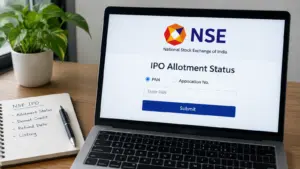
- Check your allotment status now on the KFin Technologies portal, or through the BSE and NSE IPO status pages, using your PAN or application number.
- If allotted, confirm shares are credited to your demat account on August 4 before the stock lists on August 5.
- If not allotted, track your bank account or UPI mandate for the refund or fund release, expected the same day, August 4.
- Avoid making a listing-day decision based only on GMP. Grey market premium is unofficial and has moved a great deal in a short period for this issue; treat it as one input, not the full picture.
- Read the risk factors in the RHP before deciding whether to hold or sell on listing, particularly around the company’s revenue concentration and current valuation multiple.
- Do not rely on social media allotment “leaks.” Only KFin, NSE, and BSE data is authoritative.
How to Check Manipal Health IPO Allotment Status
On KFin Technologies (Registrar):
- Visit the KFin IPO status portal.
- Select Manipal Health Enterprises IPO from the dropdown.
- Choose PAN, Application Number, or Demat Account Number.
- Enter the details and submit.
On NSE:
- Go to the NSE IPO bid verification page.
- Select Manipal Health Enterprises IPO.
- Enter your PAN and application number.
- Submit to view your status.
On BSE:
- Open the BSE IPO allotment page.
- Select “Equity” as the issue type.
- Choose Manipal Health Enterprises from the list.
- Enter your application number or PAN, complete the captcha, and search.
Expert Perspective
Analysts covering the healthcare sector have generally described Manipal Health Enterprises as a fundamentally strong business, given its scale as India’s largest private hospital chain by bed capacity and its steady revenue growth over the past two years. At the same time, most of that view comes with a caveat: the issue was priced at a price-to-earnings multiple in the mid-80s, which several analysts flagged as leaving little room for near-term listing gains even if the underlying company performs well over time.
This is where it helps to understand how experienced investors actually approach a listing like this. Many don’t judge an IPO by its first-day pop at all. Instead, they ask whether the company’s earnings growth over the next three to five years can realistically justify the price they’re paying today.
For a hospital chain, that usually means tracking a specific set of numbers rather than the stock ticker: how fast new beds are added and how quickly they start generating revenue, whether occupancy at existing hospitals is climbing, and whether margins hold up as the company expands into newer cities. A muted or even negative listing day tells you very little about any of that. A few quarters of results tell you a lot more.
What Makes This IPO Different?
A few things separate this listing from a typical mainboard debut:
- Scale: It’s the largest hospital-sector IPO to hit Indian markets by issue size, and the company is India’s largest private hospital chain by bed capacity.
- Purpose of funds: Unlike IPOs raised purely for expansion, a large share of the fresh issue proceeds is earmarked for debt repayment at the hospital subsidiary, which directly affects future interest costs rather than just growth plans.
- Institutional-retail divide: Demand was lopsided, with institutional investors far more enthusiastic than retail or non-institutional applicants, a gap wide enough to be worth noting.
- Valuation vs. sentiment mismatch: Strong business fundamentals were priced in aggressively enough that grey market sentiment stayed weak through the bidding window, a combination that doesn’t always go together.
- Sector timing: It adds a large, organised player to a healthcare-investing theme that has drawn steady interest from Indian investors over the past few years.
What Should Investors Watch After Listing?
Whether or not you received allotment, a few markers over the coming weeks will say more about this stock than the opening print does:
- Listing price versus issue price: Whether it opens at a premium, at par, or at a discount to the ₹590 upper band.
- Trading volumes in the first few sessions, which show whether institutional interest carries over post-listing.
- Continued institutional buying or selling once the lock-in-free float starts trading freely.
- Quarterly earnings, especially revenue growth and margin trends against the IPO-stage numbers.
- Debt reduction progress at the hospital subsidiary, since that was the primary use of the fresh issue proceeds.
- Occupancy and bed-capacity growth across existing and newly added hospitals.
Common Mistakes Investors Make Around Allotment Day
- Assuming GMP guarantees a listing gain. A positive GMP is sentiment, not a price commitment, and it can reverse by listing day.
- Checking allotment status on unofficial third-party apps first instead of KFin, NSE or BSE, which can lead to outdated or incorrect information.
- Panic-selling on listing day without a plan, purely because the stock opens flat or slightly negative.
- Ignoring the prospectus and applying purely on brand recognition of Manipal Hospitals without reading the valuation and risk sections.
- Refreshing allotment portals excessively before the registrar has officially updated the database, which usually happens by evening on the allotment date.
- Forgetting to track the refund or fund-release date if shares were not allotted, and assuming the money is automatically returned instantly.
Final Take
The Manipal Health allotment result answers only the first question for applicants; what happens over the following sessions matters more. Watch how the stock opens on August 5 against the ₹590 upper band, and pay closer attention to trading volumes and price action in the first week than to the opening print itself, since GMP-driven expectations for this issue have already been tempered heading into listing.
Whether you receive an allotment or not, the IPO process doesn’t end on allotment day. Track how the stock performs after listing, follow the company’s quarterly results over the next few reporting cycles, and weigh long-term fundamentals rather than short-term listing-day excitement before deciding how this stock fits into your portfolio.
FAQs
When will Manipal Health IPO allotment be finalised?
The allotment is expected to be finalised on August 3, 2026, and status will be visible online the same day once the registrar updates the database.
How do I check my Manipal Health IPO allotment status?
You can check it on the KFin Technologies registrar portal, or directly on the NSE and BSE IPO status pages, using your PAN or application number.
What is the Manipal Health IPO GMP today?
The grey market premium for this IPO has fallen sharply through the bidding period, moving from a high near ₹50 to close to flat by the end of bidding. GMP changes constantly and should be checked from live tracking sources closer to listing, since it is an unofficial, unregulated indicator.
When will Manipal Health IPO shares be credited to my demat account?
Shares are expected to be credited on August 4, 2026, for investors who receive allotment.
When is the Manipal Health IPO listing date?
The stock is scheduled to list on both NSE and BSE on August 5, 2026.
ARN Disclosure: Investik Future is an AMFI-registered Mutual Fund Distributor. ARN-341107 — Verify on AMFI ↗. Komal Thakur is the content author and digital marketer; the ARN registration belongs to Investik Future, not to the author personally.