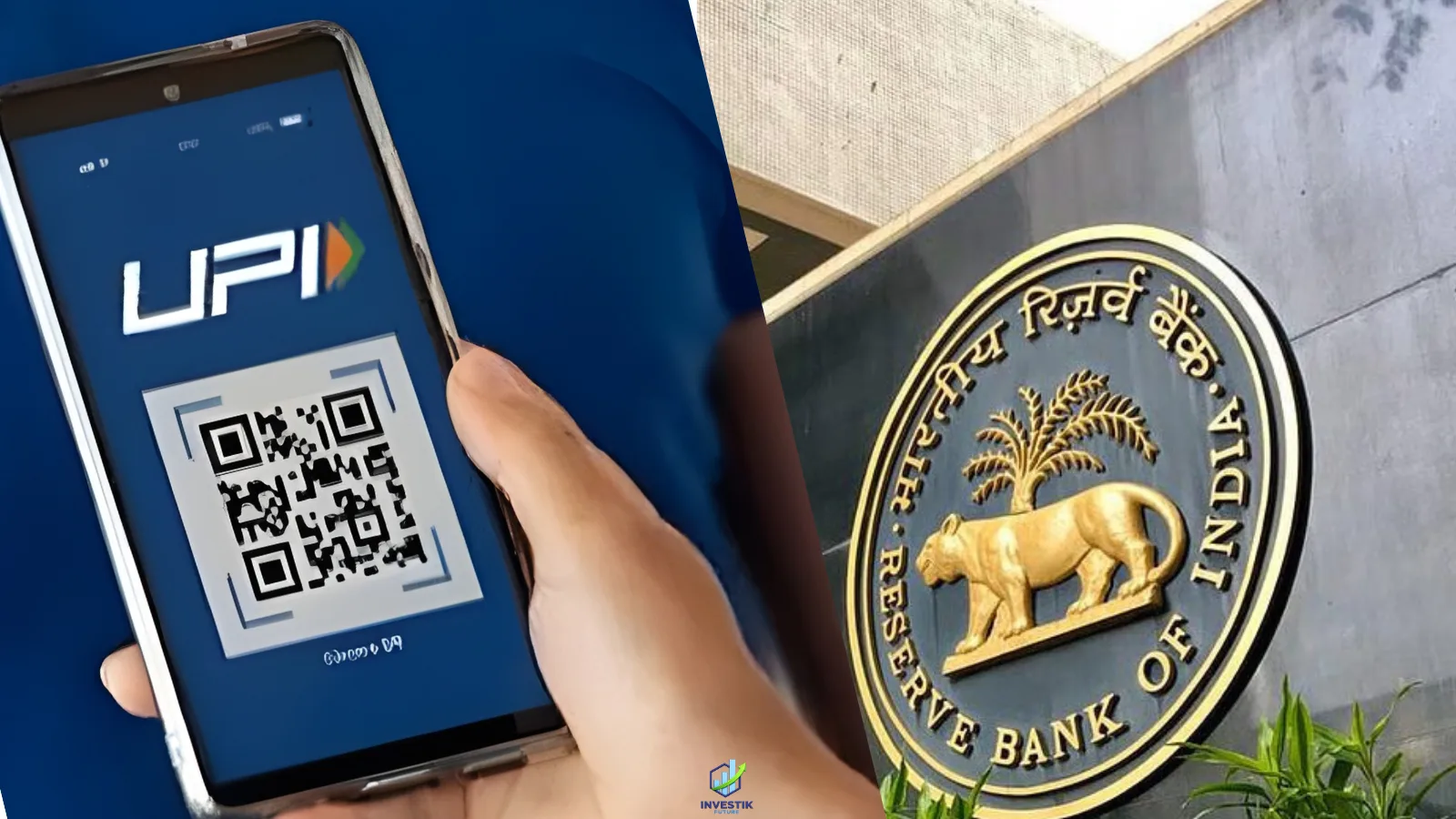

When I first read about the Reserve Bank of India’s (RBI) discussion paper suggesting a possible one-hour delay on digital payments above ₹10,000 for new payees, my reaction was honestly mixed. On one hand, I understand the intent behind it. On the other hand, I can’t ignore the concern many in the industry are raising, that this could slow down the very system that made digital payments in India so seamless in the first place.
India’s digital payments ecosystem, especially UPI, has become a daily habit for millions of people, including me. So naturally, any change that adds friction feels like a big deal.
This article examines RBI’s plan to impose a one-hour delay on first-time high-value digital payments over ₹10,000, its rationale as fraud cases soar at a reported ₹35,000 crore in FY25 and why bankers, fintech firms and users are split over whether such a move will improve safety or just dangerously slow down India’s fast-growing digital payment ecosystem.
Why RBI Is Considering This Move
As far as I know, the main reason for the RBI’s proposal is the increasing digital fraud. The scale of the problem is evident; it was reported that fraud losses were around ₹35,000 crore in FY25. What stood out to me is that most digital fraud cases comprise high-value transactions, usually above the ₹10,000 mark. This is generally the point at which scamsters prey on users who are less digitally savvy, including senior citizens.
These are not simple technical breaches; they are often psychological scams where victims are pressured into transferring money quickly. The idea of a “cooling-off period” or a one-hour delay seems to be designed as a safety buffer, giving users time to rethink or verify before money leaves their account.
Why the Industry Is Worried
While the intention seems protective, the banking and fintech industry appears far less convinced.
Some bankers feel this move could disrupt the biggest strength of UPI, instant payments. Today, UPI processes billions of transactions every month, according to recent estimates, over 10-15 billion, and users have grown fully accustomed to real-time transfers.
The concern is simple: even a small delay introduced at this scale could change user behaviour. People might hesitate to make first-time high-value payments digitally, especially above ₹10,000, and in some cases could shift back to cash or slower methods. That thought feels important because UPI wasn’t just about convenience; it was also about reducing cash dependency.
Why UPI Is at the Centre of This Debate
Even though the RBI’s discussion applies broadly to digital payments, most of the attention seems to be on UPI. That makes sense because UPI dominates peer-to-peer payments in India. A large portion of UPI usage comes from person-to-person transfers, and in value terms, P2P payments account for a substantial share of total UPI activity, often estimated at around 35-40% of transactions and a higher share of value contribution.
This is where the friction becomes more visible. Unlike IMPS or NEFT, UPI is designed to feel effortless. Adding delays might seem like a step backwards for some users who are now accustomed to instant transfers.

The Fraud Problem No One Disagrees With
One thing I think almost everyone agrees on is that digital fraud is a serious issue.
Many of these scams are not technical hacks but behavioural traps, fake police calls, digital arrest threats, fake investment schemes, or urgency-based manipulation. Victims are often pressured into sending money quickly, sometimes within a very short window after the first contact.
In that sense, I do understand the RBI’s thinking. A one-hour delay could act like a “pause button” in emotionally charged situations. But at the same time, I also feel that not all fraud happens in such a short window. Some investment scams stretch over days or weeks, which makes me wonder how effective a one-hour delay really would be in those cases.
Industry View: Is the Real Problem Being Missed?
A point that kept coming up in discussions I read is the issue of “mule accounts,” accounts used to receive and move fraudulent money.
Some experts believe that instead of slowing down transactions, the focus should be on identifying and shutting these accounts faster. RBI-backed initiatives like Mulehunter.AI already exist to detect such accounts, but there is still limited public visibility on their effectiveness at scale.
I personally find this part interesting because if fraud ultimately lands in regulated bank accounts, then strengthening that layer could be more effective than slowing down all transactions.
Also Read: New Labour Code: 50% Rule Brings Big Salary Changes
A Possible Middle Ground?
From a neutral point of view, I feel there might be a middle path here. Rather than imposing a blanket delay, a risk-based system would have been more sensible. For example:
- Delays only for suspicious transactions
- Higher thresholds for verified users
- More powerful real-time fraud alerts before payment confirmation
That was a way to ensure the system didn’t slow down for everyone, but still spaced out vulnerable people from one another. I am also convinced that user awareness is equally important as regulation. So many scams are successful not because of failures in systems, but users panicking or trusting the wrong signals.

My Personal Take
As someone who closely follows financial news but isn’t a financial industry expert, I feel this proposal is very delicately positioned.
On one side, there is real harm being done through fraud worth tens of thousands of crores annually. On the other side, there is a system that people have grown to trust because of its speed and simplicity.
If I had to summarise my thoughts honestly, I would say:
- The concern behind the RBI proposal is valid
- But the execution could create unintended friction
- And more targeted, tech-driven solutions may work better than blanket delays
I don’t think there is an easy answer here, which is probably why this debate is getting so much attention.
Also Read: RBI MPC Repo Rate at 5.25%: Holding Steady Amid Uncertainty
Frequently Asked Questions (FAQs)
1. What is RBI’s ₹10,000 UPI proposal?
It is a discussion paper proposing a potential one-hour hold on digital payments of more than ₹10,000 initiated to new payees to curb fraud risks.
2. Why is RBI considering this change?
The ramping up of digital fraud cases in India, which stood at ₹35,000 crore in FY25, is the key reason behind this.
3. Will all UPI transactions be delayed?
No, the proposal states that only first-time transactions over ₹10,000 to new payees may be affected.
4. Can users bypass this delay?
Merchants and whitelisted contacts (contacts you tell us to recognise as safe), including previously transacted payees, may be exempt.
5. Could this affect cash usage again?
Some in the industry think that added friction might cause slightly more cash to be used for urgent or first-time payments, although this is not a foregone conclusion.
Disclaimer
The article is based on publicly known information and a personal interpretation of the continuing discussion revolving around RBI’s proposal. It is not meant to be financial or regulatory advice and is for informational/educational purposes only. It is always best to refer to official RBI notifications and seek guidance from a financial advisor or experts for such advice.

Himani Soni
I’m Himani Soni, a finance content strategist with 2+ years at Investik Future. I decode market trends and simplify complex investing concepts into clear, actionable insights for the everyday investor.