
When I first heard that a new income tax law would apply from April 1, 2026, one of the first questions that came to my mind was simple: Will my tax benefits change? And if you’re a salaried employee like me, chances are Leave Travel Concession (LTC) is one of those benefits you rely on to legally reduce your tax burden.
So I spent time going through the draft rules issued for the upcoming tax framework to understand what’s actually changing and what’s not. After digging into the details, I realised something important: despite all the buzz around the new law, LTC remains mostly untouched in its core structure.
In this article, I’ll explain exactly how LTC will work from 2026, what rules remain the same, what’s clarified in numbers, and what salaried employees should actually pay attention to while planning tax savings. If you depend on LTC for reducing taxable income, this breakdown will help you make informed decisions.
What LTC Means to Me and Most Salaried Employees
For years, LTC has been one of the most practical tax exemptions available to salaried individuals. It allows us to claim exemption on travel expenses incurred while taking leave and travelling within India.
What I’ve always liked about this benefit is that it rewards something we already want to do, travel with family. But of course, like all tax benefits, it comes with specific rules.
Under the existing framework, LTC allows exemption for travel fare only. That means the tax benefit applies strictly to the cost of transportation. Expenses like hotel bookings, meals, sightseeing, taxis, or shopping are not considered.
The Core LTC Rules That Still Apply
After reviewing the upcoming framework, I found that the basic structure remains familiar. Here are the key rules that continue:
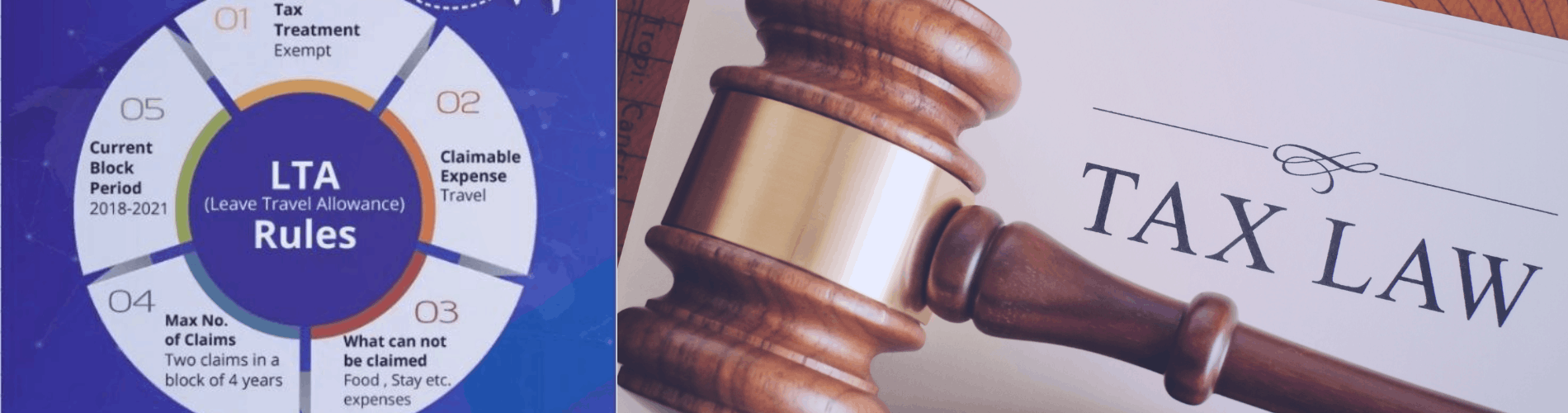
- Two Trips in a Four-Year Block: You can claim LTC exemption for 2 journeys within a block of 4 calendar years. The current block cycle that began in 2022 and ends in 2025 still forms the reference base.
- Only Travel Fare Qualifies: This hasn’t changed. The exemption is limited strictly to transportation costs. Even if your total trip costs ₹80,000, but airfare or train tickets cost only ₹28,000, only ₹28,000 is eligible.
- Family Members Covered: Eligible family members generally include: Spouse, Children, Dependent parents or siblings
4. Exemption is Limited: The amount you can claim is restricted to whichever is lower: actual travel cost, or the LTC amount provided by the employer

Travel Cost Limits Based on Mode
While reading the draft rules, I noticed they clearly specify how travel costs are calculated depending on how you travel. This clarity is actually helpful because earlier, many employees weren’t sure what limit applied.
Here’s how it works:
- Air travel: Economy fare of the entitled class via the shortest route
- Rail travel: AC First Class fare for the shortest route
- Public transport (no rail): First-class or deluxe fare
- No recognised transport: Fixed cap of ₹30 per kilometre
That last number matters. For example, if the shortest distance to your destination is 600 km, your maximum claim without public transport would be 600 × 30 = ₹18,000.
Carry-Forward Benefit Still Exists
One feature I personally find very useful is the carry-forward rule. Suppose you couldn’t travel during a block period, maybe work commitments or family responsibilities prevented it. In that case, you can still claim 1 unused LTC journey in the first calendar year of the next block.
Even better, using that carry-forward claim doesn’t reduce your entitlement for the new block. So effectively, you don’t lose your benefit just because life got busy.
The Two-Child Rule, Still There
The restriction on claiming LTC for more than 2 surviving children continues under the upcoming tax structure. However, there are exceptions:
- Children born before October 1, 1998, are excluded from this limit
- Multiple births after the first child are allowed
This rule has been retained exactly as before.

What Actually Changes Under the New Tax Law?
After going through the draft provisions carefully, I realised something surprising: the changes are mostly administrative, not structural.
The new tax law essentially reorganises LTC provisions into a different section and clarifies calculation methods. It does not reduce limits, remove benefits, or change eligibility conditions. So if you were worried that LTC might disappear under the new system, the data suggests otherwise.
Also Read: Union Budget 2026: Income Tax Slab Changes and Policy Outlook
The Most Important Practical Point
Here’s the one thing I want every salaried taxpayer to remember:
LTC exemption is still available only if you opt for the old tax regime. This is crucial because many employees switch to the new regime for lower tax rates (for example, 5%–30% slab structure changes), without realising they may lose exemptions like:
- LTC
- HRA
- Standard deductions beyond limits
- Chapter VI-A deductions
So if your annual LTC claim is around ₹25,000–₹40,000, it can significantly affect which regime is better for you.
My Personal Take: Why This Stability Matters
From my perspective, the fact that LTC rules remain largely unchanged is actually reassuring. Tax reforms often create uncertainty, especially for salaried individuals who plan their finances months in advance.
Keeping LTC intact means:
- Employers don’t need to redesign salary structures
- Employees don’t need to relearn rules
- Tax planning strategies remain stable
In other words, the transition to the new tax law becomes smoother.
Example to Understand It Better
Let’s say:
- Employer provides LTC = ₹40,000
- Actual eligible ticket cost = ₹32,000
Your exemption = ₹32,000
If instead:
- Employer LTC = ₹40,000
- Ticket cost = ₹48,000
Your exemption = ₹40,000 (because lower of the two applies)
Who Benefits Most From LTC?
From what I’ve observed, LTC is most valuable for:
- Salaried employees with families
- People who travel domestically at least once every 2 years
- Individuals who remain in the old tax regime
For someone who rarely travels or chooses the new regime, LTC may not be useful at all.
Final Thoughts
After reviewing the draft rules myself, my biggest takeaway is this: the upcoming tax law doesn’t disrupt LTC, it simply reorganises it.
You’ll still be able to claim exemption for 2 trips every 4 years, still be limited to travel fare, and still need valid proof. The benefit remains intact for those who choose the old tax regime. So if you’ve been planning your vacations with tax savings in mind, you can continue doing exactly that from 2026 onward.
Also Read: India’s Economic Survey 2026: A Steady Outlook for Investors and the Nation
Discalimer
This article is for informational and educational purposes only and is based on draft tax rules. Final provisions may differ after official notification. Readers should consult a qualified tax professional before making financial decisions.

Himani Soni
I’m Himani Soni, a finance content strategist with 2+ years at Investik Future. I decode market trends and simplify complex investing concepts into clear, actionable insights for the everyday investor.