
Bitcoin crosses $80K again, and I’ll be honest, I’ve been watching it hover just below this level for a while now. Every time it got close, something pulled it back, a macro shock, an ETF outflow week, or a geopolitical headline. So this Monday morning, seeing it finally break through didn’t feel exciting; it felt like a pause, like, is this move actually real or just another spike?
Turns out, some real things are driving this move. Let me walk you through what I found out. In this article, we explore the three main factors contributing to Bitcoin breaking past the $80,000 level: positive ETF flows with emphasis on IBIT by BlackRock, positive trends for stocks across the whole of Asia, and improved market sentiment. In addition, we explore how market experts predict that Bitcoin will fare in the coming period. If you’ve been keeping an eye on crypto markets or are just curious about what’s going on, this should give you a clear picture without getting too technical.
Bitcoin Crosses $80K, Here's What Happened
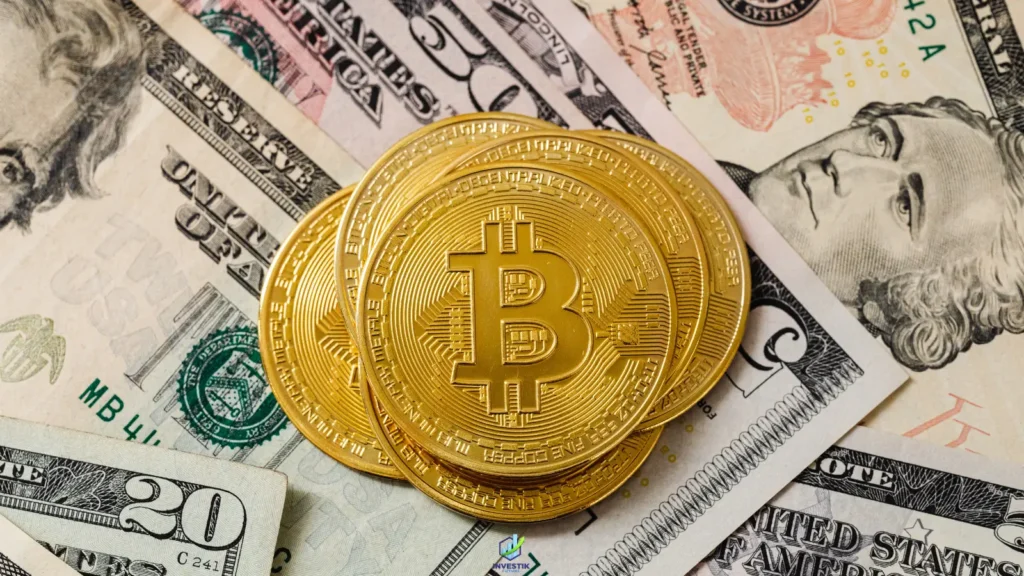
Bitcoin rose above $80,000 for the first time in more than three months as Asian stocks approached record highs. The original cryptocurrency climbed as much as 1.9% Monday morning in Singapore, reaching $80,393, its highest level since January 31.
That’s a meaningful number, not just because it’s a round figure that gets attention, but because the $80,000 level had been capping every rally attempt since February’s correction. Breaking through it, even briefly, changes the narrative around Bitcoin’s short-term direction.
For a bit of context on where we’ve been: Bitcoin had traded around $77,100 as of late April 2026, up roughly 30% from the cycle low of $60,000 but still stuck below that stubborn resistance. So today’s print is genuinely meaningful for those who have been watching.
ETF Inflows Are Back, and They're Strong
The single biggest driver of this move, from what I can tell, is the return of institutional money through Bitcoin ETFs. U.S. spot Bitcoin ETFs logged eight straight days of inflows totaling $2.10 billion through April 23, the longest streak since the nine-day October 2025 run that took Bitcoin to its $126,000 all-time high. That’s a significant comparison. The last time we saw inflows this consistent, Bitcoin was making history.
BlackRock’s IBIT alone did roughly 75% of the lifting, bringing in $167.49 million on April 23. And it’s not just BlackRock; Morgan Stanley’s new Bitcoin Trust recorded $163 million in inflows with no outflows, indicating genuine net demand.
April turned out to be the best month for Bitcoin ETF inflows this year, with $2.44 billion flowing in over the first three weeks. BlackRock’s IBIT alone captured 70% of those flows.
What makes this interesting is the type of buying. Unlike the reactionary behaviour seen with retail-based rallies, such capital flows are more strategic in nature, creating a sounder base for the overall market system. In the event that institutional investors are using ETFs in their purchasing strategy, this indicates a level of calmness in their approach.
Asia's Rally Is Lifting All Boats
The second piece of this puzzle is what’s happening in Asian markets. Asian stocks were approaching record highs on Monday, and that kind of broad risk-on environment tends to lift crypto alongside equities.
This is something I’ve noticed more and more in 2026: It is no longer true that Bitcoin does not correlate with other assets. This is especially true regarding how Bitcoin is correlated to overall equity indices such as the Nasdaq 100 and the S&P 500 indices, when there is significant institutional participation in Bitcoin.
So when Asian stocks rally and risk appetite is up globally, Bitcoin tends to benefit. It’s a bit different from the older narrative where crypto was purely its own thing, disconnected from everything else. Right now, it’s increasingly tied into the broader financial system, which cuts both ways, of course.
Sentiment Has Quietly Shifted
The third factor is harder to quantify, but the very real sentiment has changed. The break above $77,500 shifted sentiment from cautious to optimistic. And once that threshold was cleared, a lot of the fear around this being a false rally started to fade.
In this case, the 2026 Bitcoin market has been seen as one where there is a growing influence of institutions and little role played by retail investors, resulting in stability in terms of prices and correlation with the economy at large. This trend differs from that observed during 2021 and 2017 when retail investors were playing major roles through FOMO.
The returns on the monthly chart show a poor performance at the beginning of this year in both January and February. The stabilisation trend, however, appears in April. The mood has shifted from “Is the bear market coming back?” to “Okay, maybe this recovery is real.”
What Could Go Wrong?
I want to be fair to her; there are real risks I think are worth knowing about. Analysts warn that while the ETF bid is strong, it may be serving as exit liquidity for short-term holders, making Bitcoin’s behaviour around the $80,000 level a critical test of whether the rally can sustain or will be sold into again. In other words, some people who bought Bitcoin at lower prices are using this ETF-driven demand to quietly exit. That’s not necessarily a disaster, but it does mean the $80K level could face selling pressure even as new money comes in.
The three weeks of inflows ended on April 27, with $491 million flowing out across three straight sessions. So we had a brief pause right before this breakout. Whether May’s flows sustain or reverse will tell us a lot about whether $80K holds. On the macro side, higher oil prices feed directly into the Fed’s inflation math, and if oil stays elevated, it makes rate cuts harder to justify. Any risk-off move would likely hit all risk assets, including Bitcoin, before any flight-to-safety narrative kicks in.
Also Read: Quant Mutual Fund ₹124 Cr BlackBuck Deal Sees Muted Reaction
Where Do Analysts Think Bitcoin Goes from Here?
It is here that different opinions start to arise, and I should mention that no one really knows. The models for forecasting the price of Bitcoin show that Bitcoin may rise by 8%, reaching up to $85,500 by the end of May 2026 on the basis of consistent momentum and purchasing pressure.
In the long run, according to Bernstein, Bitcoin’s price will go up to $150,000 in 2026, which is also predicted by the Standard Chartered Bank. Citibank predicts that the price of Bitcoin will grow up to $143,000 in 2026 due to ETF capital inflows and changes in regulation.
But not everyone is bullish. Industry executives and investors forecast a wide range of prices for Bitcoin in 2026, dropping as low as $75,000 and rising as high as $225,000. That’s a massive spread, which tells you how genuinely uncertain things are.
My honest take. This breakout above $80K matters more for what it signals than what it guarantees. It shows that buyers are stepping up, institutions are engaged, and the floor is potentially rising. But no one should bet the house on any single price target; crypto has a way of humbling overconfident forecasters.
What I'm Taking Away From This
To tie it all together, Bitcoin crossing $80,000 today isn’t random. It’s the result of weeks of consistent ETF inflows, a broad rally in Asian markets, and a genuine shift in market sentiment from fear to cautious optimism. The risks are real: short-term holder selling, potential macro headwinds, and the ever-present possibility that this level doesn’t hold. But the structural setup is stronger than it’s been in months.
Also Read: Infosys Stock Falls 5% After Q4 Despite Profit Jump
Frequently Asked Questions (FAQ)
1. Why did Bitcoin break $80,000 today?
Bitcoin crossed $80,000, driven by a combination of strong ETF inflows (especially from BlackRock’s IBIT), a broad rally in Asian stock markets, and improved overall market sentiment.
2. What are Bitcoin ETF inflows and why do they matter?
An ETF is an exchange-traded fund, meaning that the Bitcoin ETF allows investors to invest in Bitcoin using a conventional stock account. Bitcoin ETF inflows mean that actual purchases of BTC are made via such funds. This is usually considered a good signal for Bitcoin’s performance.
3. Is this Bitcoin rally expected to continue?
Opinions differ among analysts. On one hand, models estimate that BTC could touch the price of $85,500 by May 2026, and some other longer-term forecasts of the institutional kind (Bernstein, Standard Chartered) suggest it might hit $150,000 by that time. On the other hand, ETF outflows, macro risks associated with oil prices, and possible sales by short-term holders at the mark of $80K are all possible roadblocks on the way towards higher prices.
4. How are Asian markets connected to Bitcoin’s price?
In recent years, since the involvement of institutional money in cryptocurrencies has grown, Bitcoin has begun to show similar dynamics to those seen in other global stock markets, including Asia. In times when there is an upbeat sentiment in Asia and a positive attitude toward investments around the world, Bitcoin also gains from that optimism.
5. Should I invest in Bitcoin after this rally?
It is completely up to you to make a choice about whether or not to invest in Bitcoin after this rally, depending on your financial condition, risk tolerance, and goals in investing. I am not a financial expert, and the content of this article should not be regarded as financial advice under any circumstances. You are free to do your own research and seek assistance from a financial expert if necessary.
Disclaimer
This article contains information that is for educational purposes only and should not be considered financial or legal advice. Cryptocurrencies can be extremely volatile and risky. Historical data is no indication of future returns. Any price, prediction, or expert opinion referenced in this article is based on data from the time it was written and may have changed. It is always wise to do your due diligence and consult a certified financial advisor before investing in cryptocurrencies.

Himani Soni
I’m Himani Soni, a finance content strategist with 2+ years at Investik Future. I decode market trends and simplify complex investing concepts into clear, actionable insights for the everyday investor.