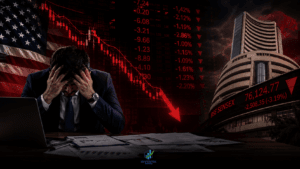

Over the past few days, I’ve been closely watching Wall Street futures and how global markets are reacting to the ongoing tensions in West Asia. And honestly, what we’re seeing right now feels like a classic case of markets trying to price in hope before certainty.
On Tuesday morning, Wall Street futures hinted at a strong opening, rising to 1%. At the same time, oil prices took a noticeable dip. At first glance, this might look like a positive shift. But when I dug deeper, I realised that this optimism is sitting on a very fragile foundation.
In this article, let me break down what’s really happening and why I think investors should stay cautious despite the short-term relief.
Wall Street Futures Are Rising, But Why?
Early signals from US futures pointed towards a positive start for Wall Street.
- Nasdaq-100 futures were up 0.55%
- S&P 500 futures gained 0.7%
- Dow Jones futures climbed 0.8%
Now, when I see all three major indices moving up together, it usually signals broad-based optimism. But this time, the trigger isn’t strong economic data or corporate earnings, it’s geopolitical speculation.
The rally is largely being driven by reports suggesting that former US President Donald Trump is open to ending the military campaign against Iran. And that’s where things get interesting. Because markets aren’t reacting to an actual resolution, they’re reacting to the possibility of one.
Oil Prices Fall: A Reaction, Not a Trend
One of the most immediate reactions to this development was seen in crude oil prices.
- Brent crude for May fell $1.22 (1.08%) to $111.56 per barrel
- The more active June contract hovered around $105.76
What stood out to me was the sharp reversal. Oil prices had actually risen nearly 2% earlier in the session before pulling back. This tells me one thing: The market is extremely sensitive right now, and sentiment is shifting by the hour.
From my perspective, this drop in oil prices is not a sign of stability; it’s just a knee-jerk reaction to a headline. Because the bigger issue, the Strait of Hormuz, is still unresolved.
The Strait of Hormuz Factor: The Real Risk
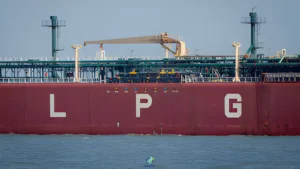
If you’ve been following global oil markets, you’ll be aware that the Strait of Hormuz is among the world’s most important choke points. Much of the world’s oil supply transits through this constrained route. Any interruption here has a direct and profound impact.
What caught my attention in the report was this: The US may end the conflict without reopening the Strait immediately. This is crucial. Because even if tensions ease, restricted oil flow can continue to keep prices volatile. Analysts are already pointing out that a real shift in oil markets will only happen when supply routes are fully restored.
So, while the headlines suggest “de-escalation,” the underlying risk hasn’t really gone away.
Asian Markets Tell a Different Story
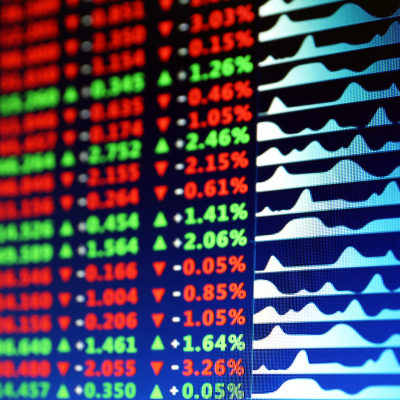
While Wall Street futures are painting a positive picture, Asian markets are telling a completely different story, and I tend to take that divergence seriously.
- Japan’s Nikkei fell 1.3%, heading for a 12.6% monthly loss
- South Korea’s Kospi dropped 3.46%, on track for a 17% monthly decline, its worst since 2008
Now this is where things start to feel a bit contradictory. If global risk is truly easing, why are Asian markets under such heavy pressure?
In my view, this reflects a more grounded assessment of the situation. Unlike futures markets, which often react quickly to headlines, Asian equities seem to be pricing in the broader economic impact, including supply chain disruptions, inflation risks, and slowing global demand.
Indian Markets End the Fiscal Year on a Weak Note
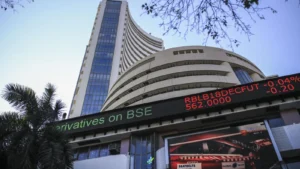
Back in India, the mood hasn’t been great either. The last trading session of the 2025-26 fiscal year ended with a sharp decline:
- Sensex fell 1,635 points (2.22%) to 71,947
- Nifty dropped 488 points (2.14%) to 22,331
I wasn’t particularly surprised by this fall. Rising crude oil prices, geopolitical uncertainty, and cautious investor sentiment have been building pressure for a while now. Monday’s decline just felt like a release of that accumulated stress.
Also Read: Stock Market Rally: Sensex 900-Point Surge Signals Relief
What I Think the Market Is Missing
Here’s my honest take: Markets right now are reacting to possibilities, not probabilities. Yes, the idea of a potential ceasefire or de-escalation sounds positive. But there are still too many unanswered questions:
- Will the Strait of Hormuz reopen quickly?
- How long will supply disruptions last?
- Can inflation pressures ease sustainably?
- Will global growth take a hit in the meantime?
Until we get clarity on these factors, any rally, whether in equities or relief in oil prices, feels temporary to me.

How I’m Looking at This as an Investor
In cases like this, I try to worry less about the headlines and more about underlying trends. For now, several things are sharply clear:
- Volatility is here to stay: Sudden moves in oil and equities indicate unstable sentiment.
- Geopolitics is driving markets: That suggests volatility will stay elevated.
- Risk management matters more than returns: This is not a time to make aggressive bets.
For myself, I am adopting a wait and watch approach for new investments while closely monitoring the sectors which are adversely impacted by crude oil prices, like aviation, logistics and companies in paint.
Final Thoughts: Relief Rally or Just a Pause?
If there was one line to summarise what we’re witnessing now, it would be this: We’re in the midst of a relief rally, not a trend reversal.
Wall Street futures may be pointing higher, and oil prices may have cooled slightly, but the core risks are still very much in play. Markets often move ahead of reality, sometimes too quickly. And when that happens, corrections can be just as sharp.
So rather than getting swept away by short-term optimism, I think it is time to be vigilant, stay enlightened, but above all, remain disciplined.
Also Read: Sensex and Nifty Fall 1.5% Amid Global Market Uncertainty
Disclaimer
This article is for informational and educational purposes only. It represents personal opinions and market observations, and should not be seen as financial or investment advice. Please do your own research and consult with a financial advisor before making any investment decisions. Investments in securities markets involve risks, including the possible loss of capital.

Himani Soni
I’m Himani Soni, a finance content strategist with 2+ years at Investik Future. I decode market trends and simplify complex investing concepts into clear, actionable insights for the everyday investor.